How relevant is the mouse model for understanding human sex determination?
Francisco Brito, Chloé Mayère, Aurélie Lardenois, Violaine Regard, Sylwia Czukiewska, Cyril Djari, Pauline Sararols, Yasmine Neirijnck, Françoise Kühne, Séverine Mazaud-Guittot, Susana M Chuva de Sousa Lopes, Frédéric Chalmel, Antoine D Rolland, Serge Nef

TL;DR
This study compares mouse and human gonadal sex determination at the single-cell level, revealing significant transcriptomic differences.
Contribution
The paper provides the first comprehensive interspecies comparison of human and mouse gonadal sex determination using single-cell transcriptomics.
Findings
Major transcriptomic differences exist in major cell types between human and mouse gonads.
Only a small fraction of genes show comparable expression profiles across species.
Poorly differentiated cells like somatic progenitors show more divergent profiles than differentiated cells.
Abstract
The mouse is the most widely used model organism for studying mammalian gonadal sex determination and related human disorders. However, a systematic and comprehensive comparison of human and mouse sex determination processes is lacking. Here, we performed an interspecies comparative analysis of the single-cell transcriptomic atlas of gonadal sex determination in mice and humans. Our results revealed major transcriptomic differences in each of the major cell types between human and mouse gonads. Only a small fraction of these genes shared a comparable expression profile, often genes known to be essential for gonadal sex determination. While the most differentiated gonadal cell types share similar transcriptomic signatures between humans and mice, poorly differentiated cells, such as somatic progenitors, show more divergent profiles. Ultimately, these comparisons will identify the genes…
Genes, proteins, chemicals, diseases, species, mutations and cell lines named across the full text — each resolved to its canonical identifier and authoritative record.
Click any figure to enlarge with its caption.
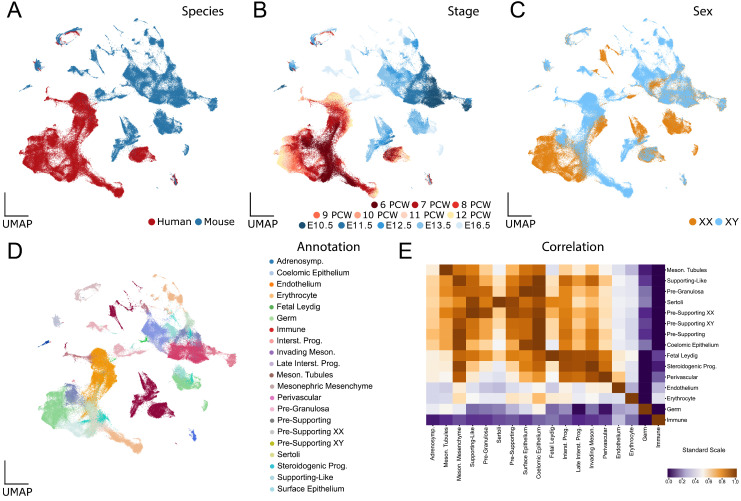 Figure 1
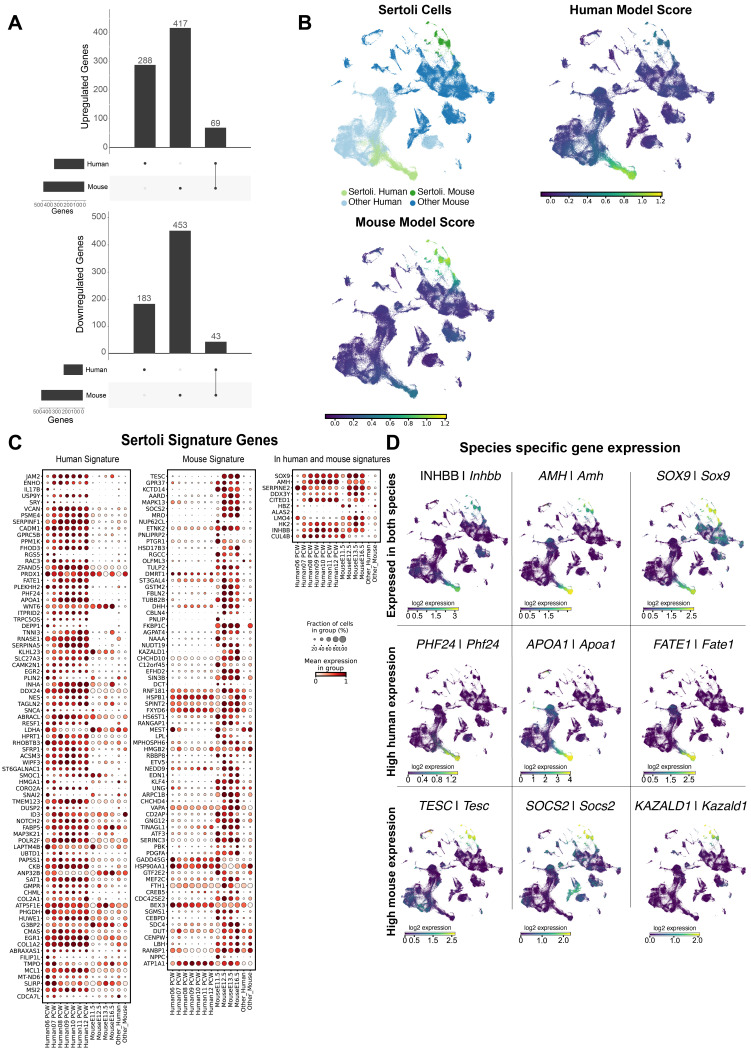 Figure 2
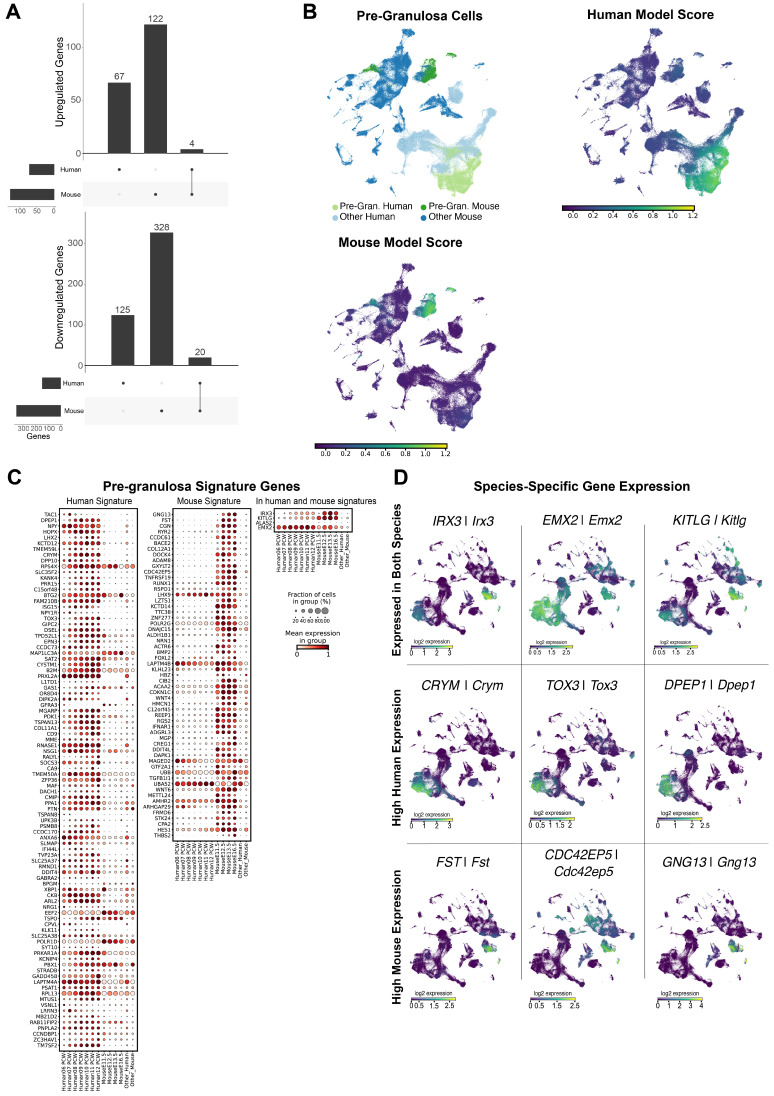 Figure 3
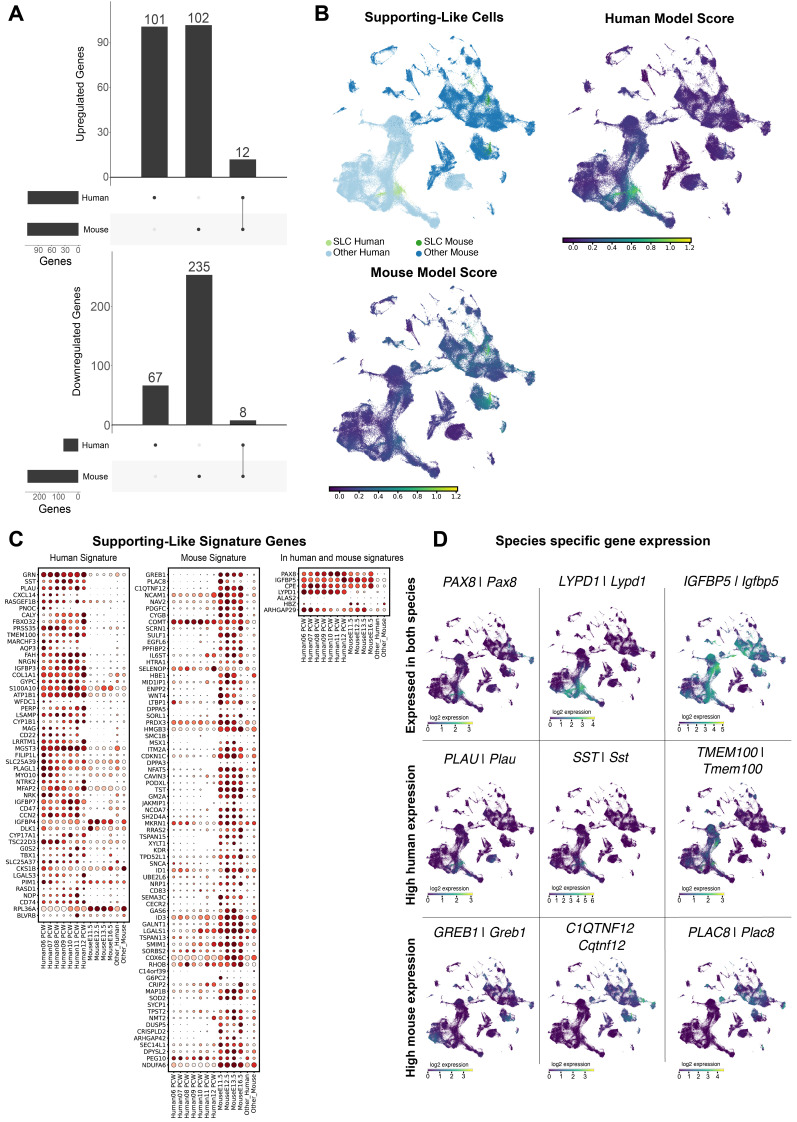 Figure 4
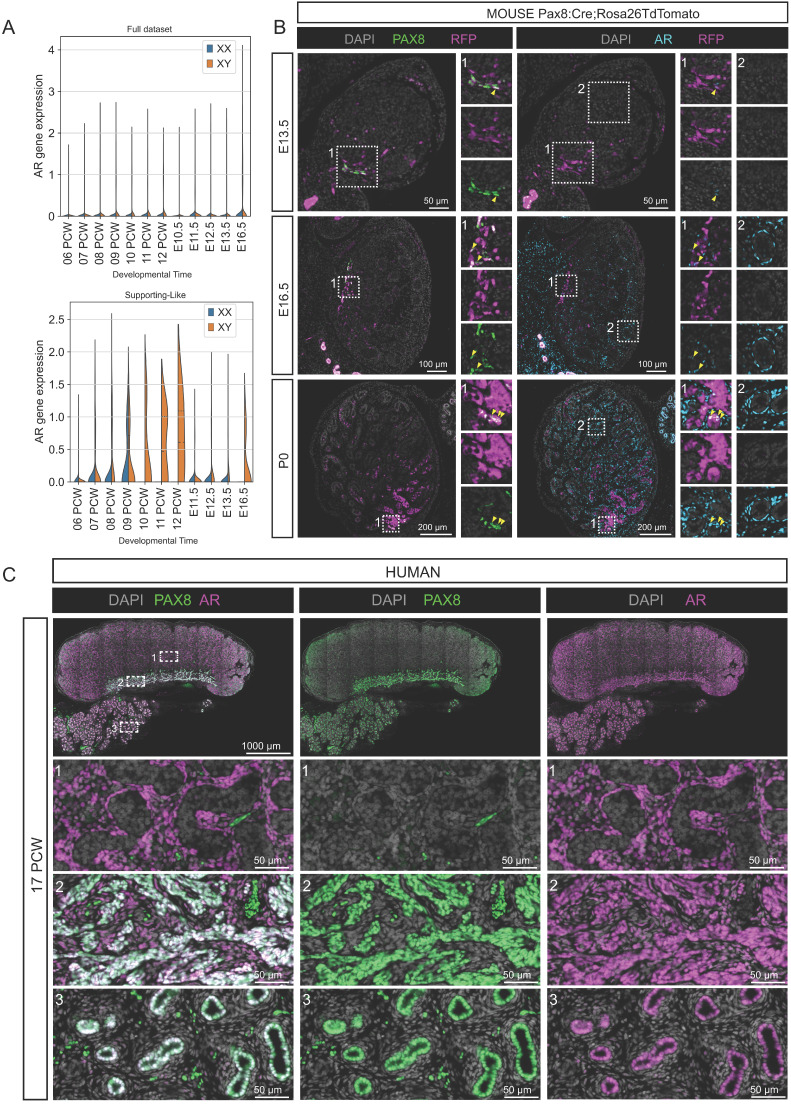 Figure 5
Peer Reviews
No public reviews on file for this paper yet. If you reviewed it on a platform where reviews are public (OpenReview, ICLR, NeurIPS, ICML), you can paste yours below so the community can read it here.
Videos
No videos yet. Explain this paper in a talk, walkthrough, or lecture? Add one.
Taxonomy
TopicsGenetic and Clinical Aspects of Sex Determination and Chromosomal Abnormalities · Sexual Differentiation and Disorders · Demographic Trends and Gender Preferences