A longitudinal study on the relationships between impulsivity and excessive smartphone use among patients with acquired brain injury and control participants
Yehuda Wacks, Meni Koslowsky, Ayala Bloch, Aviv Weinstein

TL;DR
This study explores how impulsivity relates to excessive smartphone use in people with brain injuries and finds that frontal lobe damage is linked to higher impulsivity and smartphone overuse.
Contribution
The study longitudinally examines impulsivity and smartphone use in acquired brain injury patients and controls, revealing treatment effects on impulsivity but not smartphone use.
Findings
Patients with orbitofrontal syndrome showed higher impulsivity and smartphone use compared to controls at baseline.
ABI patients improved in delay discounting after treatment but did not show improvement in smartphone use.
Impulsivity traits were linked to mental wellbeing outcomes like depression and stress.
Abstract
Previous studies have demonstrated that impulsivity is positively correlated with excessive smartphone use, indicating the involvement of frontal lobe circuits. This study examined excessive smartphone use, impulsivity, and mental wellbeing in patients with acquired brain injury (ABI) before and after occupational rehabilitation treatment, and control participants. Participants consisted of 44 patients with ABI [10 patients with orbitofrontal syndrome (OFS) and 34 without OFS] and 69 control participants with no history of brain injury. The procedure included a smartphone application that tracked daily smartphone use and frequency of device unlocks, computerized tasks that evaluated impulsive choice (Delay Discounting Task), impulsive action or response inhibition (the ability to stop an already-initiated action—the Go/No-Go task), and questionnaires measuring excessive smartphone use,…
Genes, proteins, chemicals, diseases, species, mutations and cell lines named across the full text — each resolved to its canonical identifier and authoritative record.
Click any figure to enlarge with its caption.
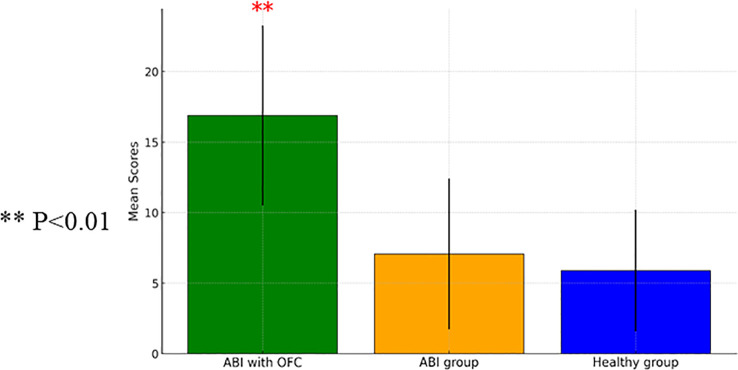 Figure 1
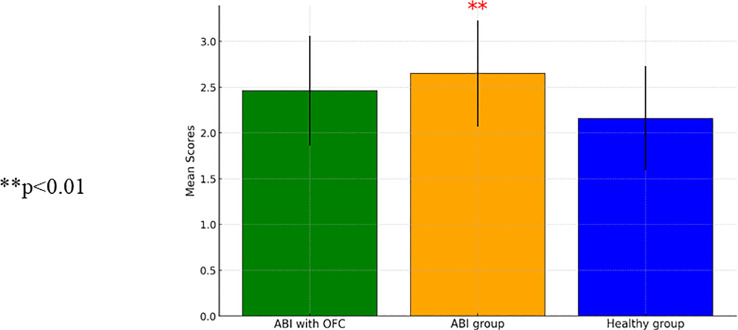 Figure 2
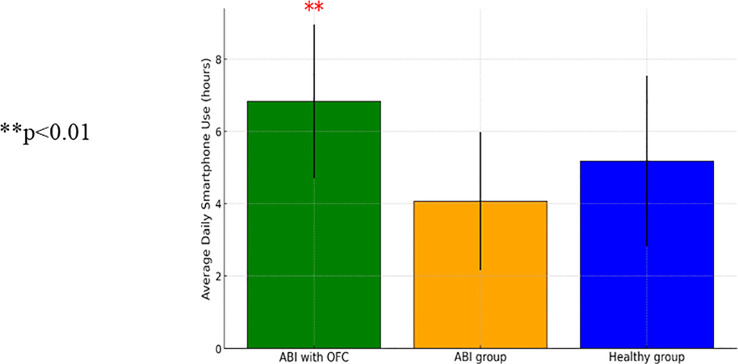 Figure 3
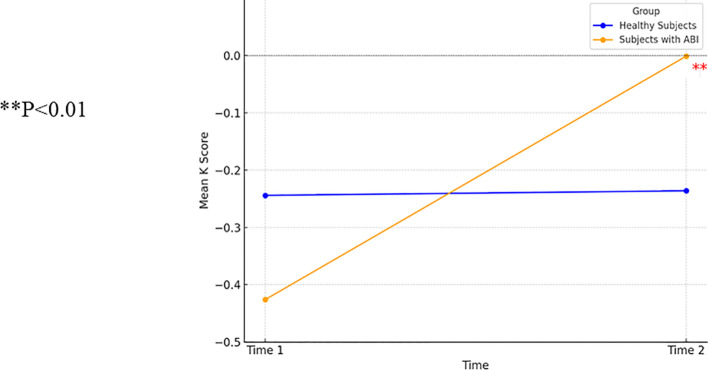 Figure 4
Peer Reviews
No public reviews on file for this paper yet. If you reviewed it on a platform where reviews are public (OpenReview, ICLR, NeurIPS, ICML), you can paste yours below so the community can read it here.
Videos
No videos yet. Explain this paper in a talk, walkthrough, or lecture? Add one.
Taxonomy
TopicsTraumatic Brain Injury Research · Virtual Reality Applications and Impacts · Stroke Rehabilitation and Recovery