Acceptance and Tinnitus Handicap in Chronic Tinnitus: Associations With Sleep Quality and Depression—A Cross‐Sectional Study
Sevgi Kutlu, Zehra Aydogan, Kübra Binay Bolat, Nazife Öztürk Özdeş

TL;DR
This study finds that higher acceptance of chronic tinnitus is linked to better sleep quality and fewer depressive symptoms, suggesting acceptance-based therapies could improve patients' well-being.
Contribution
The study is among the first to systematically explore how tinnitus acceptance correlates with depression and sleep quality in chronic tinnitus patients.
Findings
Tinnitus acceptance strongly correlates with lower tinnitus distress (THI r = –0.667) and moderately with fewer depressive symptoms and better sleep quality.
THI was the only significant independent predictor of tinnitus acceptance, while depression and sleep quality were not.
The observed associations remained significant after controlling for shared variance between measures.
Abstract
This study aims to examine the association of tinnitus acceptance on sleep quality and depression in chronic tinnitus patients, addressing a gap in the literature on acceptance processes and quality of life. A total of 130 patients (47 female, 83 male; mean age 46.75 ± 14.02) were assessed using the Tinnitus Acceptance Questionnaire (TAQ), Tinnitus Handicap Inventory (THI), Beck Depression Inventory (BDI), and Pittsburgh Sleep Quality Index (PSQI). Correlation, linear regression, and logistic regression analyses were performed. Acceptance scores were divided into “low” and “high” groups (median 41.0). Tinnitus acceptance was significantly associated with depression and sleep quality. A strong negative correlation was found with THI (r = –0.667, p < 0.001), and moderate negative correlations with BDI (r = –0.438) and PSQI (r = –0.401). Regression analyses identified THI as the only…
Genes, proteins, chemicals, diseases, species, mutations and cell lines named across the full text — each resolved to its canonical identifier and authoritative record.
Click any figure to enlarge with its caption.
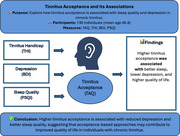 Figure 1
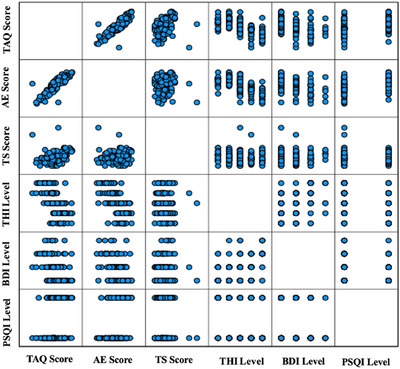 Figure 2
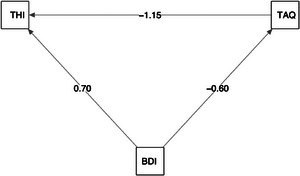 Figure 3
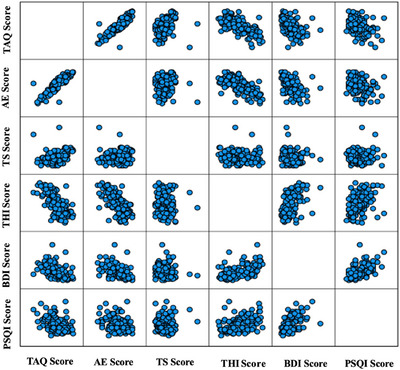 Figure 4
Peer Reviews
No public reviews on file for this paper yet. If you reviewed it on a platform where reviews are public (OpenReview, ICLR, NeurIPS, ICML), you can paste yours below so the community can read it here.
Videos
No videos yet. Explain this paper in a talk, walkthrough, or lecture? Add one.
Taxonomy
TopicsHearing, Cochlea, Tinnitus, Genetics · Cerebral Venous Sinus Thrombosis · Multisensory perception and integration