In Vivo Biosynthesis and Direct Incorporation of Noncanonical Amino Acids into Proteins
Jan Hendrik Illies, Tim Moritz Weber, Ivana Drienovská

TL;DR
This paper reviews engineered cell systems that can produce and incorporate non-standard amino acids into proteins, comparing semi-autonomous and fully autonomous approaches.
Contribution
The paper provides a critical evaluation and future outlook on autonomous cell systems for noncanonical amino acid biosynthesis and incorporation.
Findings
Autonomous cells reduce process costs and increase protein yields by producing noncanonical amino acids intracellularly.
Integrated biosynthetic pathways overcome challenges like poor membrane permeability of noncanonical amino acids.
Semi-autonomous systems depend on external precursors for ncAA production.
Abstract
Autonomous cells are engineered biological systems capable of biosynthesising and directly incorporating noncanonical amino acids (ncAAs) into proteins. These systems have the potential to extend the applicability of the genetic code to enable large‐scale fermentative production of proteins carrying ncAAs. This work evaluates approaches for the generation of autonomous and semi‐autonomous cells. Semi‐autonomous cells rely on the external addition of a precursor, which is enzymatically converted in vivo to an ncAA that is directly incorporated. In contrast, autonomous cells have a metabolic system that produces and directly incorporates an ncAA in vivo. Through a critical evaluation of the state of the art, the reader is provided with an opinion on the future development of the field. This review evaluates engineered (semi)autonomous cell systems for the biosynthesis and incorporation…
Genes, proteins, chemicals, diseases, species, mutations and cell lines named across the full text — each resolved to its canonical identifier and authoritative record.
Click any figure to enlarge with its caption.
 Figure 1
 Figure 2
 Figure 3
 Figure 4
 Figure 5
 Figure 6
 Figure 7
 Figure 8
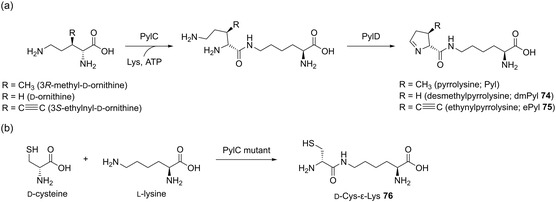 Figure 9
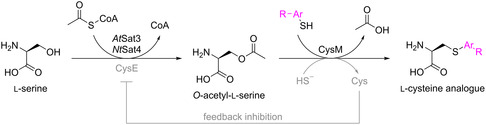 Figure 10
Peer Reviews
No public reviews on file for this paper yet. If you reviewed it on a platform where reviews are public (OpenReview, ICLR, NeurIPS, ICML), you can paste yours below so the community can read it here.
Videos
No videos yet. Explain this paper in a talk, walkthrough, or lecture? Add one.
Taxonomy
TopicsMicrobial Metabolic Engineering and Bioproduction · Enzyme Catalysis and Immobilization · RNA and protein synthesis mechanisms