Design and Characterization of Prodrugged Anti‐CTLA‐4 Antibodies
Sayumi Yamazoe, Mary Huber, Srikanth Kotapati, Rahima Akter, Aarti Jashnani, Suprit Deol, Christine Bee, John Engelhart, Yam B. Poudel, Stanley Krystek, John Haugner, Mohan Srinivasan, Arvind Rajpal, Yong Zhang, Pavel Strop, Chetana Rao

TL;DR
Researchers designed a modified anti-CTLA-4 antibody that reduces off-target effects and improves safety by attaching a PEG molecule, which is cleaved in the tumor environment.
Contribution
A novel prodrug strategy for anti-CTLA-4 antibodies using site-specific PEGylation to enhance safety and pharmacokinetics.
Findings
PEGylation at specific antibody sites reduces binding to CTLA-4 and Fc gamma receptors.
The prodrugged antibody shows high stability and extended half-life in a mouse model.
Cleavage in the tumor microenvironment restores antibody function.
Abstract
Therapeutic antibodies are widely used to treat diseases like cancer and inflammatory conditions by binding with high specificity to their molecular targets. Masking is a strategy to mitigate undesirable activity in nontarget tissues, improving safety and pharmacokinetic (PK) profiles by reducing target‐mediated drug disposition. In this article, masking of an anti‐CTLA‐4 antibody by conjugating a large PEG molecule to specific sites on the antibody is explored. While anti‐CTLA‐4 immunotherapy benefits solid tumor treatment, its adverse events limit its utility. Multiple conjugation sites within the complementarity‐determining regions and adjacent framework regions are evaluated to attenuate CTLA‐4 binding. The optimal site for maximizing masking efficiency is identified, allowing for efficient bioconjugation and functional restoration upon exposure to a cleaving enzyme in the tumor…
Genes, proteins, chemicals, diseases, species, mutations and cell lines named across the full text — each resolved to its canonical identifier and authoritative record.
Click any figure to enlarge with its caption.
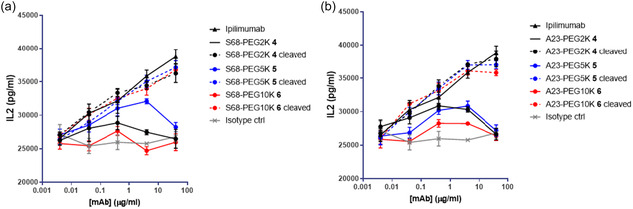 Figure 1
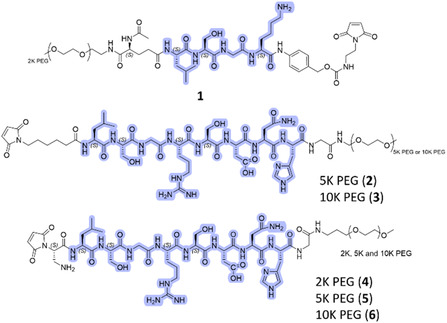 Figure 2
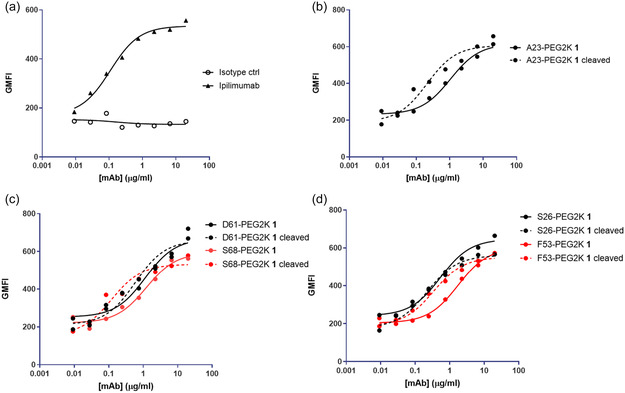 Figure 3
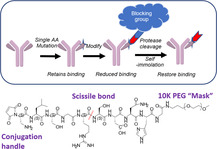 Figure 4
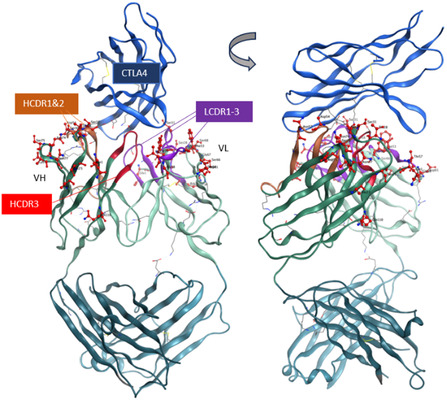 Figure 5
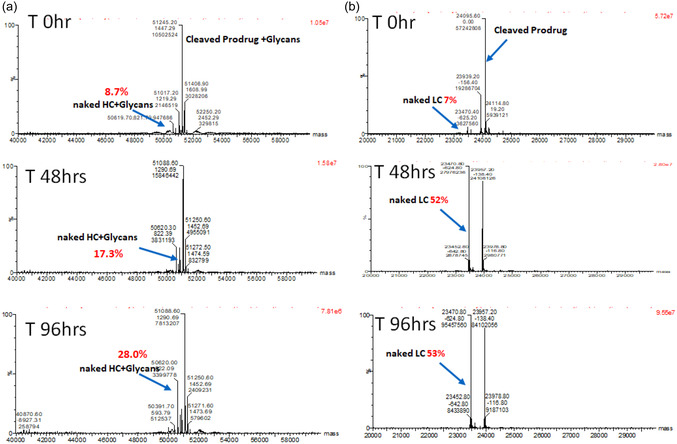 Figure 6
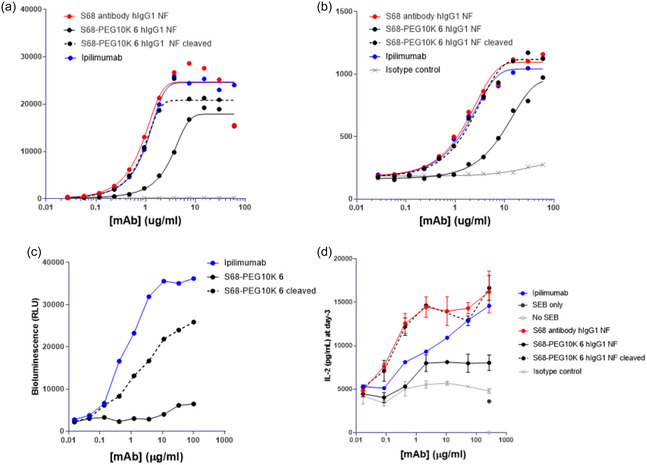 Figure 7
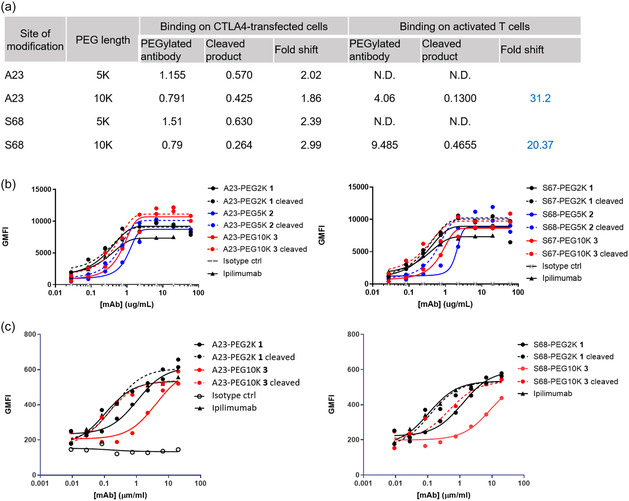 Figure 8
Peer Reviews
No public reviews on file for this paper yet. If you reviewed it on a platform where reviews are public (OpenReview, ICLR, NeurIPS, ICML), you can paste yours below so the community can read it here.
Videos
No videos yet. Explain this paper in a talk, walkthrough, or lecture? Add one.
Taxonomy
TopicsMonoclonal and Polyclonal Antibodies Research · Advanced Biosensing Techniques and Applications · Radiopharmaceutical Chemistry and Applications