Ultrasound-guided axillary vein versus internal jugular vein access for totally implantable venous access ports in breast cancer: a retrospective comparison of patient-reported outcomes
Jianfeng He, Rong Zhang, Tianhong Cai, Kai Chen, Tenghui Zhan

TL;DR
Using ultrasound to guide implantation of venous access ports in breast cancer patients through the axillary vein improves comfort and satisfaction without increasing complications.
Contribution
The study demonstrates that axillary vein access for venous ports in breast cancer patients improves patient-reported outcomes compared to the standard internal jugular approach.
Findings
Axillary vein access improved early postoperative comfort with a higher rate of no discomfort (72.5% vs. 59.4%).
Axillary vein access resulted in better cosmetic outcomes (93.1% vs. 67.9%) and higher patient satisfaction at 6 months.
Axillary vein access was an independent predictor of comfort, cosmetic outcomes, and satisfaction in multivariable analysis.
Abstract
Patient-centered venous access is critical in breast cancer supportive care. While the tunnel-less axillary vein (AxV) approach for totally implantable venous access port (TIVAP) implantation may improve patient experience, comparative evidence on patient-reported outcomes (PROs) against the standard internal jugular vein (IJV) approach remains limited. This single-center retrospective cohort study compared ultrasound-guided IJV (n = 106) versus AxV (n = 102) TIVAP implantation in breast cancer patients (September 2020–February 2025). Primary outcomes included postoperative comfort (assessed at 1 day) and cosmetic outcome and satisfaction (assessed at 6 months). Complications were monitored for 6 months. Group comparisons utilized chi-square/Fisher’s exact tests. To control for potential confounders, multivariable logistic regression analyses were performed, adjusting for age, body…
Genes, proteins, chemicals, diseases, species, mutations and cell lines named across the full text — each resolved to its canonical identifier and authoritative record.
Click any figure to enlarge with its caption.
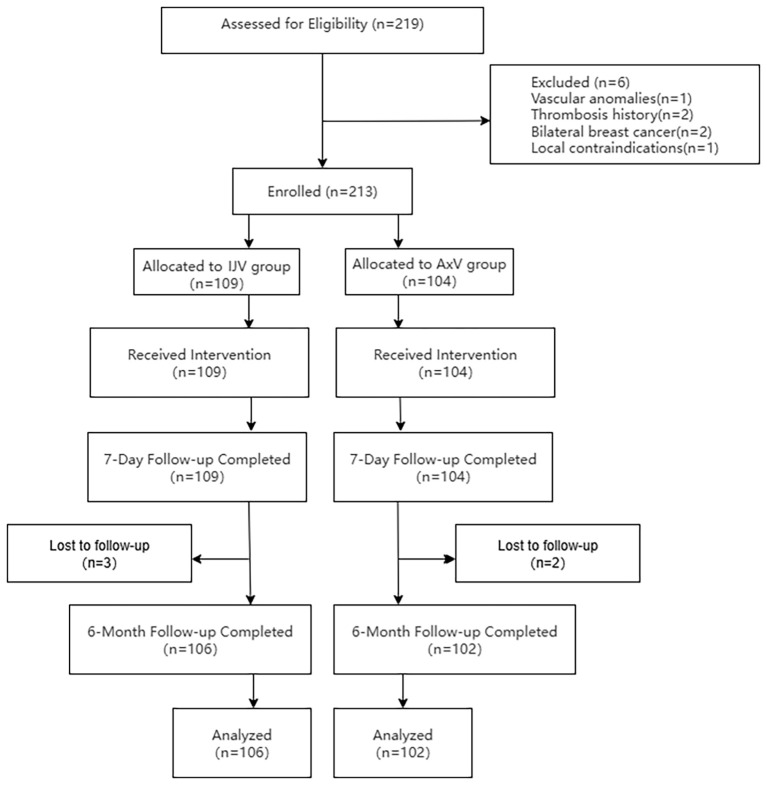 Figure 1
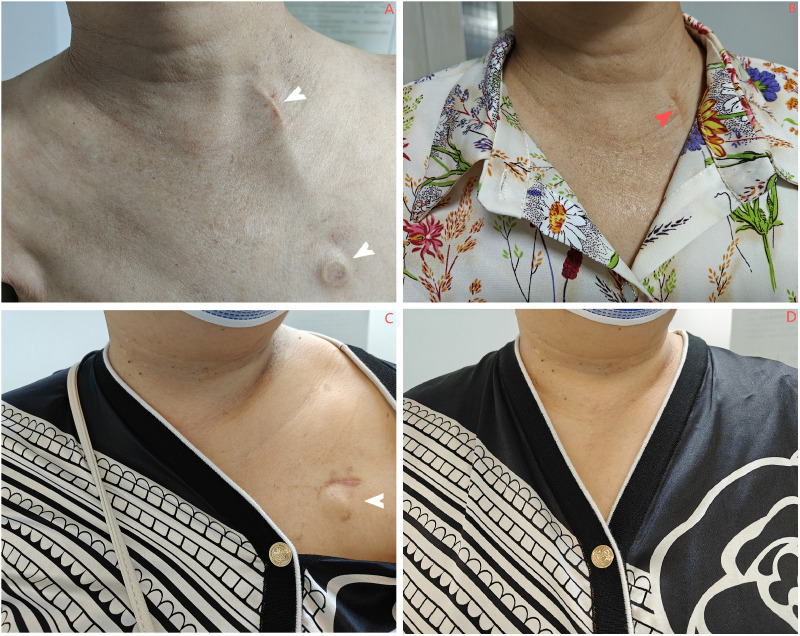 Figure 2
Peer Reviews
No public reviews on file for this paper yet. If you reviewed it on a platform where reviews are public (OpenReview, ICLR, NeurIPS, ICML), you can paste yours below so the community can read it here.
Videos
No videos yet. Explain this paper in a talk, walkthrough, or lecture? Add one.
Taxonomy
TopicsCentral Venous Catheters and Hemodialysis · Vascular Procedures and Complications · Cardiac pacing and defibrillation studies