Disorder of consciousness rather than complete Locked-In Syndrome for end stage Amyotrophic Lateral Sclerosis: a case series
Florent Gobert, Inès Merida, Emmanuel Maby, Perrine Seguin, Julien Jung, Dominique Morlet, Nathalie André-Obadia, Frédéric Dailler, Christian Berthomier, Anatole Otman, Didier Le Bars, Christian Scheiber, Alexander Hammers, Emilien Bernard, Nicolas Costes, Romain Bouet

TL;DR
This study challenges the assumption that end-stage ALS patients are fully conscious, suggesting some may have a degenerative disorder of consciousness instead.
Contribution
The paper introduces evidence that end-stage ALS may involve a disorder of consciousness rather than complete Locked-In Syndrome.
Findings
Multimodal assessments in two end-stage ALS patients showed no reliable signs of covert awareness.
Both patients exhibited brain atrophy and hypometabolism consistent with a disorder of consciousness.
Findings suggest end-stage ALS may represent a degenerative disorder of consciousness, distinct from typical Locked-In Syndrome.
Abstract
The end-stage of amyotrophic lateral sclerosis (ALS) is commonly regarded as a complete Locked-In Syndrome (cLIS). Shifting the perspective from cLIS (assumed consciousness) to Cognitive Motor Dissociation (potentially demonstrable consciousness), we aimed to assess the preservation of covert awareness (internally preserved but externally inaccessible) using a multimodal battery. We evaluate two end-stage ALS patients using neurophysiological testing, passive and active auditory oddball paradigms, an auditory Brain-Computer Interface (BCI), functional activation-task imaging, long-term EEG, brain morphology, and resting-state metabolism to characterize underlying brain function. Patient 1 initially follows simple commands but fails twice at BCI control. At follow-up, command following is no longer observed and his oddball cognitive responses disappear. Patient 2, at a single…
Genes, proteins, chemicals, diseases, species, mutations and cell lines named across the full text — each resolved to its canonical identifier and authoritative record.
Click any figure to enlarge with its caption.
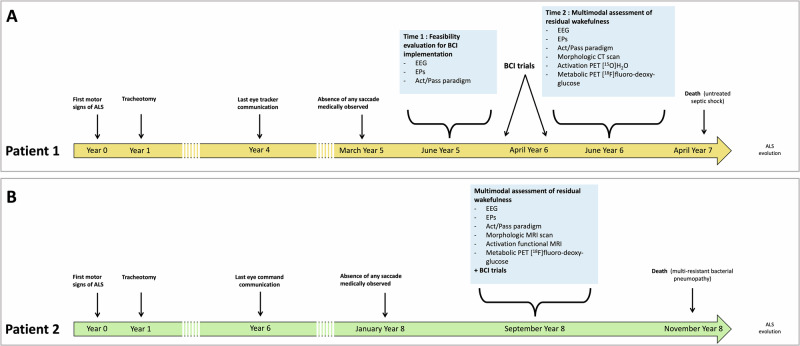 Figure 1
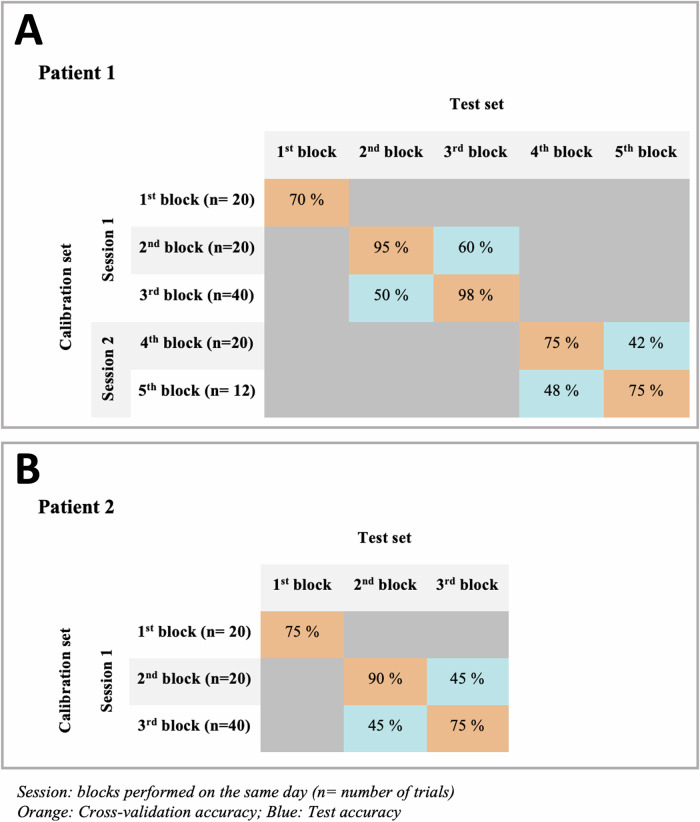 Figure 2
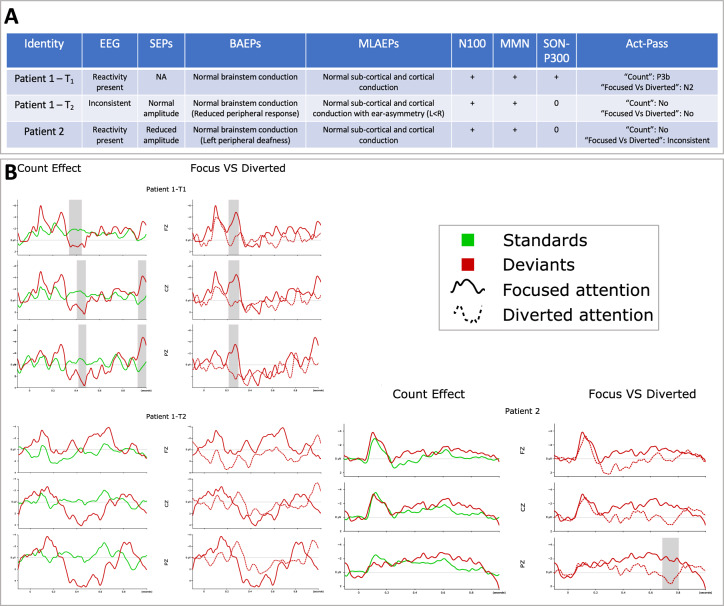 Figure 3
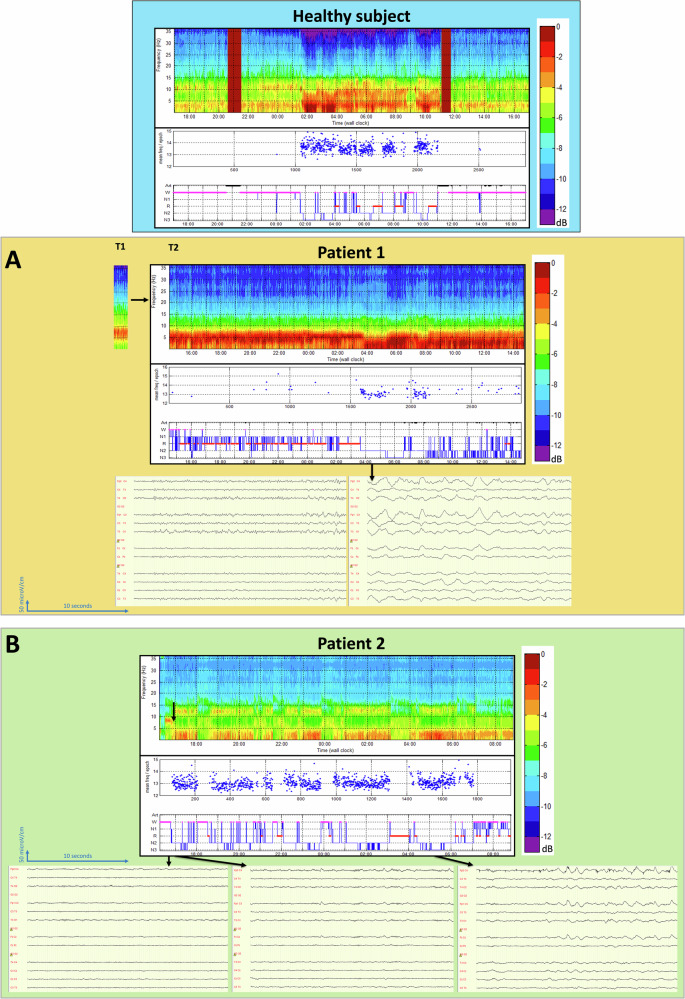 Figure 4
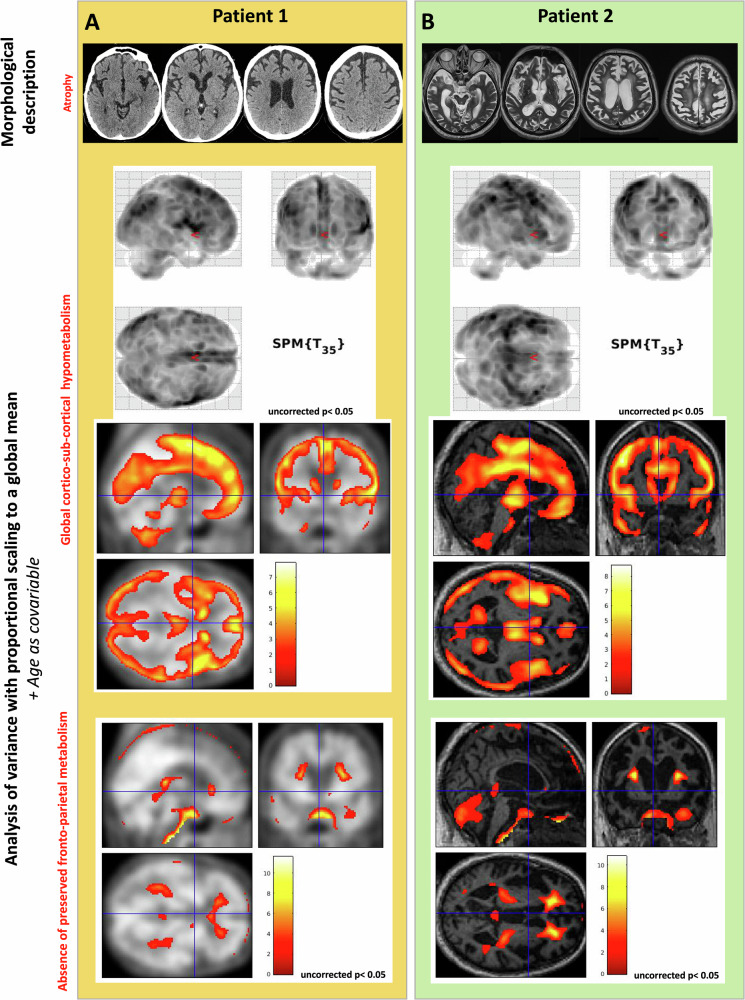 Figure 5
Peer Reviews
No public reviews on file for this paper yet. If you reviewed it on a platform where reviews are public (OpenReview, ICLR, NeurIPS, ICML), you can paste yours below so the community can read it here.
Videos
No videos yet. Explain this paper in a talk, walkthrough, or lecture? Add one.
Taxonomy
TopicsAmyotrophic Lateral Sclerosis Research · Neurological disorders and treatments · Traumatic Brain Injury Research