Intraoperative performance and influencing factors in computer-assisted total shoulder arthroplasty: a large-scale analysis
François Boux de Casson, Gabriella Ode, Ari R. Youderian, Bruno B. Gobbato, Alexandre Caubère, Amaury Jung, Sandrine Polakovic, Josie Elwell

TL;DR
This study analyzes how computer-assisted navigation affects shoulder replacement surgery performance, finding that surgeon experience and anatomical complexity influence efficiency.
Contribution
The study provides a large-scale analysis of computer-assisted navigation performance in shoulder arthroplasty, identifying factors like surgeon volume and anatomical variations that impact efficiency.
Findings
Reverse TSA procedures had longer navigation times compared to anatomic TSA.
Glenoid retroversion and inclination increased registration and navigation durations.
High-volume surgeons showed significantly faster navigation times compared to low-volume surgeons.
Abstract
The adoption of guidance technologies in total joint arthroplasty has expanded greatly in recent decades. This study aims to retrospectively evaluate the intra-operative performance of computer-assisted navigation (CAN) total shoulder arthroplasty (TSA) over years, analyzing temporal performance evolution and influencing factors. Over 40,000 cases utilizing a single CAN system (Exactech GPS) across an 8-year span were analyzed. We investigated the registration and navigation phases for anatomic (aTSA) and reverse (rTSA) procedures, focusing on factors influencing performance and temporal evolution. Data were stratified by surgeon volume, native anatomy, implant type, and procedural workflow. Key findings include: (1) Navigation times were longer for rTSA (mean 15:42 min) compared to aTSA (mean 10:01 min). (2) Glenoid retroversion > 20° and inferior inclination increased both…
Genes, proteins, chemicals, diseases, species, mutations and cell lines named across the full text — each resolved to its canonical identifier and authoritative record.
Click any figure to enlarge with its caption.
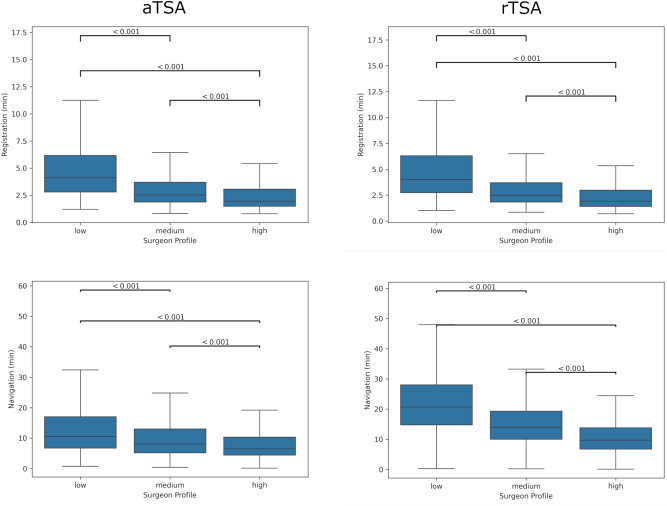 Figure 1
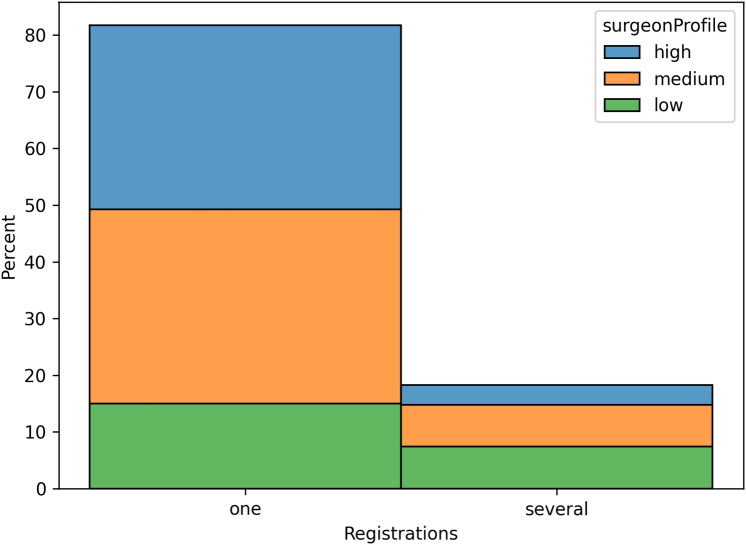 Figure 2
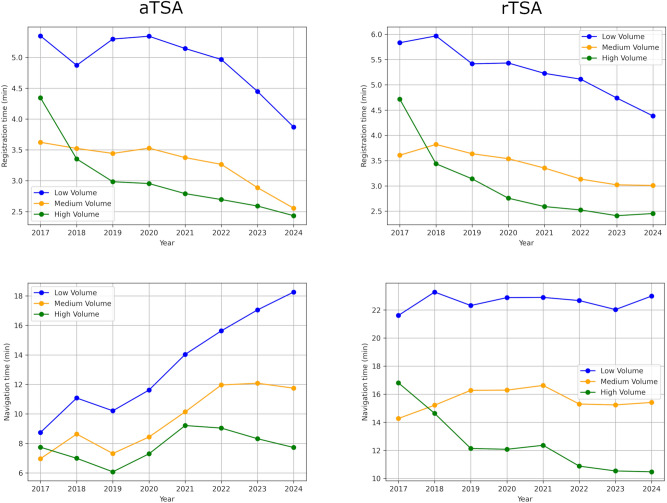 Figure 3
Peer Reviews
No public reviews on file for this paper yet. If you reviewed it on a platform where reviews are public (OpenReview, ICLR, NeurIPS, ICML), you can paste yours below so the community can read it here.
Videos
No videos yet. Explain this paper in a talk, walkthrough, or lecture? Add one.
Taxonomy
TopicsShoulder Injury and Treatment · Total Knee Arthroplasty Outcomes · Surgical Simulation and Training