Reconstructing impaired language using generative AI for people with aphasia
Achini Adikari, Damminda Alahakoon, Nuwan Pallewela, John E. Pierce, Nelson J. Hernandez, Miranda L. Rose

TL;DR
This paper explores using generative AI to help people with aphasia by reconstructing their impaired speech during conversations.
Contribution
A novel language-assistive solution using LLMs with in-context few-shot prompting to correct aphasic speech errors in real-time dialogue.
Findings
An AI solution using GPT-4o achieved 80% accuracy in reconstructing aphasic speech from a dataset of ~1980 utterances.
The system detects and corrects neologisms, paraphasic errors, and word-finding gaps in real-time conversations.
The Langchain architecture helped maintain conversation context and improve natural flow.
Abstract
In an era of Generative Artificial Intelligence (AI), it may be possible to capitalise on AI’s generative capabilities to assist people in compensating for their impaired language. Large Language Models (LLMs) have emerged as a recent breakthrough, revealing the potential to generate fluent, contextually relevant, and coherent texts. The current study leverages this inherent capability of LLMs in text generation and completion to compensate for impaired language in adults with acquired communication disabilities. To date, research studies on LLM for aphasia (a language-based communication disability after brain injury) have focused on specific and well-defined tasks and contexts (e.g., story retelling), and therefore may be less accurate and reliable in real-life conversation scenarios. This research proposes a language-assistive solution embedded in dialogue systems for individuals…
Genes, proteins, chemicals, diseases, species, mutations and cell lines named across the full text — each resolved to its canonical identifier and authoritative record.
Click any figure to enlarge with its caption.
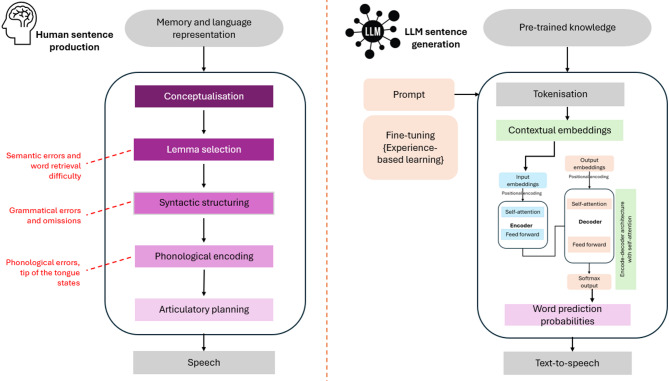 Figure 1
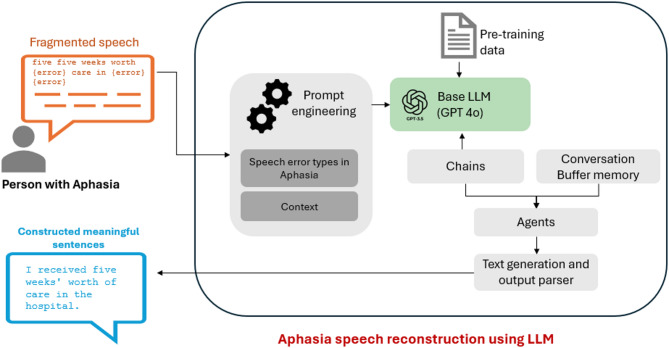 Figure 2
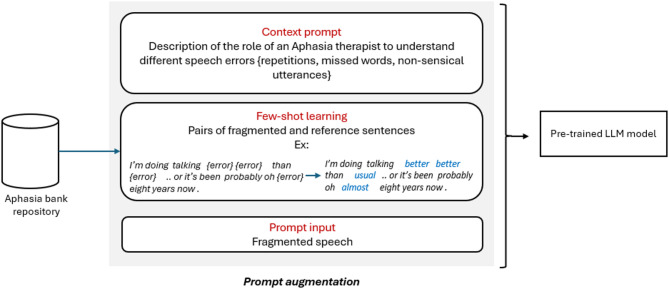 Figure 3
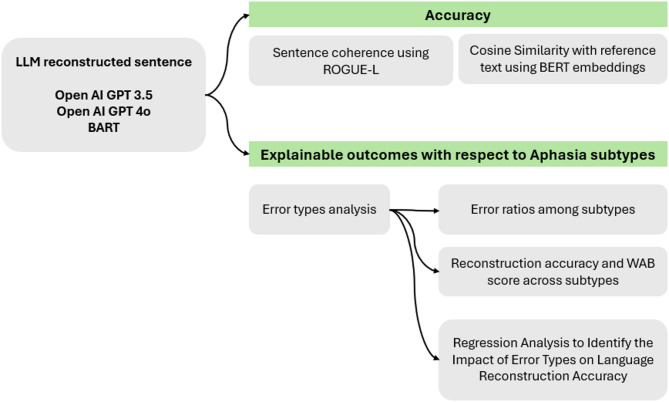 Figure 4
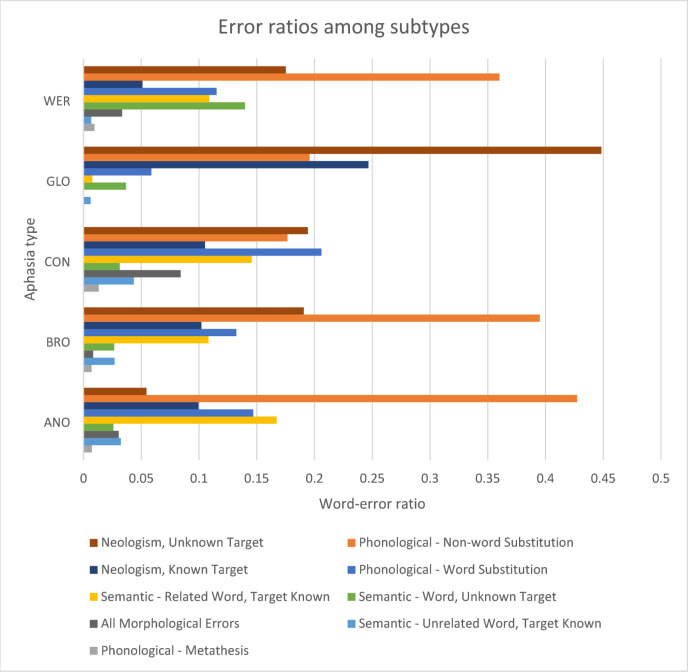 Figure 5
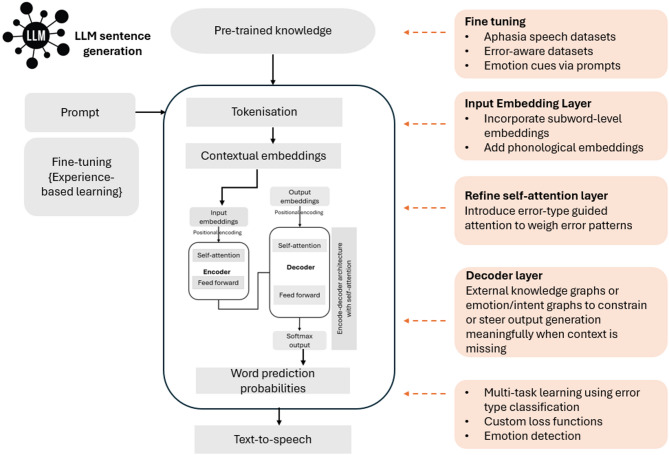 Figure 6
Peer Reviews
No public reviews on file for this paper yet. If you reviewed it on a platform where reviews are public (OpenReview, ICLR, NeurIPS, ICML), you can paste yours below so the community can read it here.
Videos
No videos yet. Explain this paper in a talk, walkthrough, or lecture? Add one.
Taxonomy
TopicsNeurobiology of Language and Bilingualism · Artificial Intelligence in Healthcare and Education · Text Readability and Simplification