A multi-distance laser-induced breakdown spectroscopy data classification method based on deep convolutional neural network and spectral sample weight optimization
Xuchen Zhang, Luning Li, Zhicheng Cui, Weiming Xu, Xuesen Xu, Rong Shu, Xiangfeng Liu, Jianyu Wang

TL;DR
This paper introduces a new method to improve the accuracy of laser-induced breakdown spectroscopy data analysis when detection distances vary, using a deep neural network with optimized sample weights.
Contribution
A novel spectral sample weight optimization strategy is introduced to enhance CNN training for multi-distance LIBS data classification.
Findings
The new weighting strategy improved testing accuracy by 8.45 percentage points compared to the original model.
Precision, recall, and F1-score were increased by 6.4, 7.0, and 8.2 percentage points on average.
Training time per epoch remained nearly identical to the original equal-weight scheme.
Abstract
Laser-induced breakdown spectroscopy (LIBS) is a stand-off chemical analysis technique. In scenarios where the LIBS detection distance varies (e.g. Mars exploration), the distance effect poses a significant challenge to data analysis. In our prior work, a deep convolutional neural network (CNN) model was developed to directly process LIBS multi-distance spectra, achieving high classification accuracy even without performing conventional “distance correction”. The present study proposes a spectral sample weight optimization strategy to further improve the CNN model training process. Unlike the default equal-weight scheme, the new strategy tailors a specific weight value for every training spectral sample. On an eight-distance LIBS dataset acquired by the MarSCoDe duplicate instrument, the CNN model with the new weighting strategy can achieve a maximum testing accuracy of 92.06%,…
Genes, proteins, chemicals, diseases, species, mutations and cell lines named across the full text — each resolved to its canonical identifier and authoritative record.
Click any figure to enlarge with its caption.
 Figure 1
 Figure 2
 Figure 3
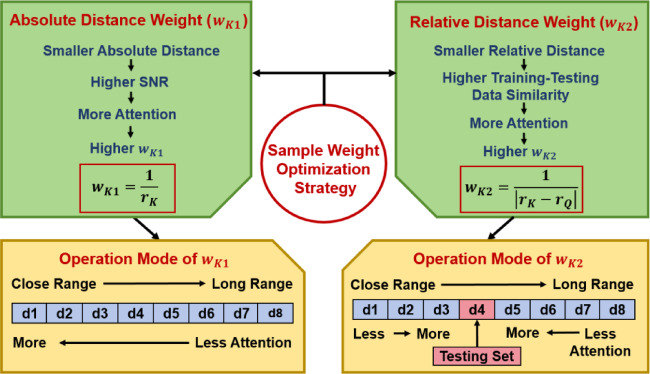 Figure 4
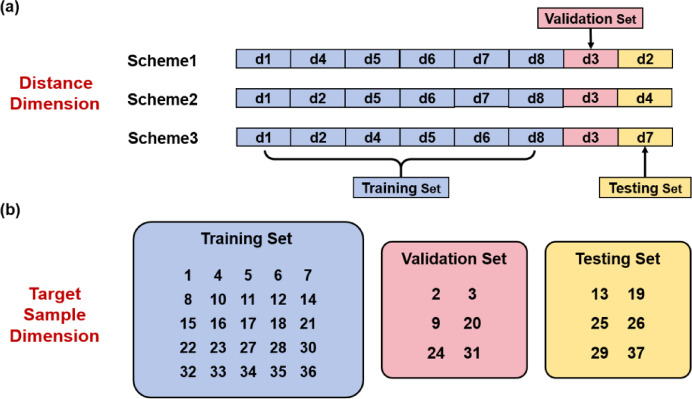 Figure 5
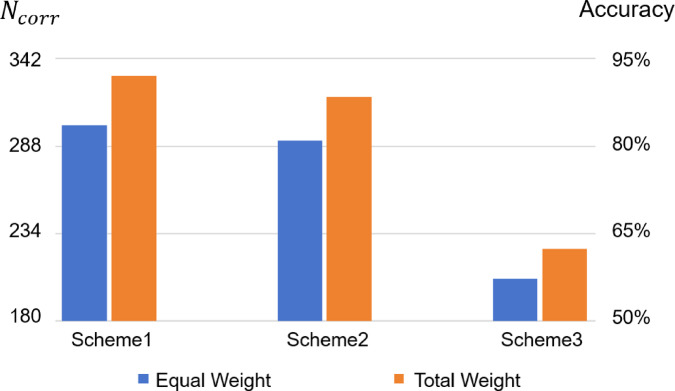 Figure 6
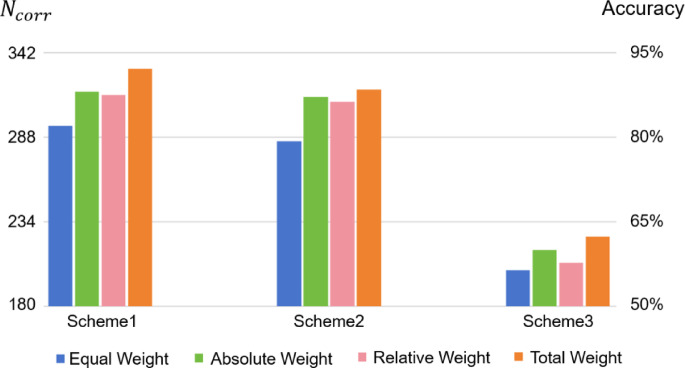 Figure 7
Peer Reviews
No public reviews on file for this paper yet. If you reviewed it on a platform where reviews are public (OpenReview, ICLR, NeurIPS, ICML), you can paste yours below so the community can read it here.
Videos
No videos yet. Explain this paper in a talk, walkthrough, or lecture? Add one.
Taxonomy
TopicsLaser-induced spectroscopy and plasma · Spectroscopy Techniques in Biomedical and Chemical Research · Spectroscopy and Laser Applications