Exploring potential hidden aspects of quantum field theory through numerical solution of the Klein–Gordon equation using the Yee algorithm
Babak Honarbakhsh

TL;DR
This paper introduces a new computational method to solve the Klein–Gordon equation using a Maxwell-like approach, addressing issues like negative probability and revealing connections to Dirac spinors.
Contribution
A novel reformulation of the Klein–Gordon equation using Maxwell–Heaviside-like equations and the Yee algorithm, enabling efficient numerical solutions and addressing negative probability.
Findings
The reformulated Klein–Gordon equation introduces Conserved Maxwellian Fields (CMFs) with non-negative probability density.
CMFs show structural similarities to Dirac spinors, especially in three spatial dimensions with monopole-like divergence.
The method provides a computational framework for handling nonlinear and inhomogeneous systems efficiently.
Abstract
This study presents a novel reformulation of the Klein–Gordon (KG) equation by embedding it within a system of first-order Maxwell–Heaviside (MH)-like equations, enabling its numerical solution using the finite-difference time-domain method based on the Yee algorithm. This approach extends the scalar KG field into a pair of fictitious Maxwellian vector fields. This reformulation not only provides an efficient computational framework, capable of handling nonlinearity and inhomogeneity, but also introduces a first-order structure with symmetric field dynamics. Plane-wave quantization of these fields reveals a conserved, non-negative quantity, forming what is termed Conserved Maxwellian Fields (CMFs), that addresses the longstanding issue of negative probability density in the conventional KG theory. Furthermore, the resulting CMFs exhibit deep structural analogies with Dirac spinors,…
Genes, proteins, chemicals, diseases, species, mutations and cell lines named across the full text — each resolved to its canonical identifier and authoritative record.
Click any figure to enlarge with its caption.
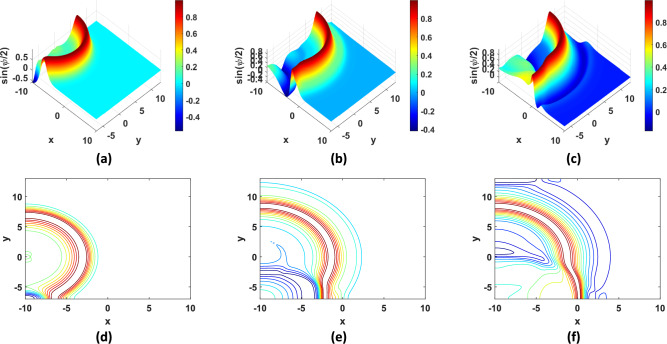 Figure 10
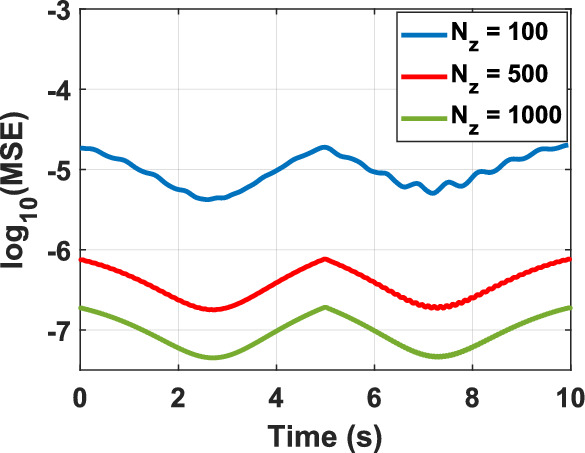 Figure 1
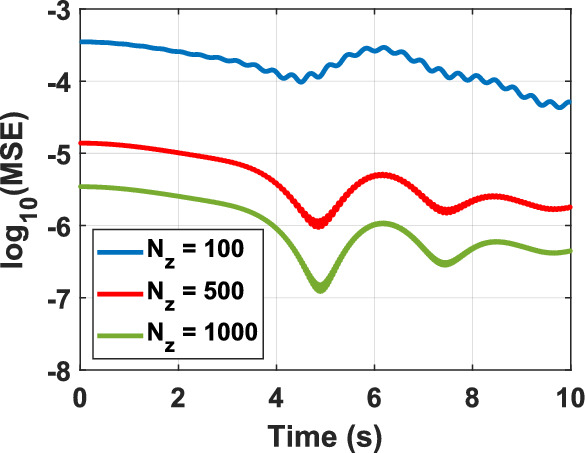 Figure 2
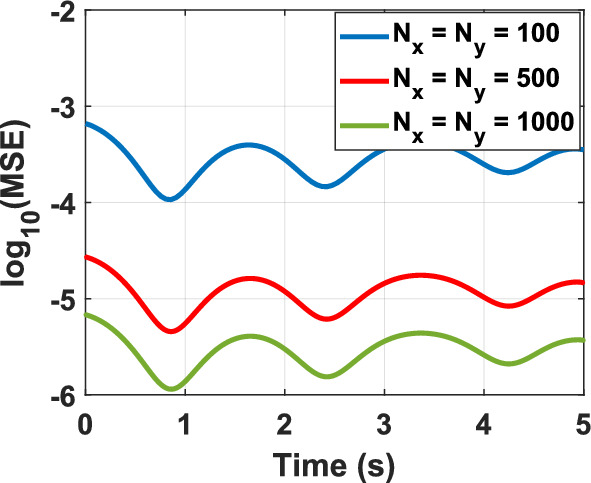 Figure 3
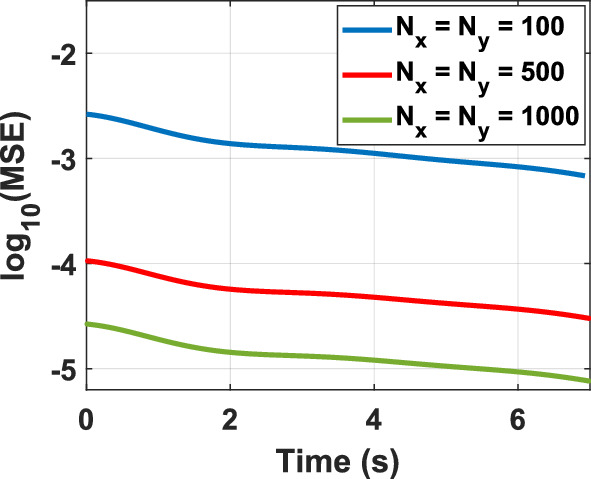 Figure 4
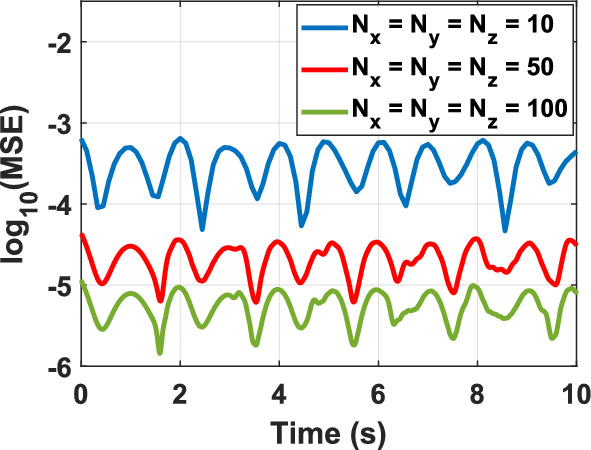 Figure 5
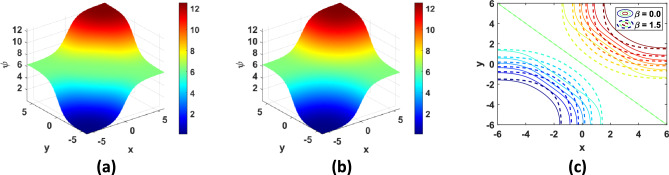 Figure 6
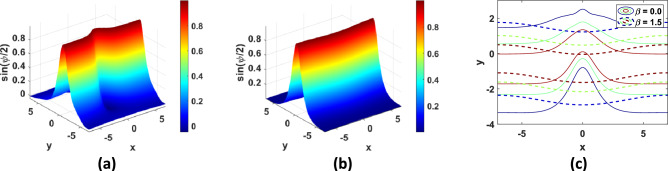 Figure 7
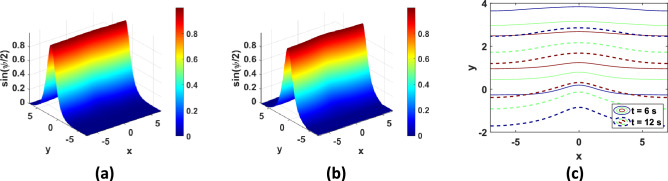 Figure 8
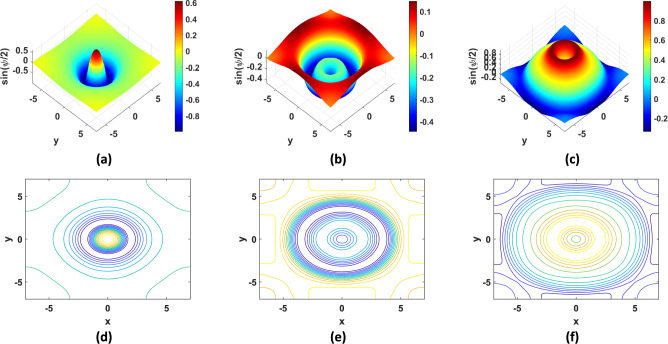 Figure 9
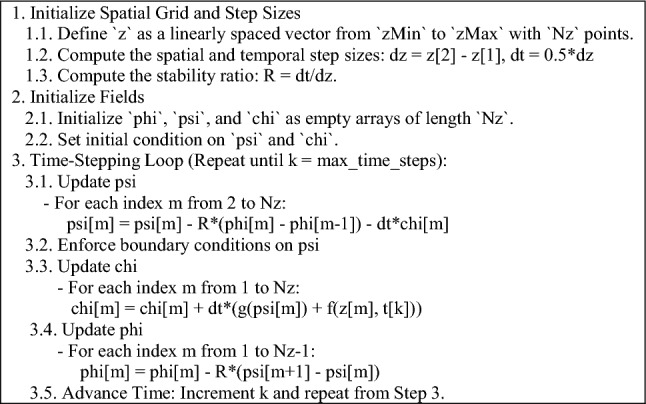 Figure 11
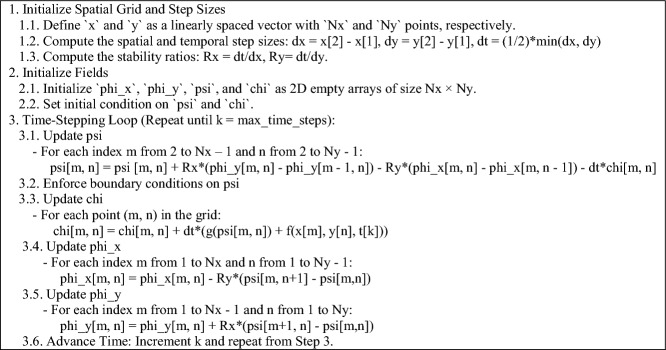 Figure 12
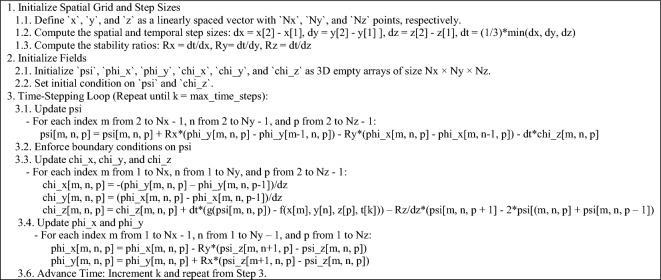 Figure 13
Peer Reviews
No public reviews on file for this paper yet. If you reviewed it on a platform where reviews are public (OpenReview, ICLR, NeurIPS, ICML), you can paste yours below so the community can read it here.
Videos
No videos yet. Explain this paper in a talk, walkthrough, or lecture? Add one.
Taxonomy
TopicsNonlinear Photonic Systems · Quantum Mechanics and Non-Hermitian Physics · Nonlinear Waves and Solitons