RECAP-seq: restriction enzyme-based CpG-methylated fragment amplification for early cancer detection
Dongju Shin, Taehoon Kim, Jaywon Lee, Hwang-Phill Kim, Tae-You Kim, Duhee Bang

TL;DR
RECAP-seq is a new method that detects early cancer by focusing on DNA methylation patterns in cell-free DNA, achieving high accuracy even at low cancer DNA levels.
Contribution
RECAP-seq introduces a novel approach to enrich hypermethylated DNA fragments using restriction enzymes, enabling sensitive early cancer detection.
Findings
RECAP-seq successfully detected cancer-specific signals at as low as 0.001% tumor DNA fraction.
The method identified 7,091 hypermethylated markers, including ALX4, which correlates with colorectal cancer progression.
Clinical validation showed 78.7% sensitivity and 95% specificity with an AUC of 0.932 in colorectal cancer detection.
Abstract
Aberrant DNA methylation drives cancer development, yet current screening methods require substantial resources for targeted enrichment across multiple CpG-rich regions. Early cancer detection in cell-free DNA (cfDNA) presents additional challenges due to low circulating tumor DNA fractions (0.01–10%) that dilute cancer-specific signals. To address these limitations, we developed Restriction Enzyme-based CpG-methylated fragment AmPlification sequencing (RECAP-seq) to selectively enrich hypermethylated fragments from existing Enzymatic Methyl-seq (EM-seq) libraries. RECAP-seq combines EM-seq library preparation with BstUI restriction enzyme digestion to target CGCG motifs, achieving preferential enrichment of CpG islands. With spike-in experiments using cell line mixtures, RECAP-seq successfully distinguished samples as low as 0.001%. The method identified 7,091 hypermethylated markers,…
Genes, proteins, chemicals, diseases, species, mutations and cell lines named across the full text — each resolved to its canonical identifier and authoritative record.
Click any figure to enlarge with its caption.
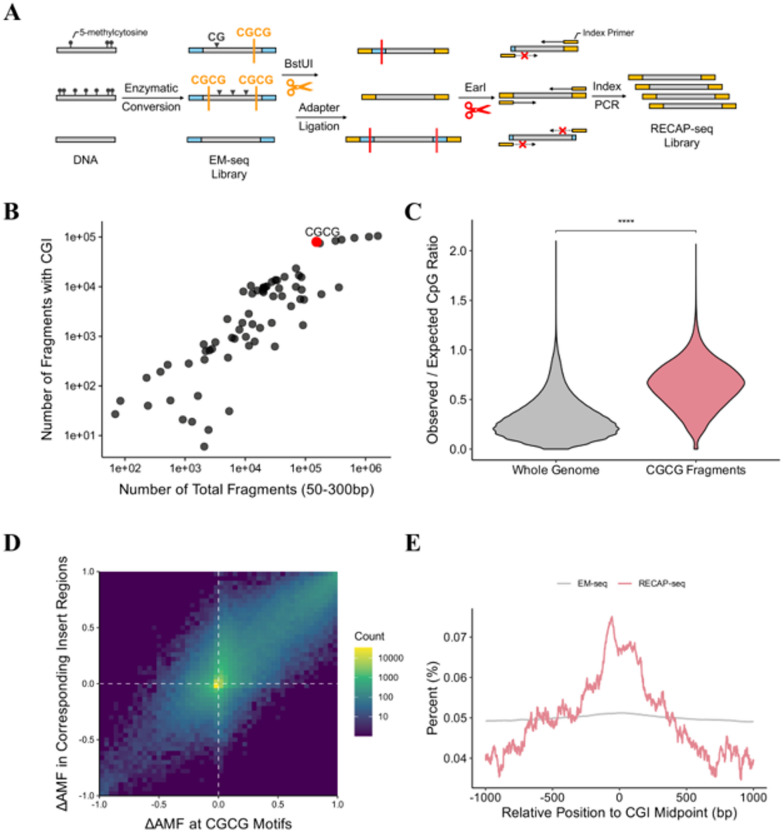 Figure 1
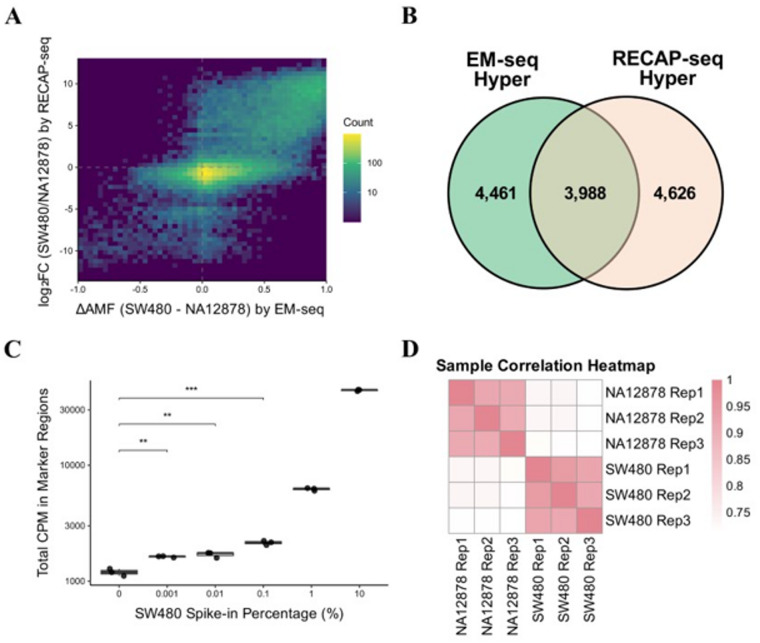 Figure 2
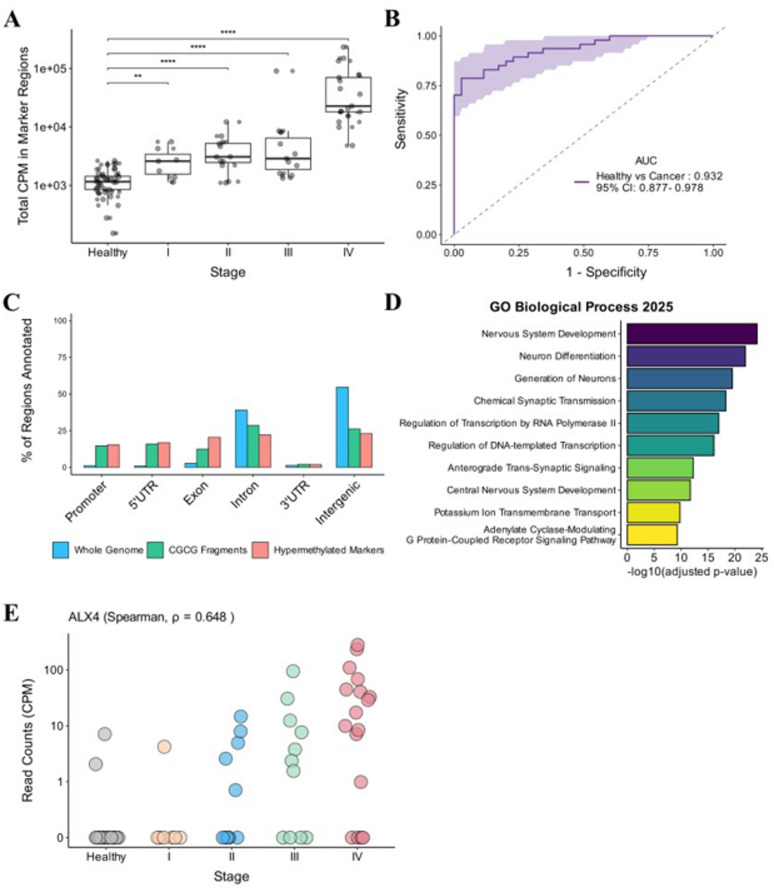 Figure 3
Peer Reviews
No public reviews on file for this paper yet. If you reviewed it on a platform where reviews are public (OpenReview, ICLR, NeurIPS, ICML), you can paste yours below so the community can read it here.
Videos
No videos yet. Explain this paper in a talk, walkthrough, or lecture? Add one.
Taxonomy
TopicsCancer Genomics and Diagnostics · Epigenetics and DNA Methylation · Cancer Cells and Metastasis