Essential developmental processes in Physcomitrium patens require distinct levels of total activity provided by functionally redundant PpROP GTPases
Aude Le Bail, Benedikt Kost, Janina Nüssel, Tamara Isabeau Lolis, David Koch, Hildegard Voll, Sylwia Schulmeister, Alexander Kaier, Karin Ljung, Maria Ntefidou

TL;DR
This study explores how four similar PpROP GTPase proteins in moss work together to control cell growth and development, revealing new insights into their roles and evolution.
Contribution
The study identifies novel functions of PpROP GTPases in moss development and shows that distinct developmental processes require specific total activity levels rather than individual PpROPs.
Findings
PpROP GTPases are involved in cell proliferation, caulonema differentiation, and gametophore formation in Physcomitrium patens.
Different developmental processes require distinct total levels of PpROP activity, not specific individual PpROPs.
PpROP functions depend variably on GDP/GTP cycling and use distinct downstream signaling pathways.
Abstract
RHO (RAS homologous) GTPases regulate important cellular and developmental processes in most eukaryotes. Plant‐specific ROP (RHO of plants) GTPase families expanded and functionally diversified during the evolution of vascular plants, but contain few members in nonvascular extant relatives of early land plants. Here, a systematic investigation of essential PpROP functions in the development of the nonvascular moss Physcomitrium patens is presented.This investigation was based on: knocking out individually or all possible combinations of each of the four PpROP genes, which encode nearly identical proteins; complementing knockout lines with wild‐type (WT) or mutated PpROPs, or with heterologous homologs; and inducing PpROP overexpression.PpROPs were found to have previously unknown functions in cell proliferation, caulonema differentiation, and gametophore formation. PpROP functions were…
Genes, proteins, chemicals, diseases, species, mutations and cell lines named across the full text — each resolved to its canonical identifier and authoritative record.
Click any figure to enlarge with its caption.
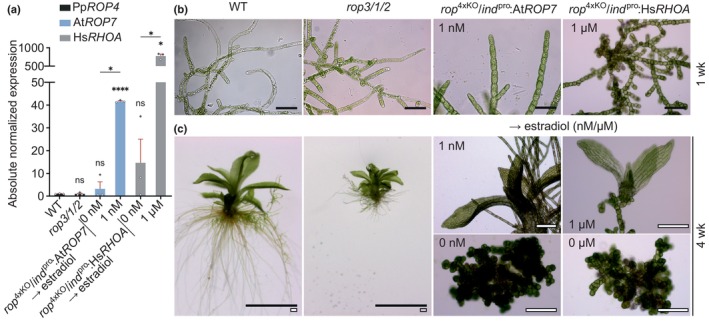 Figure 1
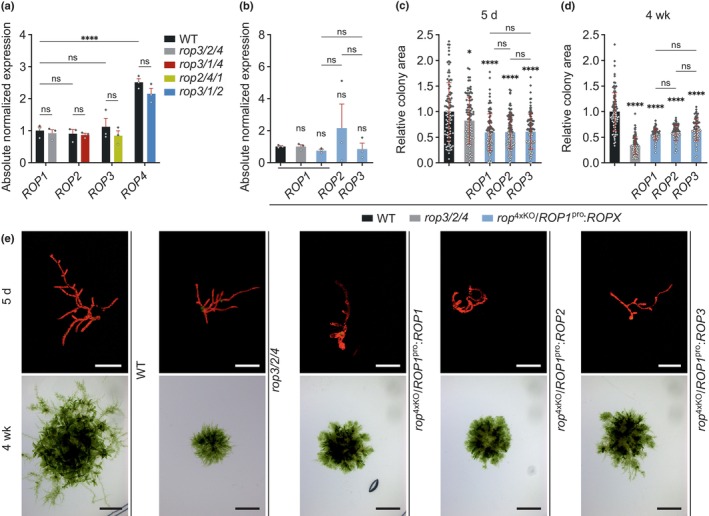 Figure 2
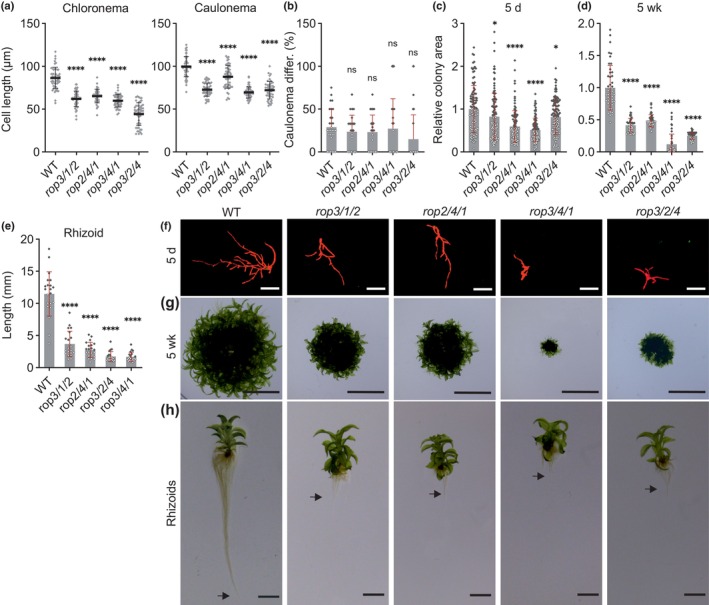 Figure 3
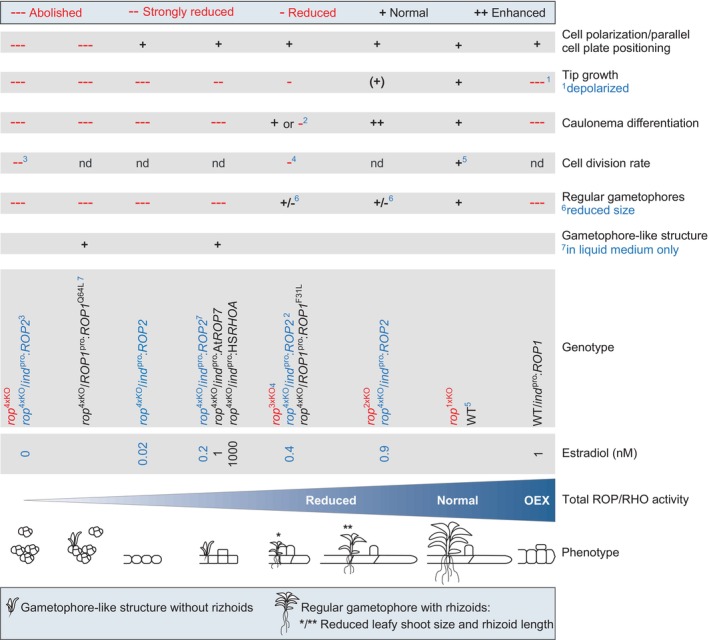 Figure 4
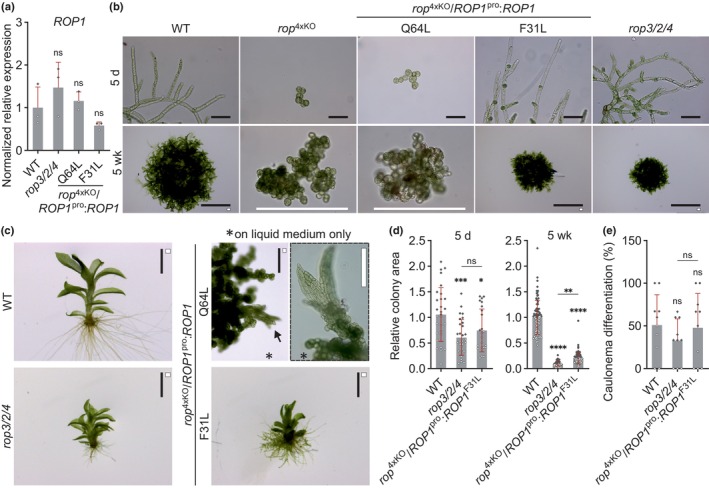 Figure 5
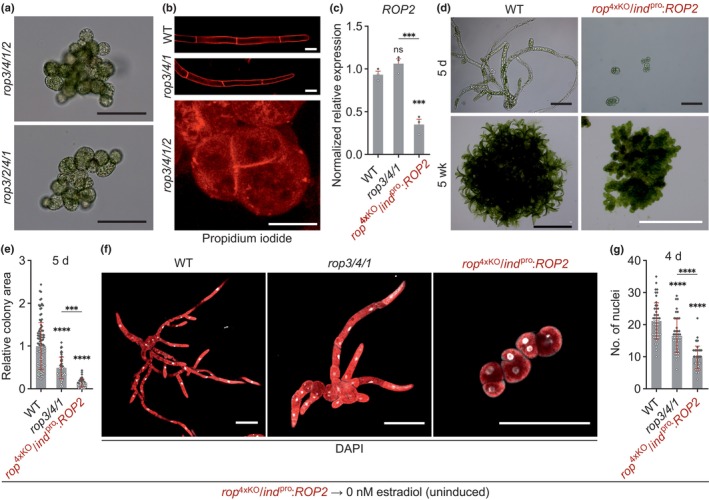 Figure 6
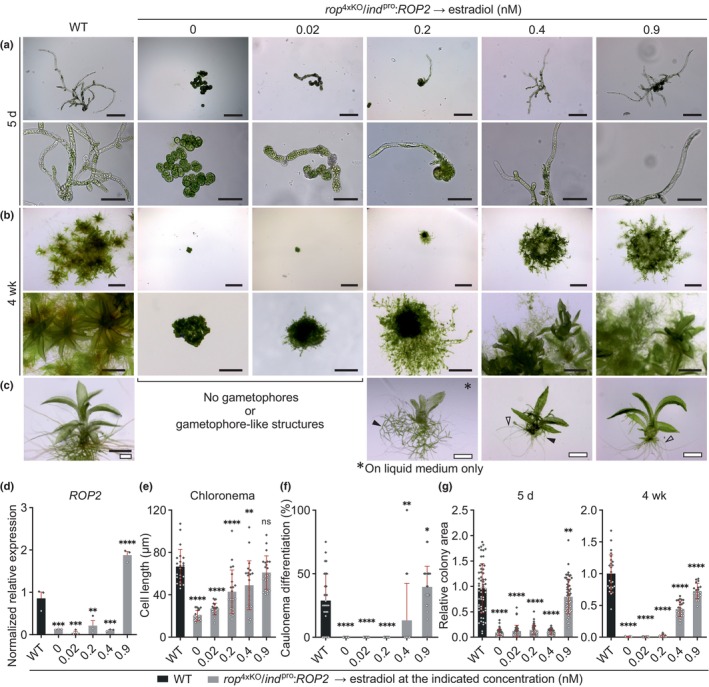 Figure 7
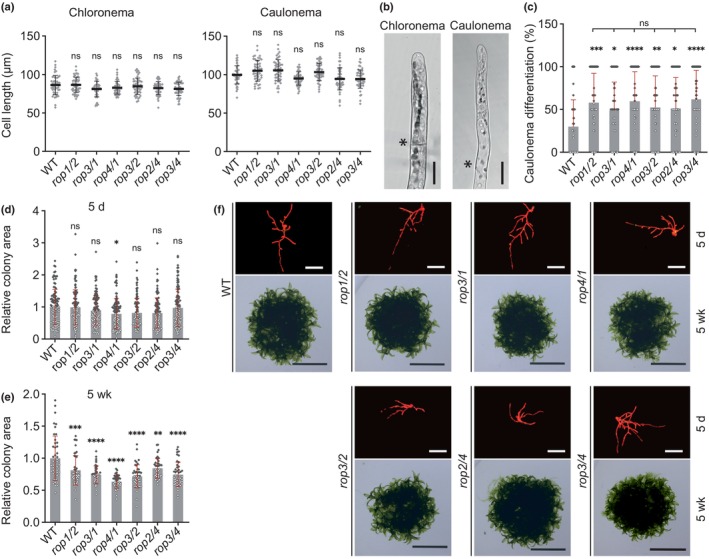 Figure 8
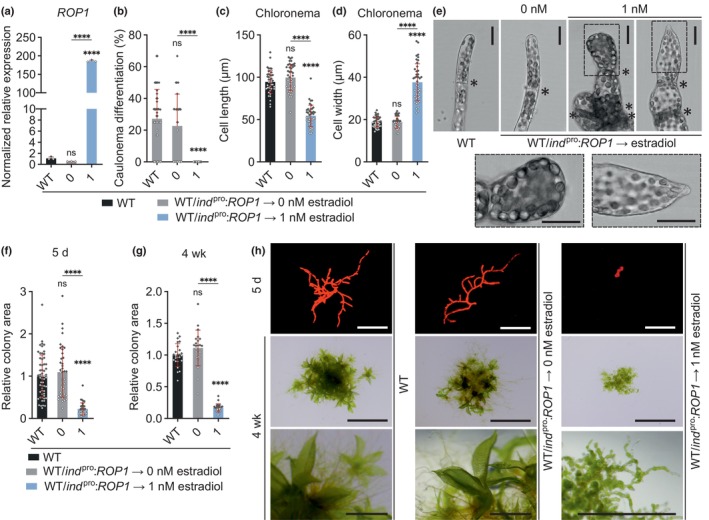 Figure 9
Peer Reviews
No public reviews on file for this paper yet. If you reviewed it on a platform where reviews are public (OpenReview, ICLR, NeurIPS, ICML), you can paste yours below so the community can read it here.
Videos
No videos yet. Explain this paper in a talk, walkthrough, or lecture? Add one.
Taxonomy
TopicsPlant Molecular Biology Research · Plant Reproductive Biology · Plant nutrient uptake and metabolism