Post-COVID-19 Consequences in Relatives of Severely Ill Patients: Results of the Prospective Multicenter NeNeSCo Study
Simona Klinkhammer, Caroline van Heugten, Susanne van Santen, Annelien A Duits, Janneke Horn, Arjen JC Slooter, Esmée Verwijk, Johanna MA Visser-Meily

TL;DR
This study examines the long-term psychosocial effects on relatives of severely ill COVID-19 patients, finding high levels of stress and anxiety, especially when patients were in the ICU.
Contribution
The study provides new insights into psychosocial outcomes of relatives of COVID-19 patients, highlighting the impact of ICU admission and patient cognitive complaints.
Findings
Relatives of ICU patients had higher levels of anxiety and caregiver burden compared to those of general ward patients.
Anxiety decreased over time, but caregiver burden increased in the overall group.
Relatives' passive coping was the strongest predictor of unfavorable psychosocial outcomes.
Abstract
Severe illness and intensive care treatment pose significant challenges not only for the patients but also for their relatives, known as post-intensive care syndrome in family members (PICS-F). Not much is known about psychosocial outcomes in relatives of former severely ill COVID-19 patients who were hospitalized under pandemic-related challenges. This study aimed to investigate long-term psychosocial outcomes of relatives of formerly hospitalized COVID-19 patients in relation to patient and relative characteristics. Longitudinal data on psychosocial outcomes of relatives of COVID-19 patients, admitted to the general ward or intensive care unit (ICU) in 2020 and enrolled in the multicenter prospective cohort NeNeSCo study, were collected via questionnaires, 9 and 15 months post-hospital discharge of the patient. Outcomes of interest were anxiety, depression, post-traumatic stress…
Genes, proteins, chemicals, diseases, species, mutations and cell lines named across the full text — each resolved to its canonical identifier and authoritative record.
Click any figure to enlarge with its caption.
 Figure 1
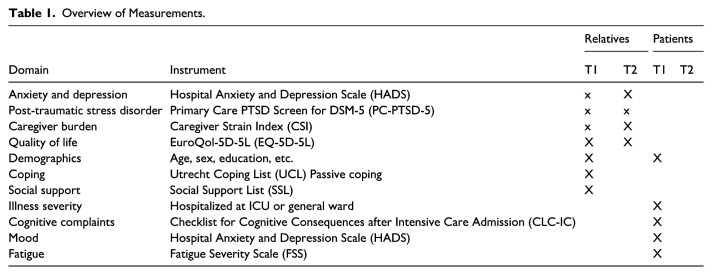 Figure 2
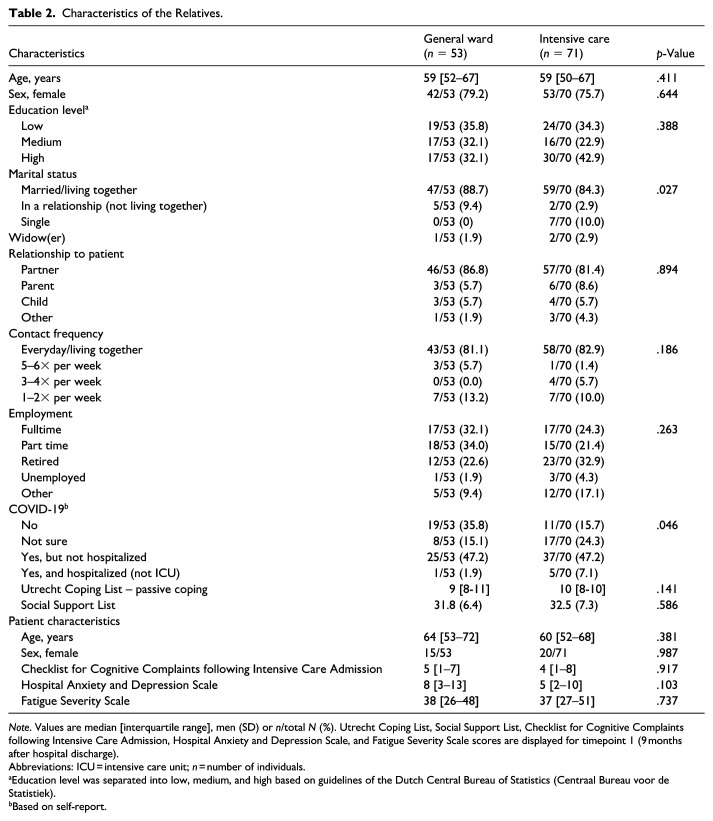 Figure 3
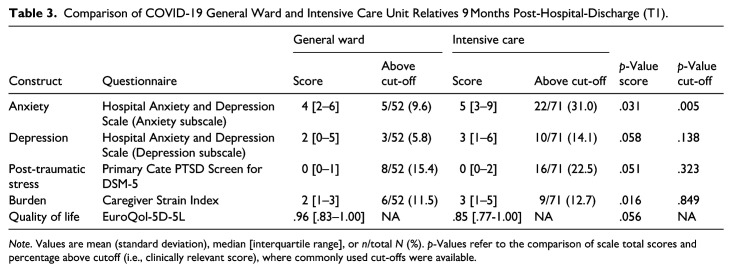 Figure 4
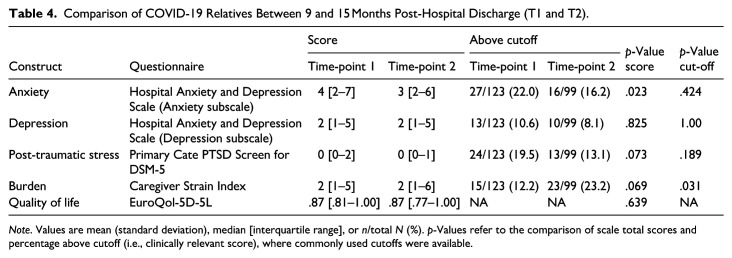 Figure 5
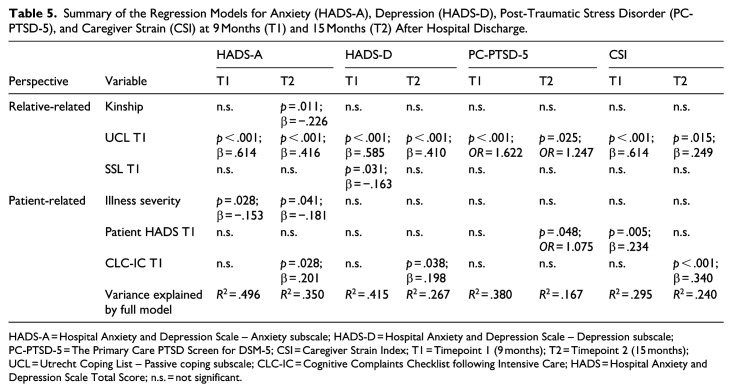 Figure 6
Peer Reviews
No public reviews on file for this paper yet. If you reviewed it on a platform where reviews are public (OpenReview, ICLR, NeurIPS, ICML), you can paste yours below so the community can read it here.
Videos
No videos yet. Explain this paper in a talk, walkthrough, or lecture? Add one.
Taxonomy
TopicsFamily and Patient Care in Intensive Care Units · Intensive Care Unit Cognitive Disorders · Palliative Care and End-of-Life Issues