Surface emergence and persistence of MHC class I free heavy chains
Fernando M. Ruggiero, François-Xavier Mauvais, Ursula Wellbrock, Peter M. van Endert, Sebastian Springer

TL;DR
This study reveals how MHC class I free heavy chains appear on cell surfaces and how long they stay there, suggesting they might have important biological roles.
Contribution
The study identifies the biogenesis and trafficking pathways of MHC class I free heavy chains and reveals their surface persistence.
Findings
Class I free heavy chains arise from β2m dissociation at the plasma membrane or from intracellular compartments.
Free heavy chains accumulate on the cell surface within minutes and persist for several hours.
Endocytic removal and recycling rates of free heavy chains vary significantly between different allotypes.
Abstract
Major histocompatibility complex (MHC) class I heavy chains associate with the light chain beta-2 microglobulin (β2m) to present antigenic peptides to cytotoxic T cells. Upon dissociation of both peptide and β2m, class I free heavy chains (fH) are generated. While the presence of the fH at the cell surface has been reported, their biogenesis, trafficking, and lifetime are insufficiently defined, and their biological functions are largely unknown. Here, we show that class I fH arise via β2m dissociation from peptide-free, β2m-bound class I molecules that are located at the plasma membrane or recycled from intracellular compartments. Using conformation-specific antibodies, peptide rescue assays, brefeldin A blockade, and in silico modeling, we elucidate the short- and long-term kinetics of generation and disappearance of plasma membrane-associated fH. We demonstrate that fH accumulate at…
Genes, proteins, chemicals, diseases, species, mutations and cell lines named across the full text — each resolved to its canonical identifier and authoritative record.
Click any figure to enlarge with its caption.
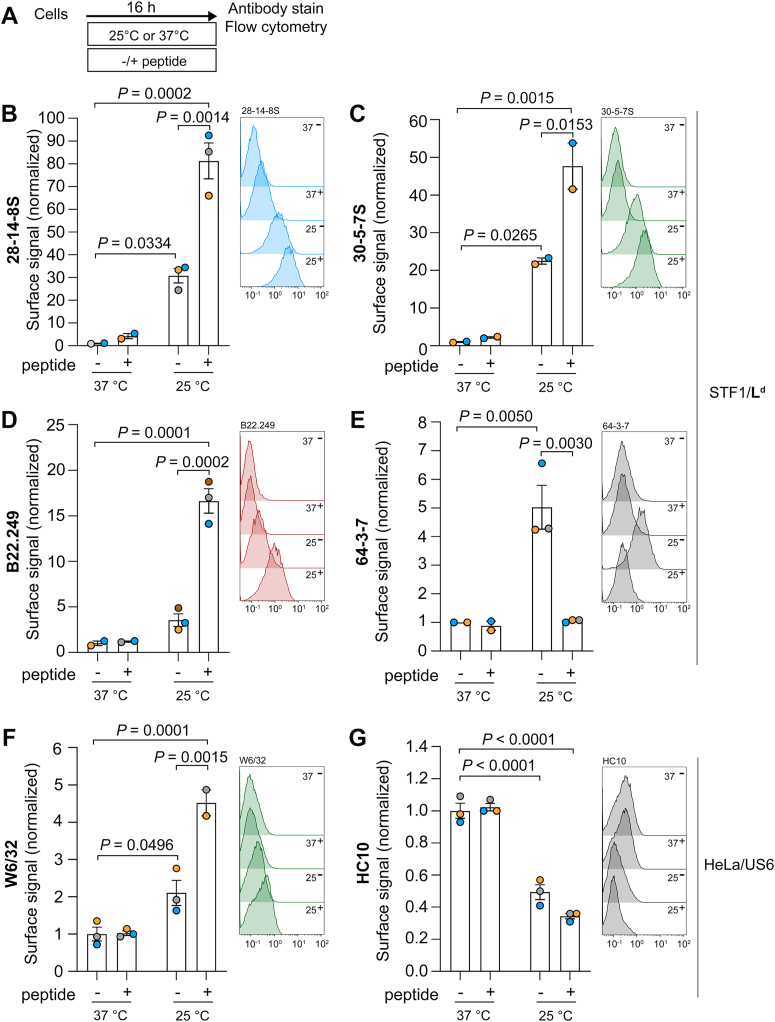 Figure 1
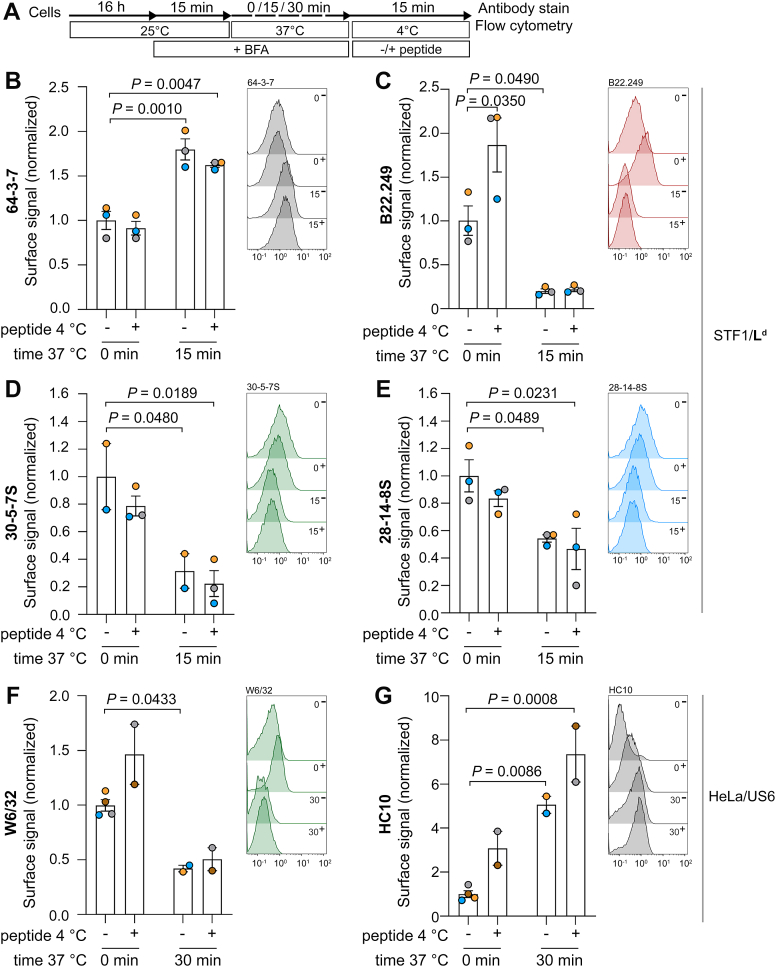 Figure 2
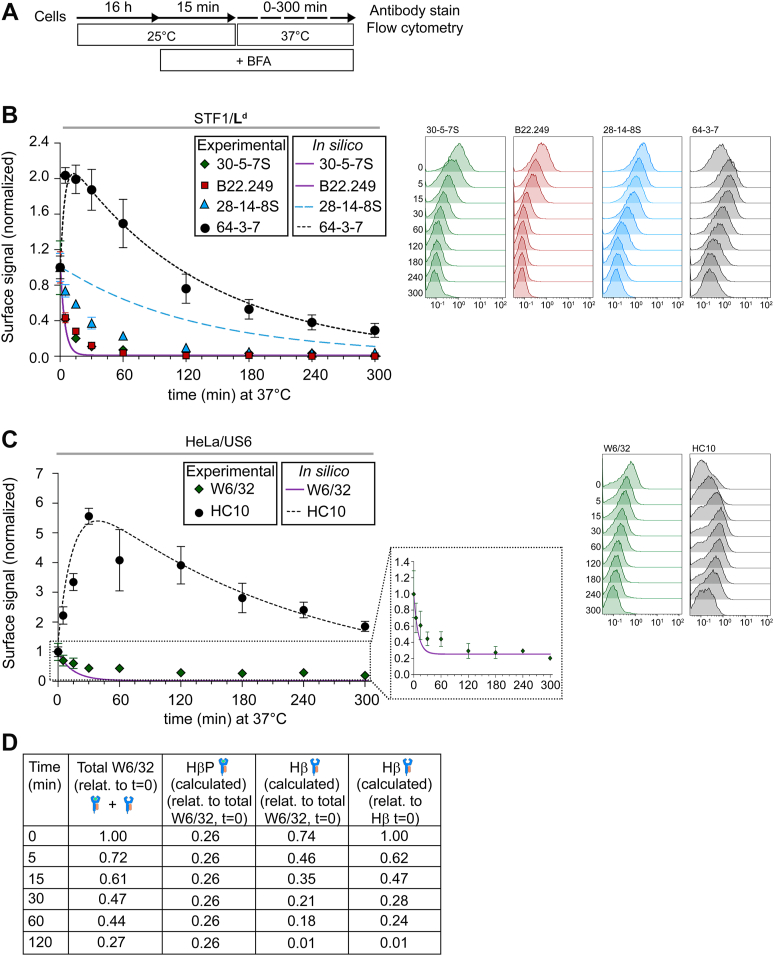 Figure 3
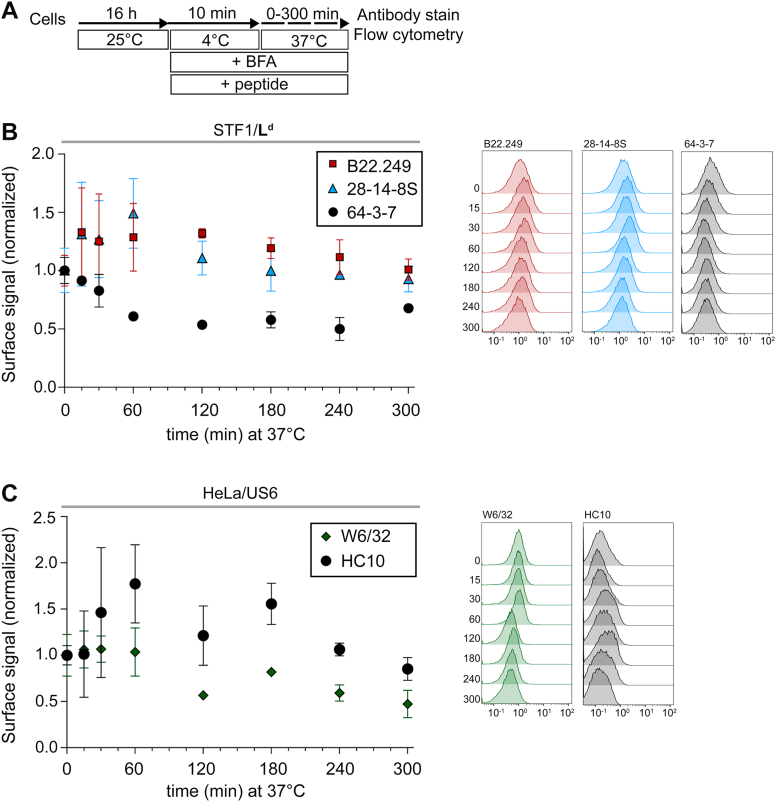 Figure 4
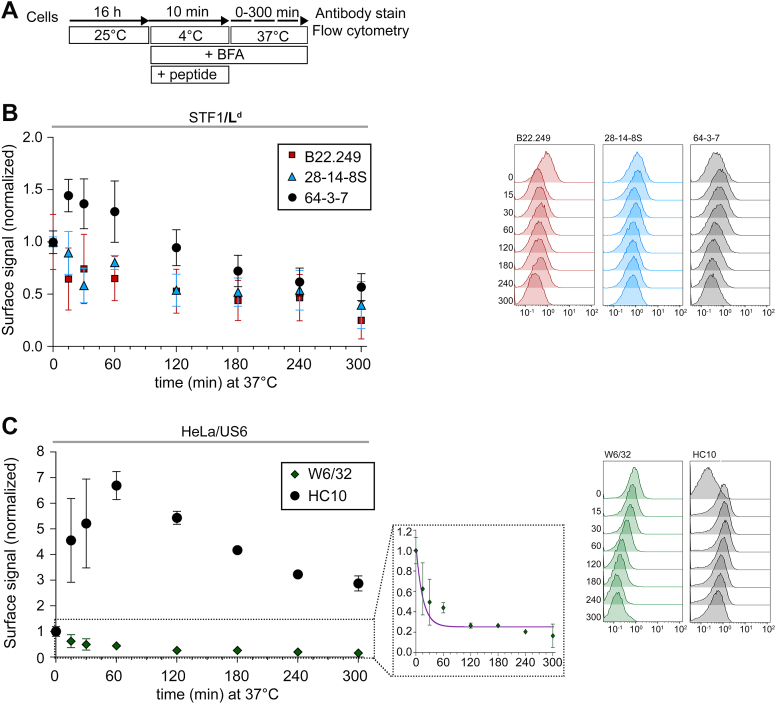 Figure 5
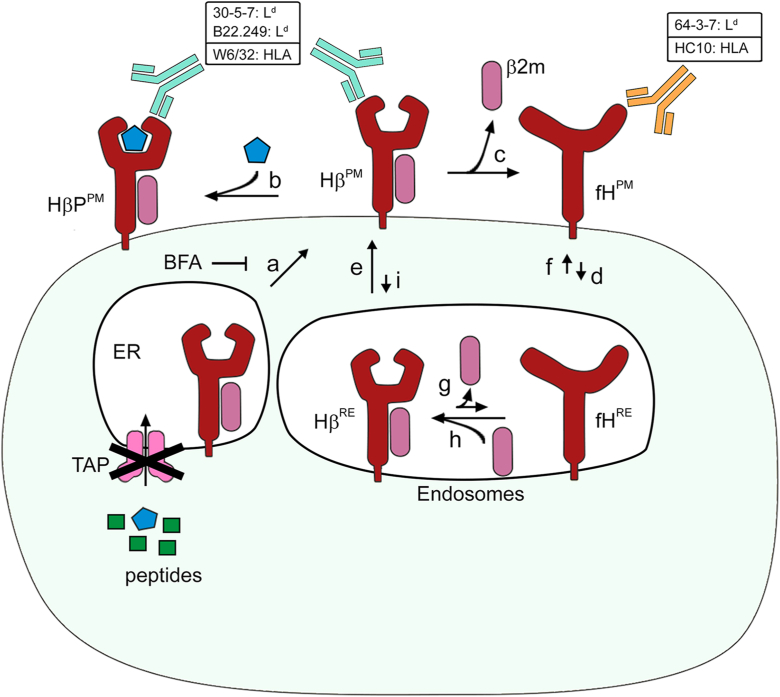 Figure 6
Peer Reviews
No public reviews on file for this paper yet. If you reviewed it on a platform where reviews are public (OpenReview, ICLR, NeurIPS, ICML), you can paste yours below so the community can read it here.
Videos
No videos yet. Explain this paper in a talk, walkthrough, or lecture? Add one.
Taxonomy
TopicsImmune Cell Function and Interaction · T-cell and B-cell Immunology · Monoclonal and Polyclonal Antibodies Research