Direct coupling of lactate oxidation with butyryl-CoA formation via a canonical electron transfer flavoprotein in Fusobacterium nucleatum
Long T.M. Do, Robert Godin, Kirsten R. Wolthers

TL;DR
This paper shows how the bacteria Fusobacterium nucleatum uses a specific protein to convert lactate into butyryl-CoA, which helps maintain redox balance in the gut.
Contribution
The study identifies a canonical electron transfer flavoprotein (ETF) in Fusobacterium nucleatum that directly couples lactate oxidation with butyryl-CoA formation.
Findings
ETF transfers electrons from D-lactate dehydrogenase to butyryl-CoA dehydrogenase in a coupled reaction.
The flavoprotein in ETF is physiologically primed to accept electrons from lactate oxidation due to its compressed redox potentials.
The gene cluster may help F. nucleatum manage redox homeostasis during oxidative stress.
Abstract
The gram-negative opportunistic pathogen Fusobacterium nucleatum encodes an electron transfer flavoprotein (ETF) within a 6-gene cluster that also includes genes for a D-lactate dehydrogenase (Ldh), butyryl-CoA dehydrogenase (Bcd), and LrgAB. Herein, we demonstrate that ETF functions as a canonical ETF, transferring two electrons from Ldh following oxidation of D-lactate to Bcd for the reduction of crotonyl-CoA to butyryl-CoA. Steady-state kinetic analysis of the LdhFN/ETFFN/BcdFN reaction (lactate + crotonyl-CoA → pyruvate + butyryl-CoA) yielded a kcat of 2.5 ± 0.1 s−1 and a KM of 0.65 ± 0.04 μM and 5.2 ± 0.5 μM for D-lactate and butyryl-CoA, respectively. As observed in homologous ETFs, the flavin adenine dinucleotide (FAD) cofactor of ETF forms the red anionic semiquinone (FAD•-) but the Eo′ values (versus the normal hydrogen electrode) of −70 mV (FAD/FAD•-) and = −122 mV…
Genes, proteins, chemicals, diseases, species, mutations and cell lines named across the full text — each resolved to its canonical identifier and authoritative record.
Click any figure to enlarge with its caption.
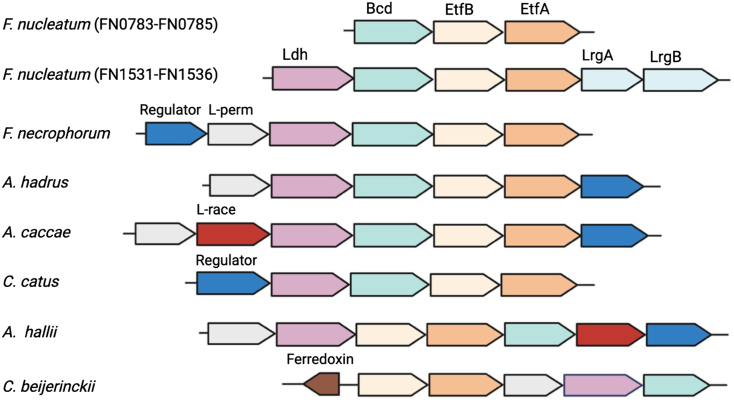 Figure 1
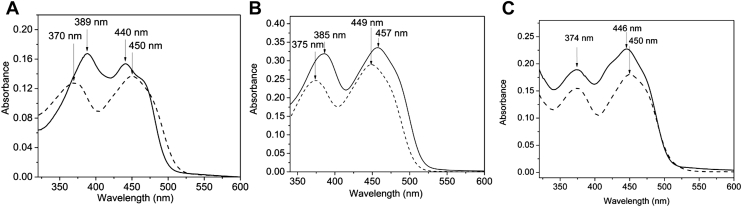 Figure 2
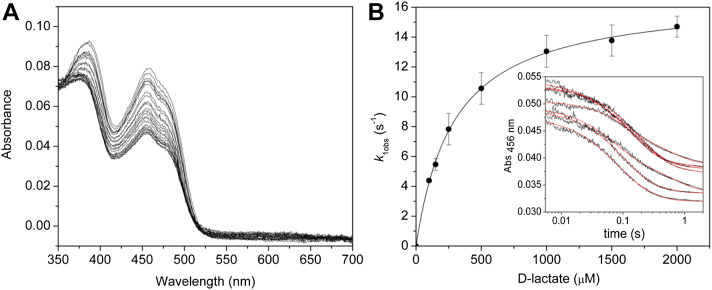 Figure 3
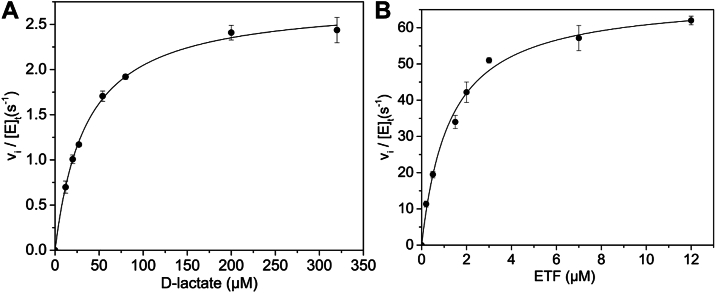 Figure 4
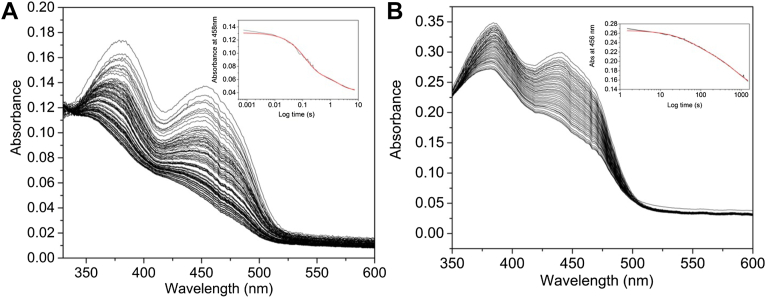 Figure 5
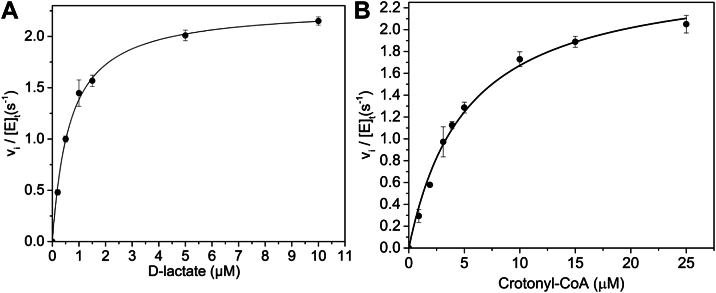 Figure 6
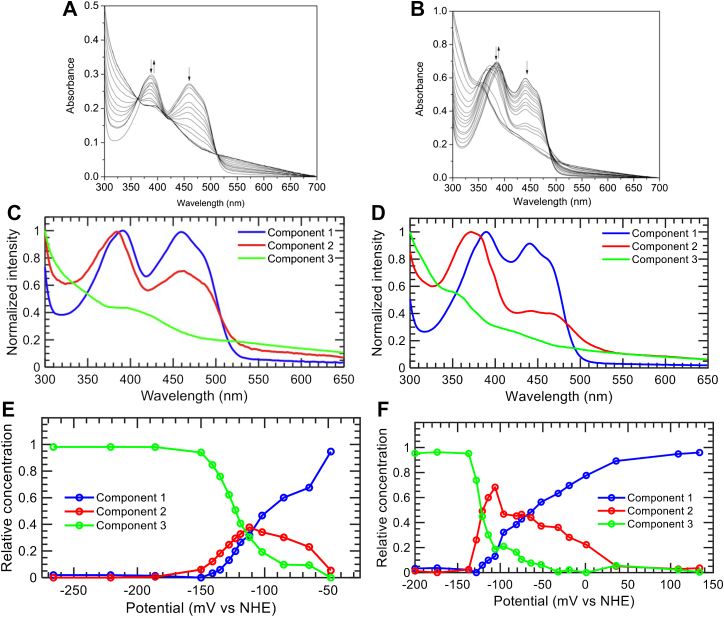 Figure 7
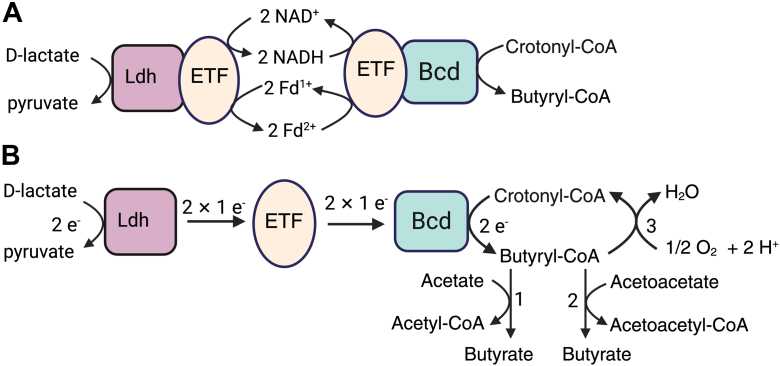 Figure 8
Peer Reviews
No public reviews on file for this paper yet. If you reviewed it on a platform where reviews are public (OpenReview, ICLR, NeurIPS, ICML), you can paste yours below so the community can read it here.
Videos
No videos yet. Explain this paper in a talk, walkthrough, or lecture? Add one.
Taxonomy
TopicsMicrobial Metabolic Engineering and Bioproduction · Photosynthetic Processes and Mechanisms · Enzyme Catalysis and Immobilization