In vivo analysis of Drosophila chondroitin sulfate biosynthetic genes
Tomomi Izumikawa, Ayano Moriya, Eriko Nakato, Kako Yamamoto, Raiki Sano, Takuya Akiyama, Akiko Kinoshita-Toyoda, Hidenao Toyoda, Hiroshi Nakato

TL;DR
This study explores how chondroitin sulfate is made in fruit flies and finds that certain genes are important for its production and function in development.
Contribution
The study identifies new in vivo tools and reveals novel aspects of chondroitin sulfate biosynthesis in Drosophila.
Findings
Csgalnact-null mutants show reduced CS in the larval brain and altered CS chain length.
C4st mutants exhibit high lethality, folded wings, and increased unsulfated chondroitin production.
Both mutants show impaired adult negative geotaxis behavior, indicating neuromuscular system involvement.
Abstract
Chondroitin sulfate (CS) is an evolutionarily conserved class of glycosaminoglycans and is found in most animal species. Previous studies of CS-deficient Drosophila models, Chondroitin sulfate synthase (Chsy), and Chondroitin polymerizing factor (Chpf) mutants demonstrated the importance of CS in the structural integrity of the basement membrane and organ shape maintenance. However, biosynthetic mechanisms of Drosophila CS remain to be elucidated. To investigate the CS biosynthesis in Drosophila, we generated mutants for two additional biosynthetic enzyme genes, CS N-acetylgalactosaminyltransferase (Csgalnact) and CS 4-O sulfotransferase (C4st), using CRISPR–Cas9 mutagenesis. Csgalnact-null mutants show moderate changes in CS biosynthesis, including reduced CS in the larval brain and altered CS chain length. We found that this gene is dispensable for normal viability and morphogenesis.…
Genes, proteins, chemicals, diseases, species, mutations and cell lines named across the full text — each resolved to its canonical identifier and authoritative record.
Click any figure to enlarge with its caption.
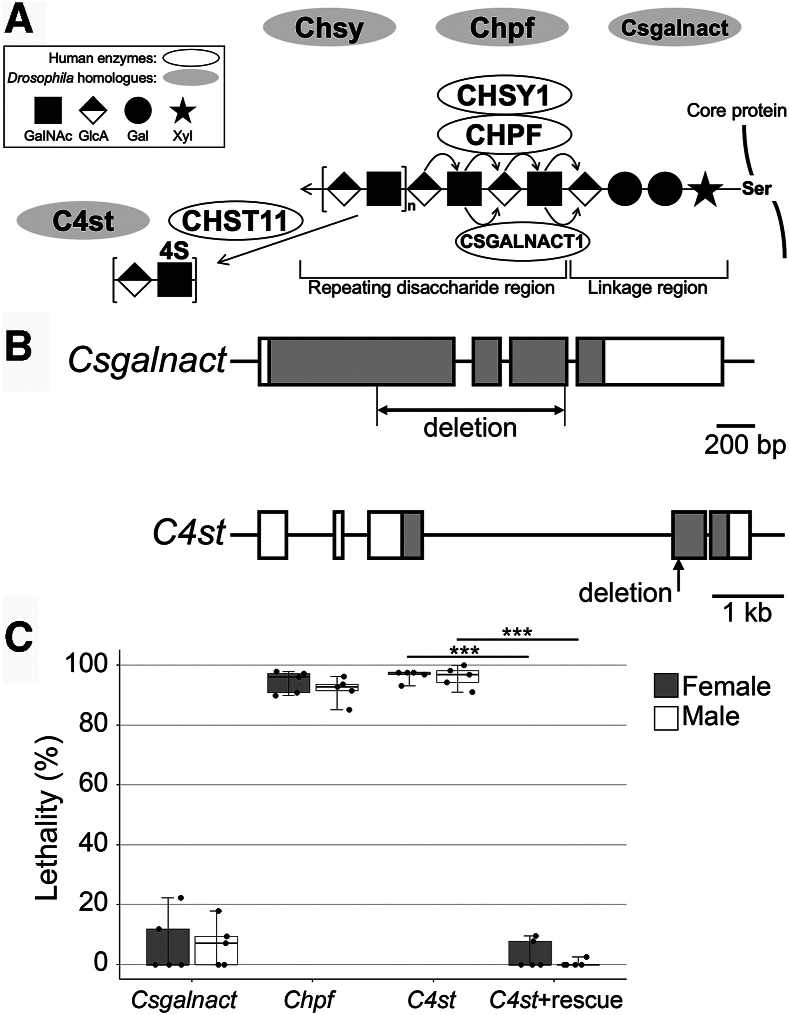 Figure 1
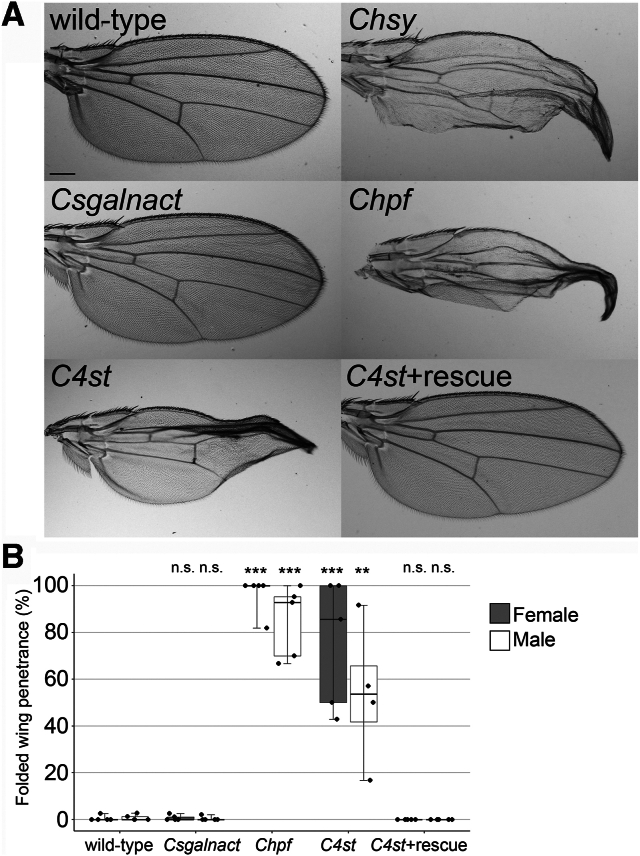 Figure 2
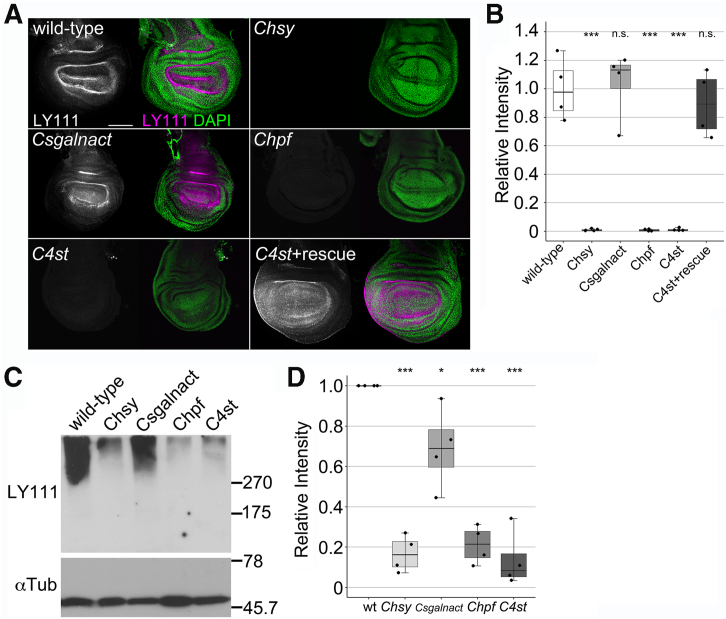 Figure 3
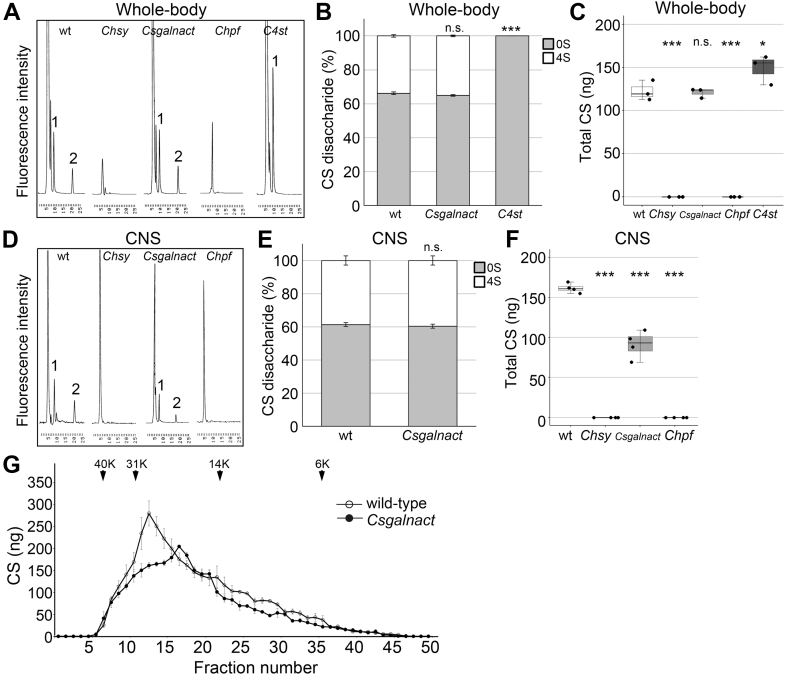 Figure 4
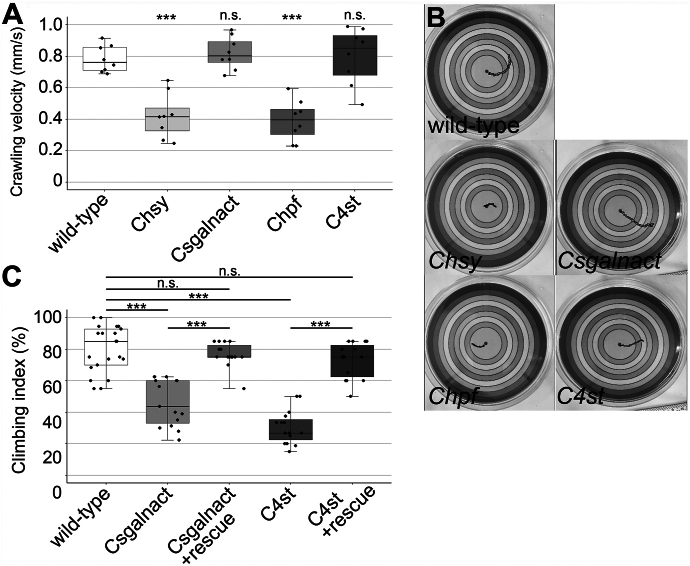 Figure 5
Peer Reviews
No public reviews on file for this paper yet. If you reviewed it on a platform where reviews are public (OpenReview, ICLR, NeurIPS, ICML), you can paste yours below so the community can read it here.
Videos
No videos yet. Explain this paper in a talk, walkthrough, or lecture? Add one.
Taxonomy
TopicsProteoglycans and glycosaminoglycans research · Silk-based biomaterials and applications · Glycosylation and Glycoproteins Research