Efficacy of Enfortumab Vedotin After Platinum Chemotherapy and Pembrolizumab in Metastatic Urothelial Carcinoma: A Multicenter Real-World Analysis of the ARON-2EV Cohort
Ondrej Fiala, Francesco Grillone, Kazutoshi Fujita, Enrique Grande, Patrizia Giannatempo, Tarek Taha, Zin W. Myint, Thomas Büttner, Alfonso Gómez de Liaño, Ravindran Kanesvaran, Gaetano Facchini, Akihiro Yano, Luigi Formisano, Alexandr Poprach, Vincenza Conteduca, Alina Pirshtuk

TL;DR
Enfortumab vedotin is effective in treating metastatic urothelial carcinoma after platinum chemotherapy and pembrolizumab, with prior immunotherapy response predicting better outcomes.
Contribution
This study demonstrates real-world efficacy of enfortumab vedotin and identifies prior pembrolizumab outcomes as a potential predictor of response.
Findings
Median overall survival was 12.3 months in patients treated with enfortumab vedotin after platinum chemotherapy and pembrolizumab.
Patients who responded to pembrolizumab had a higher overall response rate to enfortumab vedotin compared to those who did not respond.
The study confirms the clinical utility of enfortumab vedotin in diverse metastatic urothelial carcinoma scenarios.
Abstract
Our results support the real-world efficacy of enfortumab vedotin (EV) in patients with metastatic urothelial carcinoma previously treated with platinum-based chemotherapy followed by pembrolizumab. We observed an association between prior pembrolizumab outcomes and subsequent EV efficacy. This suggests that prior immunotherapy outcomes could serve as practical clinical indicators of potential benefits from subsequent EV treatment. Enfortumab vedotin (EV) has demonstrated efficacy in metastatic urothelial carcinoma (mUC) following treatment with platinum-based chemotherapy (PBC) and PD-1/PD-L1 inhibitors, including pembrolizumab (PEM). Our aim was to assess real-world clinical outcomes of EV in patients with mUC previously treated with PBC followed by pembrolizumab (PBC/PEM). ARON-2EV is an international, multicenter, retrospective study examining the real-world use of EV in patients…
Genes, proteins, chemicals, diseases, species, mutations and cell lines named across the full text — each resolved to its canonical identifier and authoritative record.
Click any figure to enlarge with its caption.
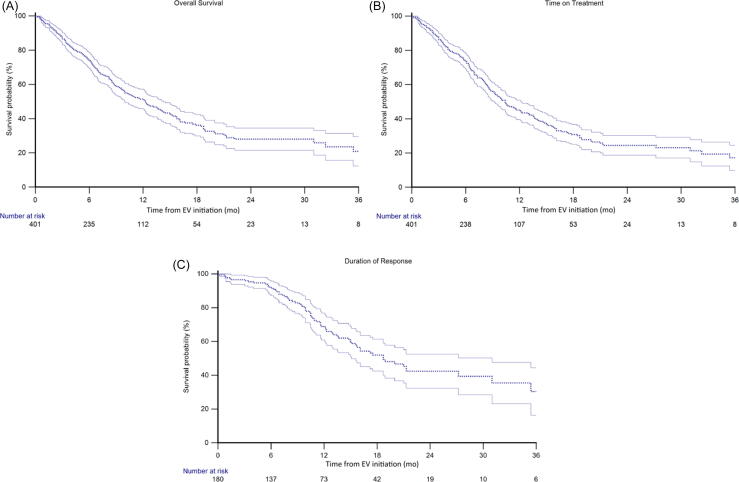 Figure 1
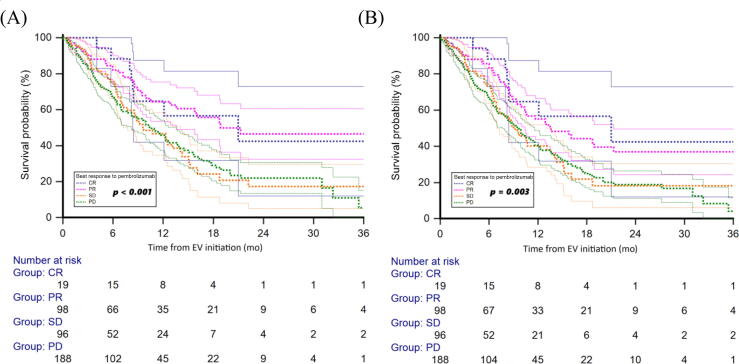 Figure 2
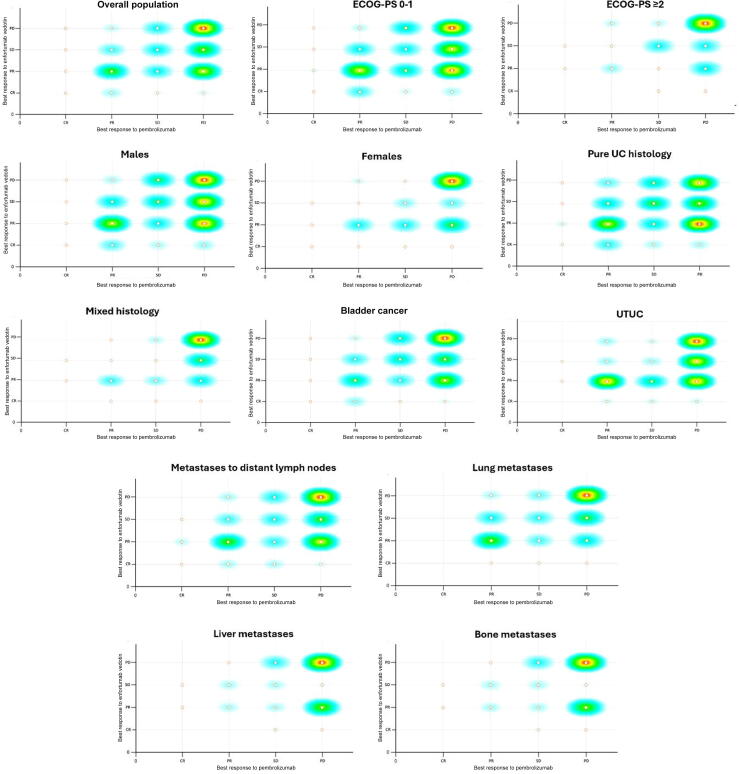 Figure 3
Peer Reviews
No public reviews on file for this paper yet. If you reviewed it on a platform where reviews are public (OpenReview, ICLR, NeurIPS, ICML), you can paste yours below so the community can read it here.
Videos
No videos yet. Explain this paper in a talk, walkthrough, or lecture? Add one.
Taxonomy
TopicsBladder and Urothelial Cancer Treatments · Urinary and Genital Oncology Studies · Esophageal Cancer Research and Treatment