Assessing land use change and the impacts on semi-natural habitats across England and Wales using four time points between 1930 and 2020
Lucy E. Ridding, Alexander R. Wickenden, Zephyr Orsler, Clare S. Rowland, Jennifer M. Hampton, Bruce Mitchell, Alistair Edwardes, Karen Mullin, Gavin Haughton, Neil Thurston, Ivano Pola, Geoffrey Sinclair, Mary-Rose Sinclair, Janet Shaw, Richard F. Pywell

TL;DR
This study examines how land use changes in England and Wales from 1930 to 2020 affected semi-natural habitats, showing which habitats increased or decreased over time.
Contribution
The study provides a detailed historical analysis of land use changes and their impact on semi-natural habitats using four time points over 90 years.
Findings
Broadleaved woodland was the only semi-natural habitat to increase between the 1960s and 2020.
Grassland was largely lost to arable land between the 1960s and 1990, showing the impact of post-war agricultural intensification.
Rough grassland, heath, and wetland experienced the greatest loss between the 1930s and 1960s.
Abstract
Habitat loss and degradation caused by human land use change is one of the major drivers of global biodiversity decline. Understanding historical patterns of land use/land cover (LULC) change over multiple time periods is essential for improving our knowledge of the magnitude and scale of habitat loss, but also for predicting future changes and targeting biodiversity conservation and restoration policy and actions. This study assesses habitat loss resulting from LULC change in England and Wales between 1930 and 2020 at four different time points. We digitise a selection of published 1960s land use maps based on detailed field surveys, to use alongside existing published historical data (1930s) and more recent land cover datasets derived from satellite imagery (1990, 2020) for England and Wales. Broadleaved woodland was the only semi-natural habitat to increase between the 1960s and…
Genes, proteins, chemicals, diseases, species, mutations and cell lines named across the full text — each resolved to its canonical identifier and authoritative record.
Click any figure to enlarge with its caption.
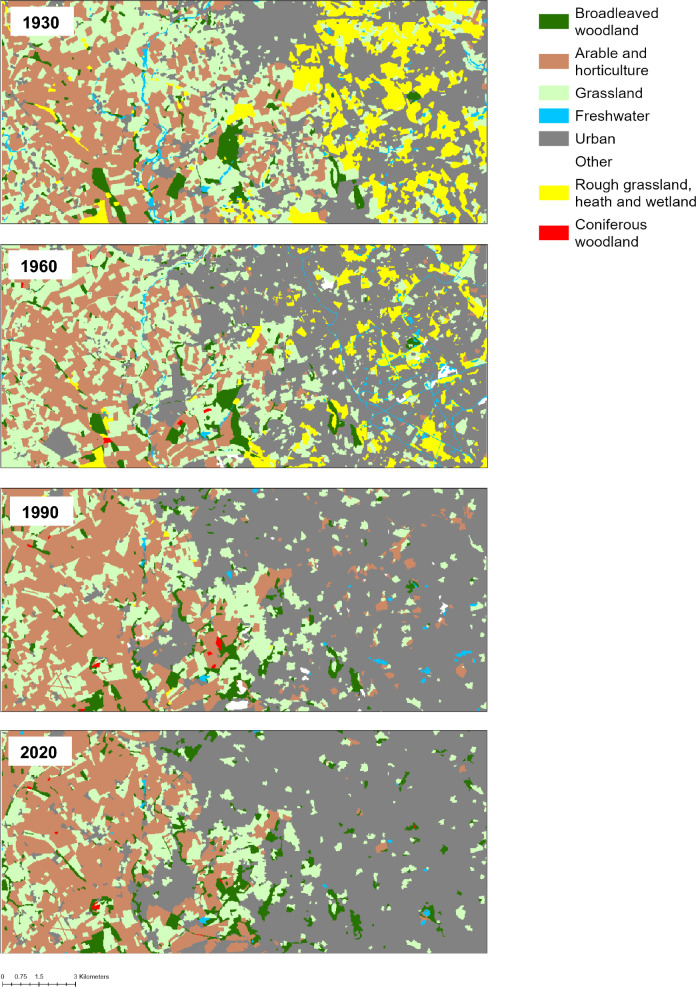 Figure 1
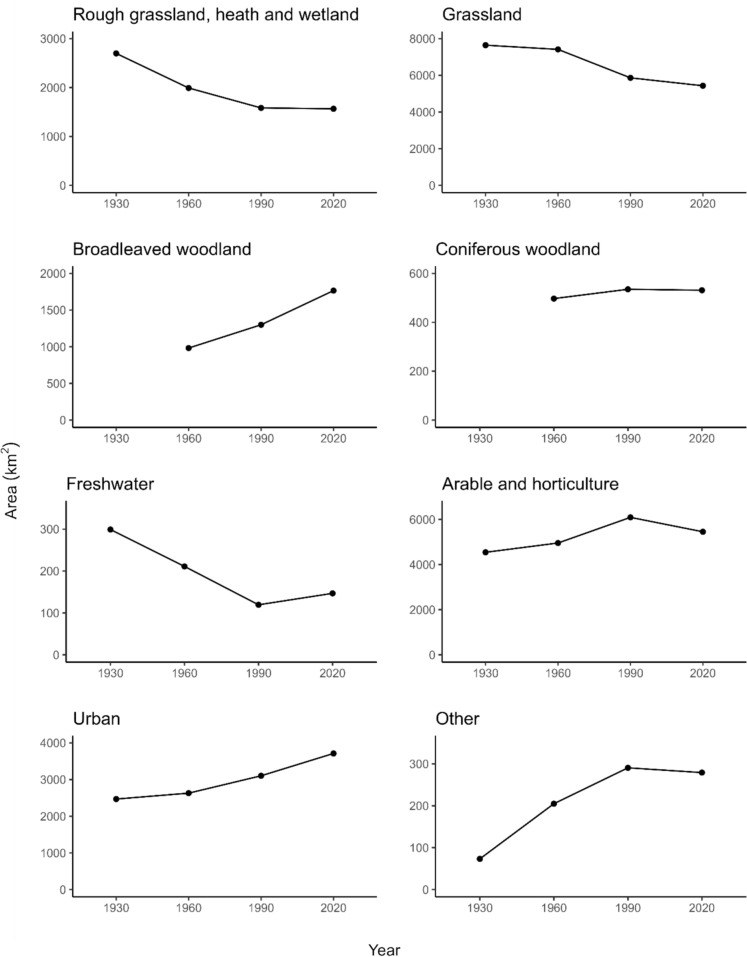 Figure 2
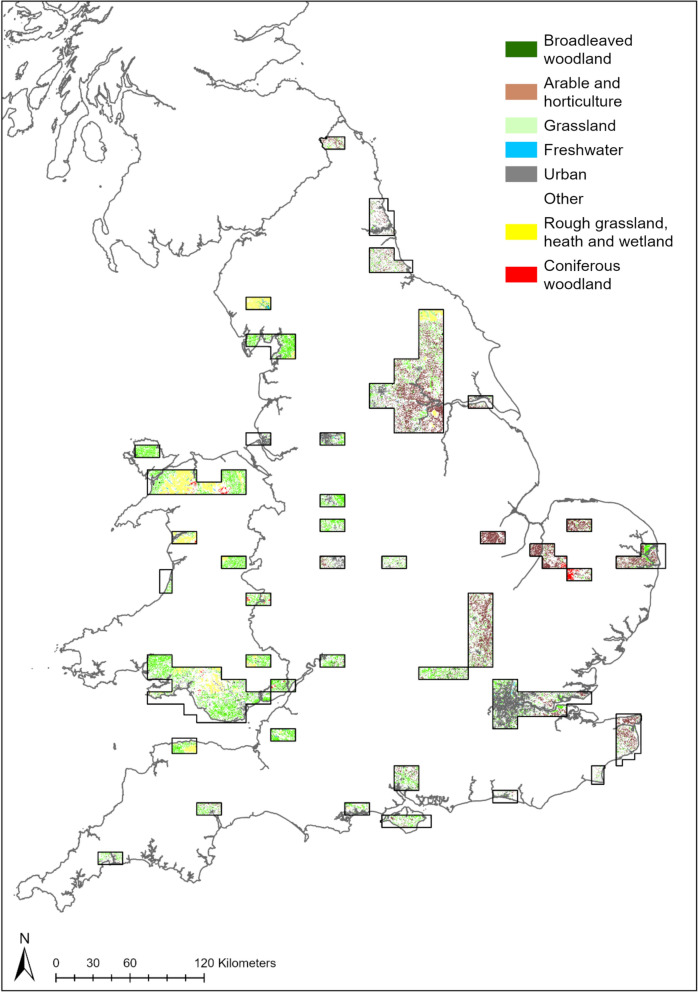 Figure 3
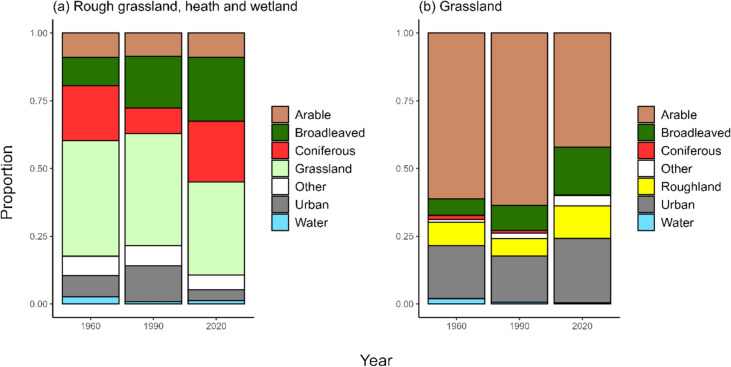 Figure 4
Peer Reviews
No public reviews on file for this paper yet. If you reviewed it on a platform where reviews are public (OpenReview, ICLR, NeurIPS, ICML), you can paste yours below so the community can read it here.
Videos
No videos yet. Explain this paper in a talk, walkthrough, or lecture? Add one.
Taxonomy
TopicsLand Use and Ecosystem Services · Wildlife-Road Interactions and Conservation · Ecology and Vegetation Dynamics Studies