Medullary sponge kidney: in-depth phenotyping for a better understanding of functional and structural abnormalities
Corentin Tournebize, Aurélie De Mul, Nadia Abid, Aurélie Portefaix, Sophie Pacaud, Maxime Schleef, Laurence Derain-Dubourg, Olivier Rouviere, Sandrine Lemoine

TL;DR
This study uses MRI to investigate kidney function and structure in patients with medullary sponge kidney, revealing impaired oxygenation but no fibrosis.
Contribution
The study introduces a detailed phenotyping approach using fMRI to assess functional and structural abnormalities in medullary sponge kidney.
Findings
Patients with medullary sponge kidney showed higher R2* cortex-to-medulla ratios, indicating impaired renal oxygenation.
MRI revealed medullary cysts in 60% of medullary sponge kidney patients.
Estimated GFR was inaccurate in medullary sponge kidney patients, while measured GFR was significantly lower.
Abstract
Medullary sponge kidney is an entity characterized by pre-calyceal dilatation of the renal tubules, whose pathophysiology is unknown. Tubular anomalies have been described, suggesting impaired medullary function. To better characterize these patients, tools for assessing medullary function and structure are needed. The latter can be evaluated with functional magnetic resonance imaging (fMRI), using blood-oxygen-level-dependent imaging, which quantifies tissue oxygenation, and diffusion-weighted-imaging and T1-mapping sequences which allow fibrosis assessment. The aim of this study was to deeply phenotype medullary sponge kidney patients. We carried out fMRI, measured glomerular filtration rate (mGFR) by iohexol clearance, and metabolic assessment of urolithiasis in patients with medullary sponge kidney and in healthy controls. The primary endpoint was the comparison of R2*, inversely…
Genes, proteins, chemicals, diseases, species, mutations and cell lines named across the full text — each resolved to its canonical identifier and authoritative record.
Click any figure to enlarge with its caption.
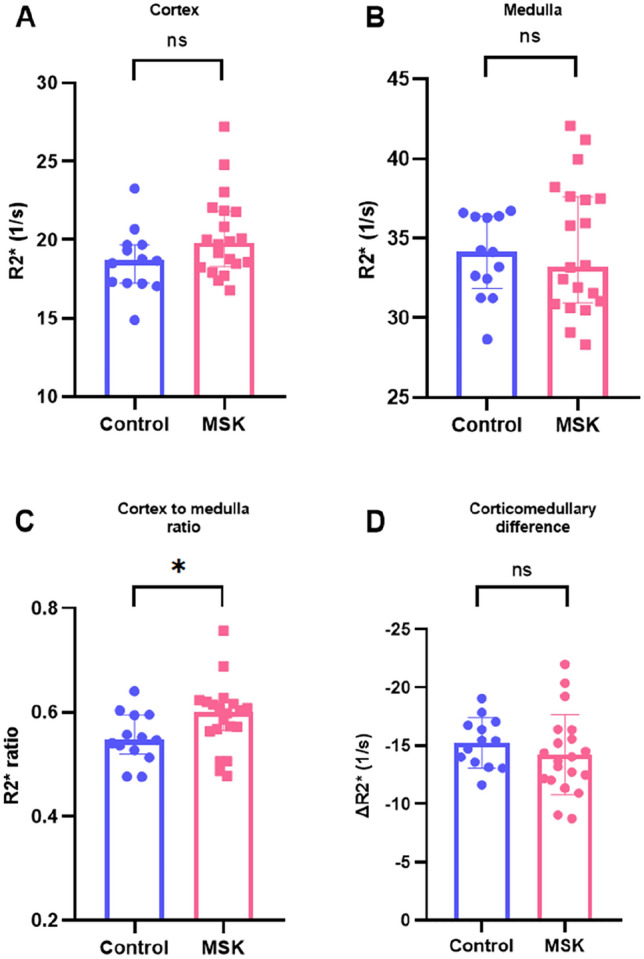 Figure 1
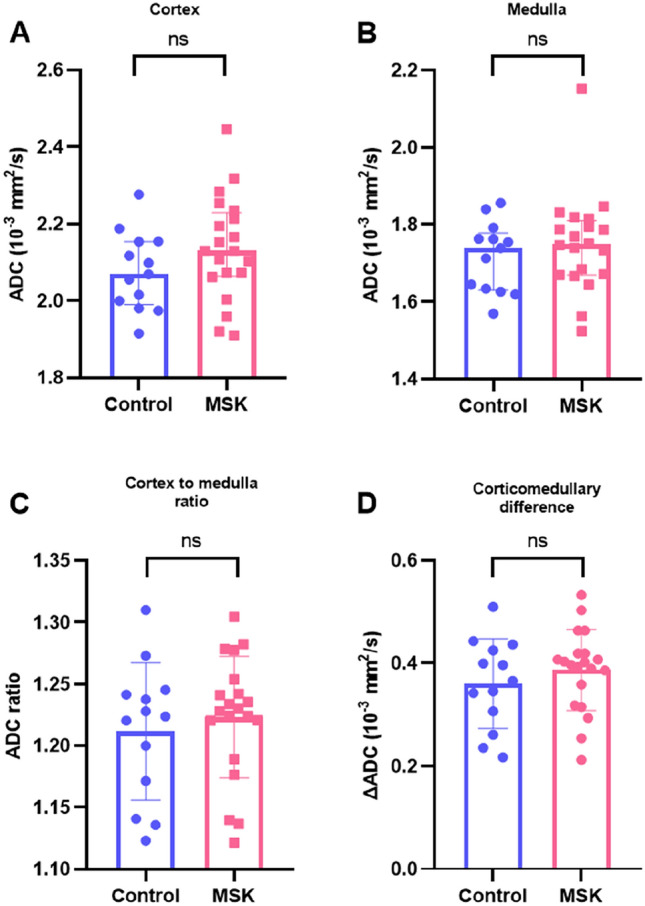 Figure 2
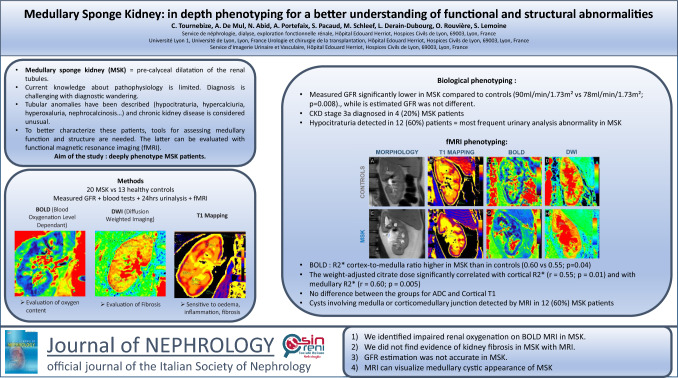 Figure 3
Peer Reviews
No public reviews on file for this paper yet. If you reviewed it on a platform where reviews are public (OpenReview, ICLR, NeurIPS, ICML), you can paste yours below so the community can read it here.
Videos
No videos yet. Explain this paper in a talk, walkthrough, or lecture? Add one.
Taxonomy
TopicsPediatric Urology and Nephrology Studies · Kidney Stones and Urolithiasis Treatments · Urological Disorders and Treatments