Real-world clinical outcomes of apalutamide versus abiraterone with androgen deprivation therapy for metastatic hormone-sensitive prostate cancer
Eduardo Pons-Fuster, Celia Maria Gonzalez-Ponce, Silverio Ros-Martinez, Juan José Fernández-Ávila, María Sacramento Díaz-Carrasco, Alberto Espuny-Miró

TL;DR
This study compares apalutamide and abiraterone in treating prostate cancer, finding apalutamide delays disease progression more effectively, though with more side effects.
Contribution
The study provides a direct comparison of apalutamide and abiraterone in mHSPC, focusing on PSA kinetics and survival outcomes.
Findings
Apalutamide showed significantly better PSA progression-free survival compared to abiraterone.
Apalutamide achieved lower median nadir PSA and faster time to reach it.
Adverse events were more common with apalutamide, but both treatments were generally well tolerated.
Abstract
Metastatic hormone-sensitive prostate cancer (mHSPC) is an aggressive disease with a poor prognosis. Current treatment guidelines recommend combining androgen receptor axis-targeted therapies (ARATs) with androgen deprivation therapy (ADT) for mHSPC. While individual ARATs have shown success, few studies directly compare their effects. To compare the safety and clinical outcomes of abiraterone acetate (abiraterone) and apalutamide in chemotherapy-naïve mHSPC patients, focusing on prostate-specific antigen (PSA) kinetics, safety, and survival outcomes. A retrospective, single-centre study included 107 chemotherapy-naïve mHSPC patients treated with abiraterone or apalutamide plus ADT. PSA levels were measured at baseline and during treatment. Primary outcomes were PSA progression-free survival (PSA-PFS) and overall survival (OS). Adverse events were recorded. Inverse probability…
Genes, proteins, chemicals, diseases, species, mutations and cell lines named across the full text — each resolved to its canonical identifier and authoritative record.
Click any figure to enlarge with its caption.
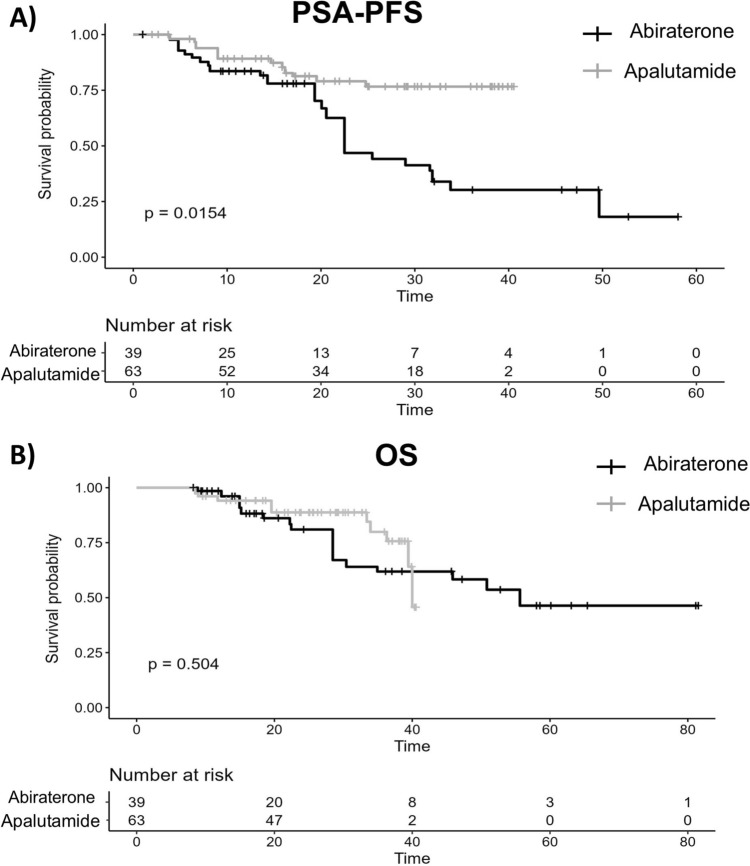 Figure 1
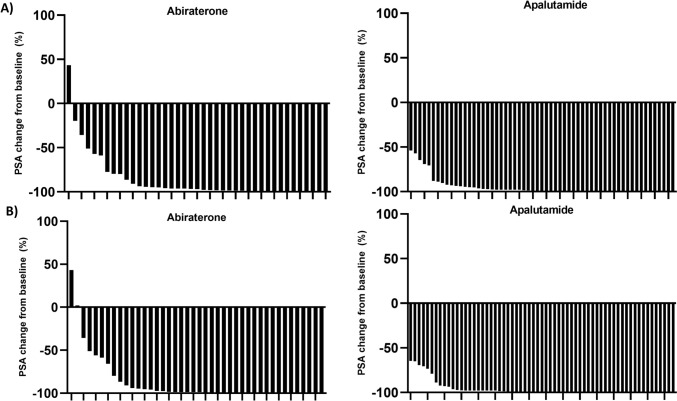 Figure 2
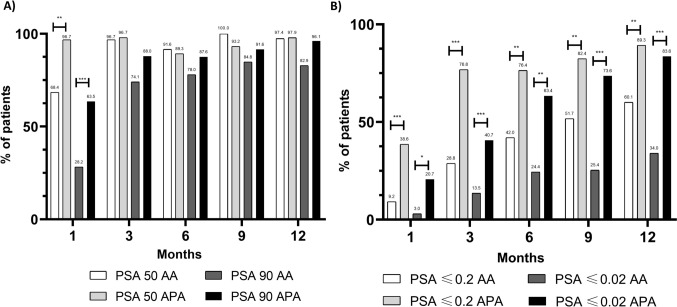 Figure 3
Peer Reviews
No public reviews on file for this paper yet. If you reviewed it on a platform where reviews are public (OpenReview, ICLR, NeurIPS, ICML), you can paste yours below so the community can read it here.
Videos
No videos yet. Explain this paper in a talk, walkthrough, or lecture? Add one.
Taxonomy
TopicsProstate Cancer Treatment and Research · Radiopharmaceutical Chemistry and Applications · Multiple Myeloma Research and Treatments