Feasibility and safety of the synchroseal articulating bipolar energy-based device for robotic gastrectomy in patients with gastric cancer: a prospective single-arm clinical trial with historical controls
Ji-Hyeon Park, JeeSun Kim, Danbi Lee, Seong-Ho Kong, Do Joong Park, Hyuk-Joon Lee, Han-Kwang Yang

TL;DR
A new device called Synchroseal was tested for robotic stomach surgery in gastric cancer patients, showing reduced inflammation and shorter operation times compared to traditional tools.
Contribution
The study introduces and evaluates the Synchroseal device as a novel bipolar energy-based tool for robotic gastrectomy.
Findings
Synchroseal reduced postoperative C-reactive protein levels compared to conventional ultrasonic shears.
The device showed shorter operation times and lower serum amylase levels.
Both Synchroseal and ultrasonic shears achieved adequate lymph node dissection.
Abstract
This study evaluated the feasibility and safety of Synchroseal (SS), a new articulating bipolar energy-based device, in da Vinci robotic gastrectomy for gastric cancer. A prospective study of 25 patients using SS was compared with retrospective data from 218 patients treated with conventional ultrasonic shears (US). Propensity score matching (PSM) ensured comparability. Metrics analyzed included C-reactive protein (CRP) levels, operative time, lymph nodes (LNs) retrieved, intraoperative blood loss, laboratory tests, hospital stay duration, and complication rates. PSM yielded a balanced comparison between the two groups (standardized differences < 0.1). SS (n = 25) significantly reduced CRP levels on postoperative days 2, 4, and 6 compared to US (n = 123) [7.67 ± 4.73 vs. 10.18 ± 5.66, (p = 0.040), 5.11 ± 3.33 vs. 6.65 ± 4.23, (p = 0.090), 2.74 ± 2.10 vs. 4.26 ± 3.78, (p = 0.001)].…
Genes, proteins, chemicals, diseases, species, mutations and cell lines named across the full text — each resolved to its canonical identifier and authoritative record.
Click any figure to enlarge with its caption.
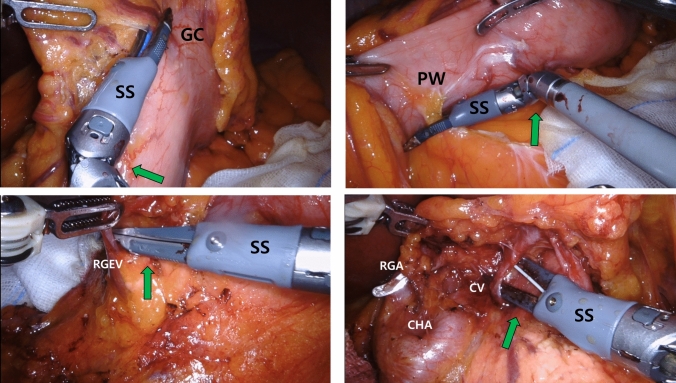 Figure 1
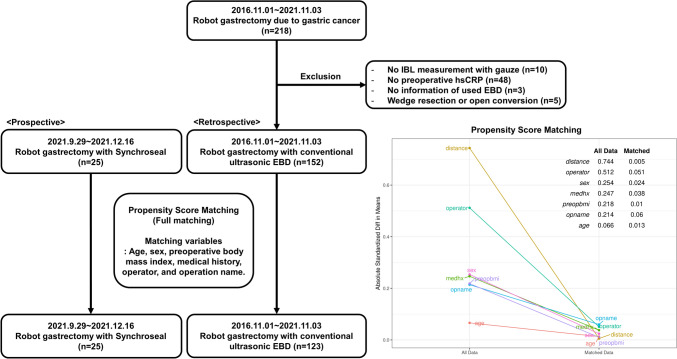 Figure 2
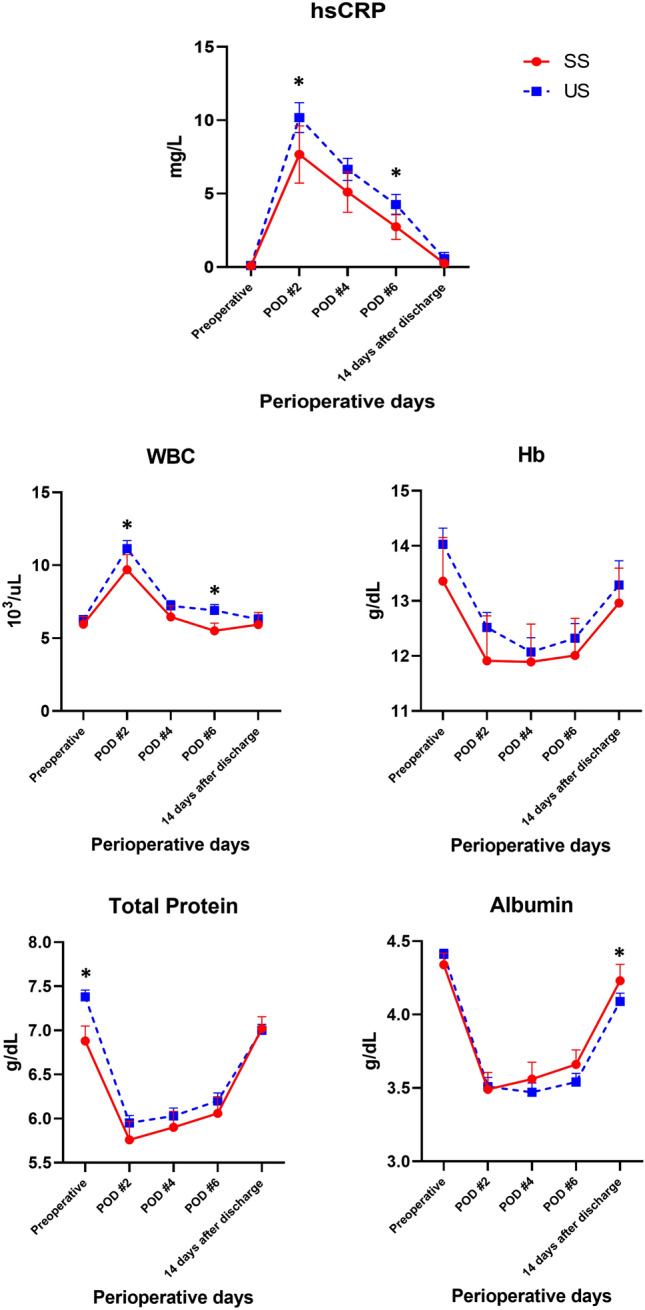 Figure 3
Peer Reviews
No public reviews on file for this paper yet. If you reviewed it on a platform where reviews are public (OpenReview, ICLR, NeurIPS, ICML), you can paste yours below so the community can read it here.
Videos
No videos yet. Explain this paper in a talk, walkthrough, or lecture? Add one.
Taxonomy
TopicsGastric Cancer Management and Outcomes · Esophageal and GI Pathology · Dysphagia Assessment and Management