Development of a practice-based score to predict extended duration of proton beam therapy session in pediatric patients
José M. Fernández-de Miguel, Miguel Ángel García-Aroca, Ignacio Manrique Yera, Felipe A. Calvo, María Aymerich de Francesci, Jose Manuel Álvarez Avello, Elena Panizo Morgado, Jorge M. Núñez-Córdoba

TL;DR
This study developed a score to predict long proton beam therapy sessions in children, helping improve treatment efficiency.
Contribution
The study introduces a new predictive score based on patient factors to estimate extended proton beam therapy session durations in pediatric patients.
Findings
A nomogram-based score with an area under the curve of 0.84 was developed to predict extended PBT session durations.
Age over 45 months was a strong predictor of extended session duration.
Factors like long-term venous access and craniospinal location also significantly increased session duration.
Abstract
Due to the labor intensity demanded by proton beam therapy (PBT) in pediatric patients, information on operational procedures related to efficiency is crucial to optimize quality and safety. We aimed to identify patient factors that affect the duration of the pediatric PBT session and to develop an easy-to-use predictive score of extended duration. This is an observational retrospective cohort study in an academic medical centre, between May 2020 and February 2024. Seventy seven ASA III pediatric patients treated with PBT were recruited. The mean age was 4.8 years [standard deviation (SD): 2.1] and 52% were women. The mean duration of the PBT session was 50 min (SD: 17). Extended duration of the PBT session (> 45 min) occurred in 39 patients (51%). Five predictors of extended duration were selected for the final prediction model. In the multivariable model, an age > 45 months showed a…
Genes, proteins, chemicals, diseases, species, mutations and cell lines named across the full text — each resolved to its canonical identifier and authoritative record.
Click any figure to enlarge with its caption.
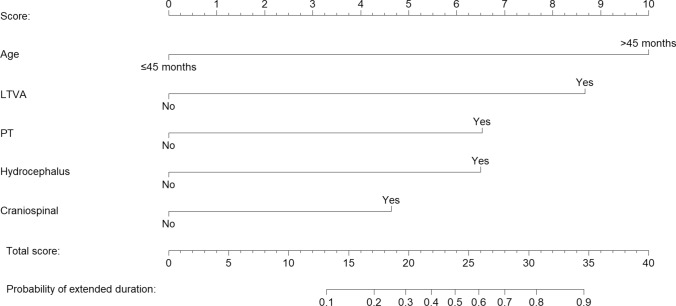 Figure 1
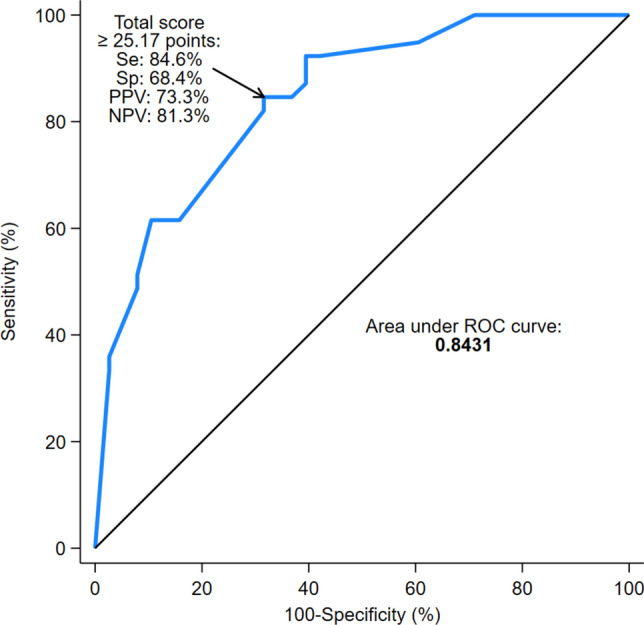 Figure 2
Peer Reviews
No public reviews on file for this paper yet. If you reviewed it on a platform where reviews are public (OpenReview, ICLR, NeurIPS, ICML), you can paste yours below so the community can read it here.
Videos
No videos yet. Explain this paper in a talk, walkthrough, or lecture? Add one.
Taxonomy
TopicsChildhood Cancer Survivors' Quality of Life · Radiation Therapy and Dosimetry · Neonatal Health and Biochemistry