Combination chemotherapy for older patients with unresectable biliary tract cancer: a prospective observational study using propensity-score matched analysis (JON2104-B)
Satoshi Kobayashi, Kohei Nakachi, Kouji Yamamoto, Makoto Ueno, Yuta Maruki, Kenji Ikezawa, Takeshi Terashima, Satoshi Shimizu, Kotoe Oshima, Kunihiro Tsuji, Yoshiharu Masaki, Hidetaka Tsumura, Taro Shibuki, Masato Ozaka, Naohiro Okano, Yukiyasu Okamura, Kumiko Umemoto

TL;DR
This study compares chemotherapy regimens for older patients with advanced biliary tract cancer, focusing on survival and safety outcomes.
Contribution
The study evaluates the efficacy and safety of combination chemotherapy in older patients with biliary tract cancer using propensity-score matched analysis.
Findings
GEM + CDDP + S-1 showed longer progression-free survival than GEM + CDDP without additional toxicity.
GEM + CDDP and gemcitabine had similar overall survival outcomes for vulnerable older patients.
Safety profiles of GEM + CDDP and GEM + CDDP + S-1 were comparable, but both were more toxic than gemcitabine alone.
Abstract
Systemic chemotherapy with gemcitabine plus S-1 (GEM + S-1), GEM + CDDP plus S-1 (GEM + CDDP + S-1), or gemcitabine plus cisplatin (GEM + CDDP) is standard treatment for advanced biliary tract cancer (aBTC). We aimed to evaluate the efficacy and safety of combination chemotherapy in older patients with aBTC. This multicenter prospective observational study (JON2104-B, UMIN000045156) included patients aged ≥ 70 years with aBTC. Inverse-probability weighting propensity-score analyses (IPW) were used to compare overall survival (OS) as the primary endpoint and progression-free survival (PFS) across treatment groups. This study included 305 patients between August 2021 and January 2023. Of them, 75, 131, 26, 52, and 10 received GEM + CDDP + S-1, GEM + CDDP, GEM + S-1, gemcitabine, and S-1; their median ages were 74, 75, 77.5, 80, and 80 years, and approximately 24%, 16.8%, 23.1%, 9.6%,…
Genes, proteins, chemicals, diseases, species, mutations and cell lines named across the full text — each resolved to its canonical identifier and authoritative record.
Click any figure to enlarge with its caption.
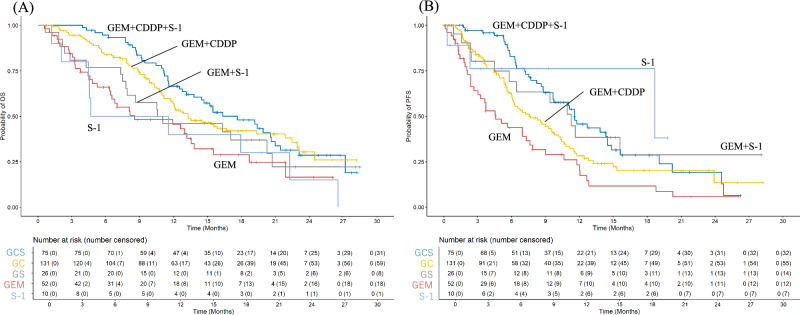 Figure 1
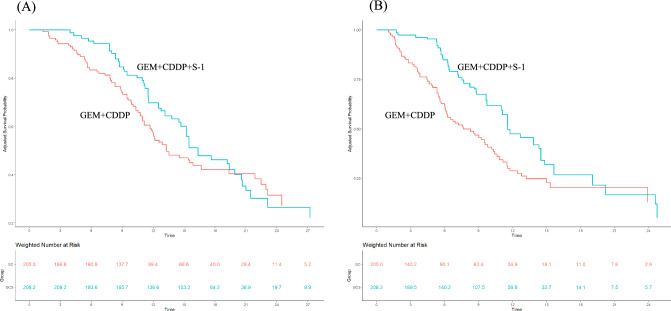 Figure 2
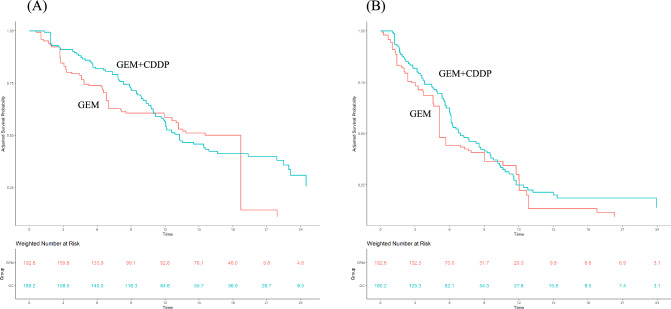 Figure 3
Peer Reviews
No public reviews on file for this paper yet. If you reviewed it on a platform where reviews are public (OpenReview, ICLR, NeurIPS, ICML), you can paste yours below so the community can read it here.
Videos
No videos yet. Explain this paper in a talk, walkthrough, or lecture? Add one.
Taxonomy
TopicsCholangiocarcinoma and Gallbladder Cancer Studies · Gallbladder and Bile Duct Disorders · Pancreatic and Hepatic Oncology Research