Substrate and enzyme determinants for recognition by human mitochondrial RNase P
Enxhi Hazisllari, Danijela Radovanović, Ursula Toth, Elisa Vilardo, Roland K Hartmann, Walter Rossmanith

TL;DR
This study explores how human mitochondrial RNase P recognizes and processes tRNA precursors, revealing unique substrate and enzyme determinants.
Contribution
The study identifies a rigid measuring mechanism and specific interactions in human mitochondrial RNase P for tRNA processing.
Findings
MtRNase P processes tRNA precursors more efficiently with longer 5′ extensions.
The enzyme uses a rigid measuring mechanism for cleavage-site selection.
TRMT10C–SDR5C1 interactions with the anticodon loop are not crucial for efficient processing.
Abstract
RNase P enzymes of widely varying architectures recognize the 5′-leader/acceptor-stem junction and the D/T loop-interaction region of precursor tRNAs to direct cleavage to the 5′ end of tRNAs. In contrast, human mitochondrial RNase P (mtRNase P) encases the entire tRNA with the aid of the methyltransferase subcomplex TRMT10C–SDR5C1. Here, we performed a kinetic analysis of substrate recognition by mtRNase P using substrate and protein variants. Surprisingly, processing by mtRNase P was found to be more efficient for tRNA precursors with longer 5′ extensions and decreased sharply at a leader length of 1 nt. MtRNase P also employs a more rigid “measuring mechanism” for cleavage-site selection than the related single-subunit enzymes, so that even substrates with a G:C base-pair extension of the acceptor stem are cleaved predominantly at the canonical site. The specific contacts of…
Genes, proteins, chemicals, diseases, species, mutations and cell lines named across the full text — each resolved to its canonical identifier and authoritative record.
Click any figure to enlarge with its caption.
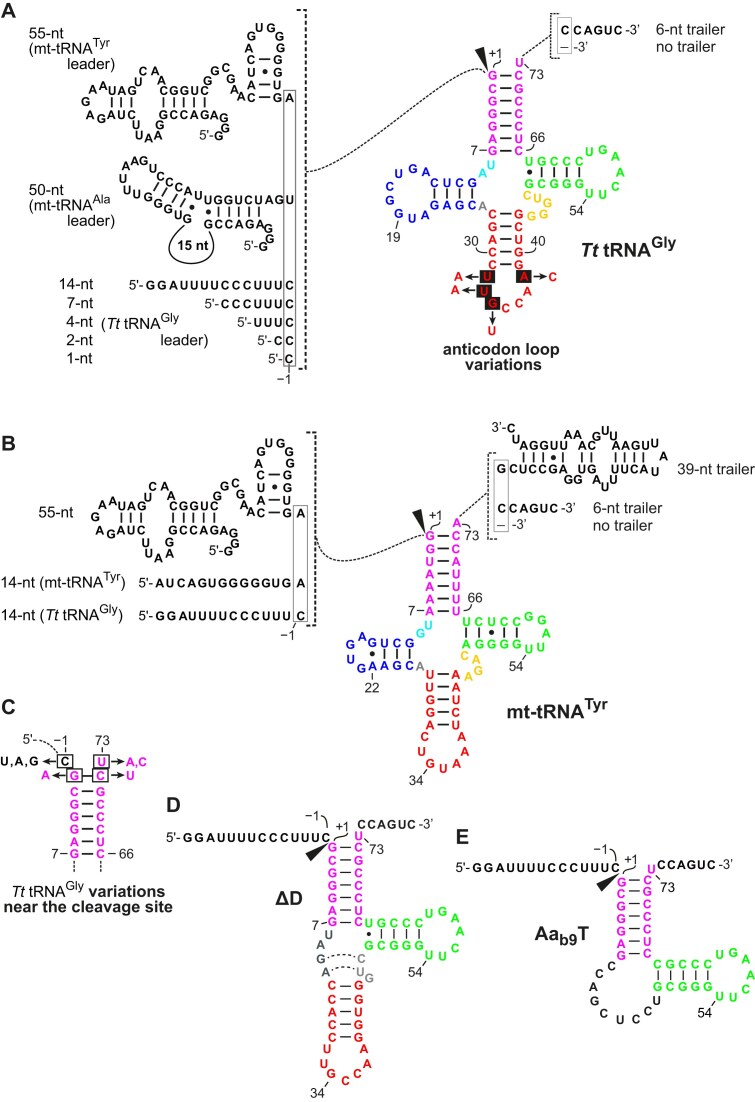 Figure 1
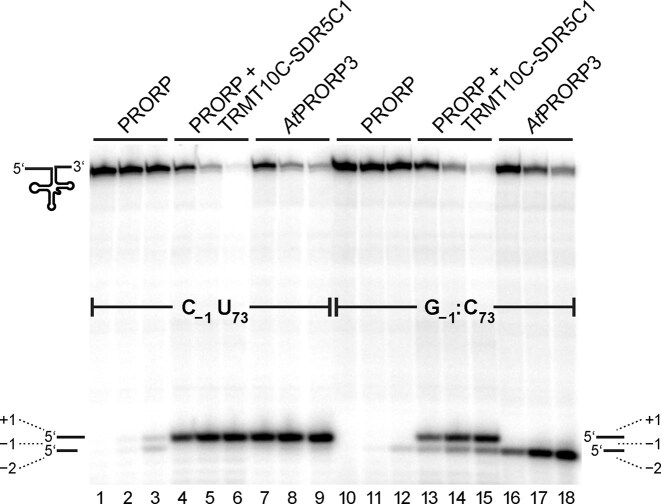 Figure 2
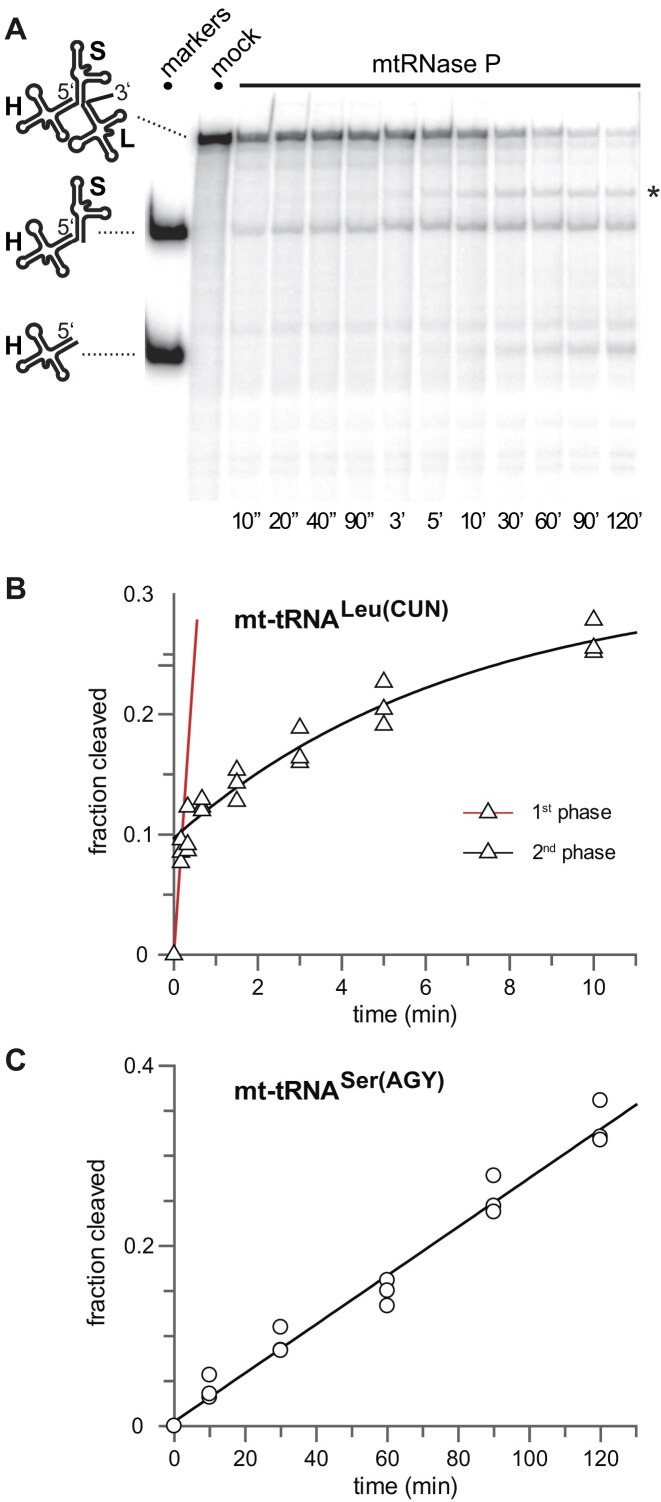 Figure 3
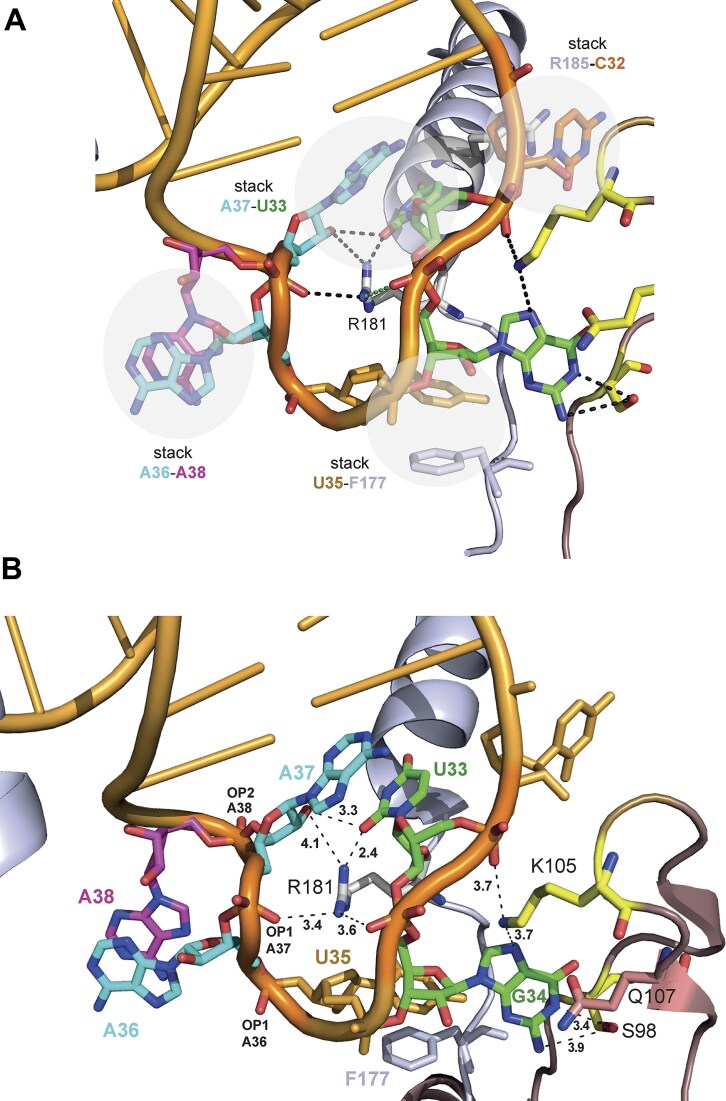 Figure 4
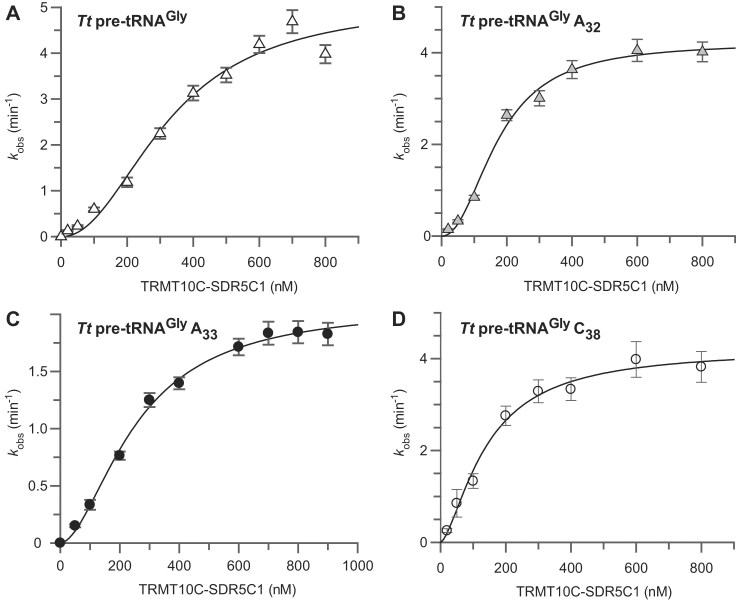 Figure 5
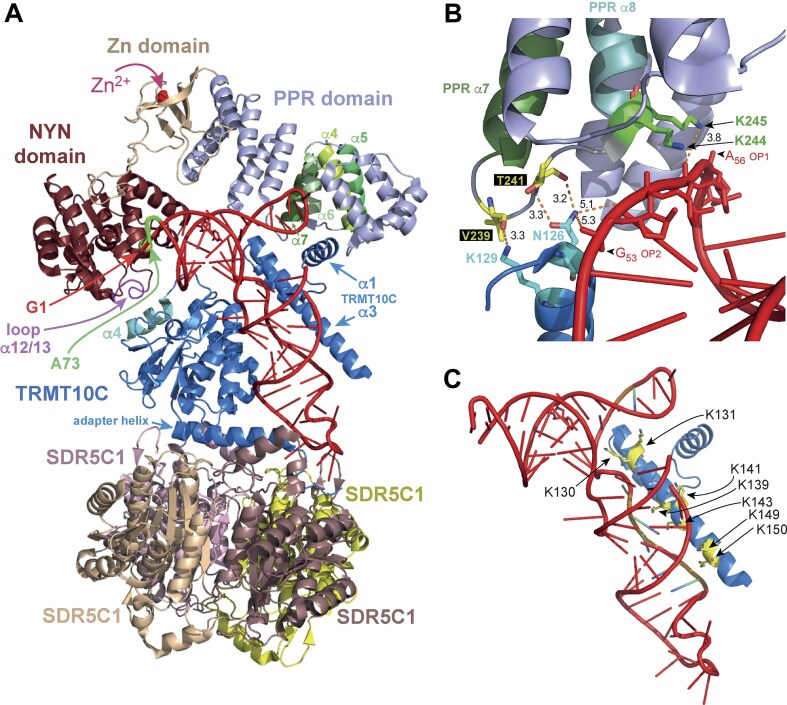 Figure 6
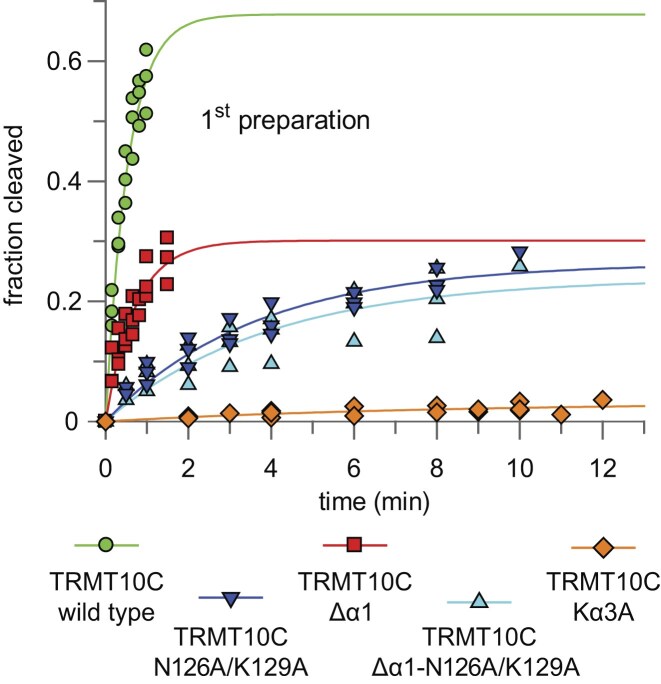 Figure 7
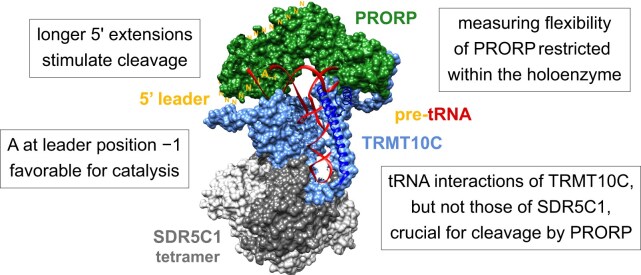 Figure 8
Peer Reviews
No public reviews on file for this paper yet. If you reviewed it on a platform where reviews are public (OpenReview, ICLR, NeurIPS, ICML), you can paste yours below so the community can read it here.
Videos
No videos yet. Explain this paper in a talk, walkthrough, or lecture? Add one.
Taxonomy
TopicsRNA and protein synthesis mechanisms · RNA modifications and cancer · RNA Research and Splicing