Nuclear factor E2 p45-related factor (NRF2) and peroxiredoxin 6 tissular expression as prognostic biomarkers for advanced HPV-negative squamous cell carcinoma of the oropharynx
Pierre Philouze, Nazim Benzerdjeb, Céline Malésys, Anne-Sophie Wozny, Mamadou Soumboundou, Amandine Kobler, Alain C. Jung, Mickaël Burgy, Philippe Céruse, Gersende Alphonse, Claire Rodriguez-Lafrasse

TL;DR
This study shows that high levels of NRF2 and peroxiredoxin 6 in oropharyngeal tumors are linked to worse survival outcomes, especially in HPV-negative patients.
Contribution
The study identifies NRF2 and peroxiredoxin 6 as novel prognostic biomarkers for HPV-negative oropharyngeal squamous cell carcinoma.
Findings
NRF2 and peroxiredoxin 6 are overexpressed in tumor tissue compared to healthy tissue.
High expression of peroxiredoxin 6 is significantly associated with worse progression-free and overall survival.
Combined high expression of NRF2 and peroxiredoxin 6 is linked to the worst survival outcomes.
Abstract
•NRF2 and peroxiredoxin 6 are overexpressed in tumor tissue compared to healthy tissue prior to any treatment, suggesting their involvement in therapy resistance.•High tumoral expression of NRF2 or peroxiredoxin 6 are negative prognostic factors on survival outcomes in non-HPV-induced oropharyngeal SCC patient.•Associating peroxiredoxin 6 and NRF2 expression improves patient survival prediction. NRF2 and peroxiredoxin 6 are overexpressed in tumor tissue compared to healthy tissue prior to any treatment, suggesting their involvement in therapy resistance. High tumoral expression of NRF2 or peroxiredoxin 6 are negative prognostic factors on survival outcomes in non-HPV-induced oropharyngeal SCC patient. Associating peroxiredoxin 6 and NRF2 expression improves patient survival prediction. Non-HPV-induced squamous cell carcinomas (SCC) of the oropharynx have a poorer prognosis than…
Genes, proteins, chemicals, diseases, species, mutations and cell lines named across the full text — each resolved to its canonical identifier and authoritative record.
Click any figure to enlarge with its caption.
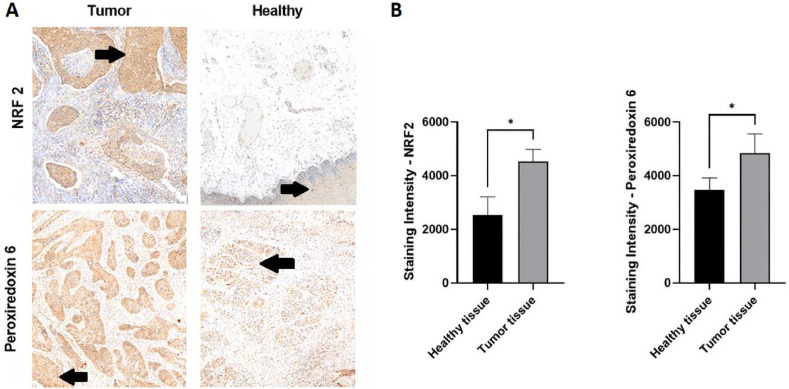 Figure 1
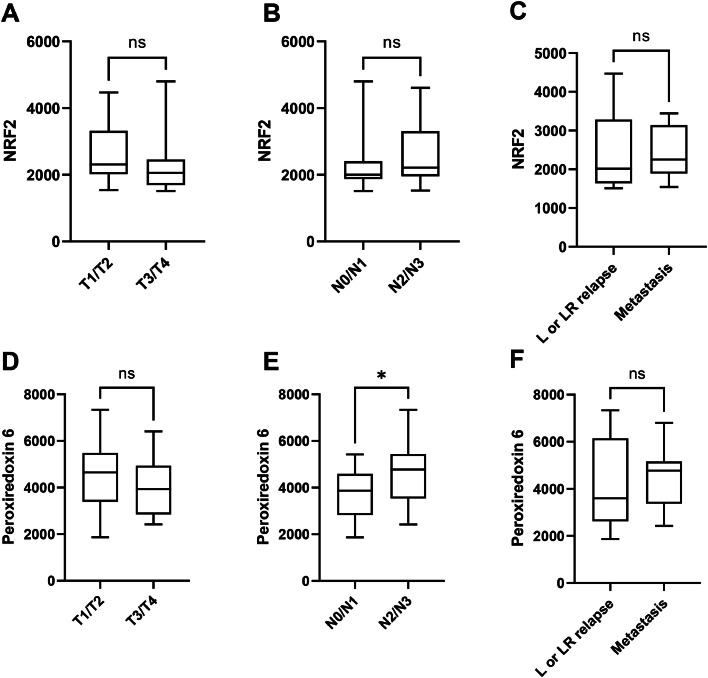 Figure 2
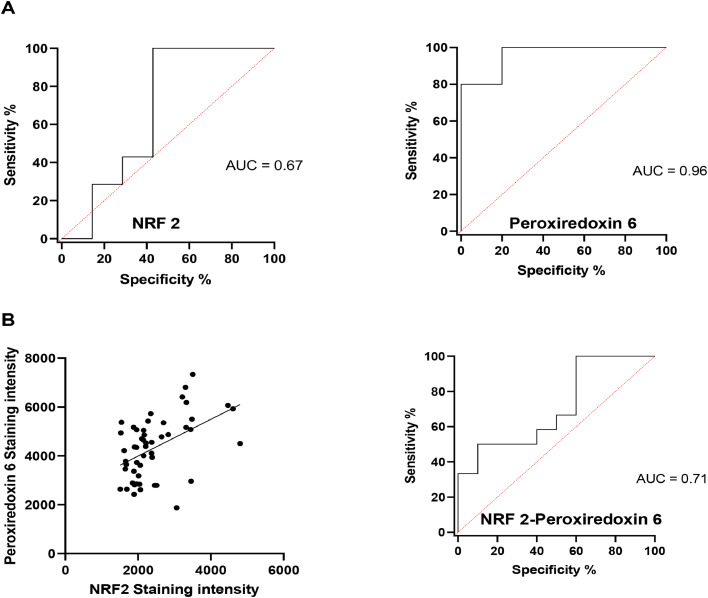 Figure 3
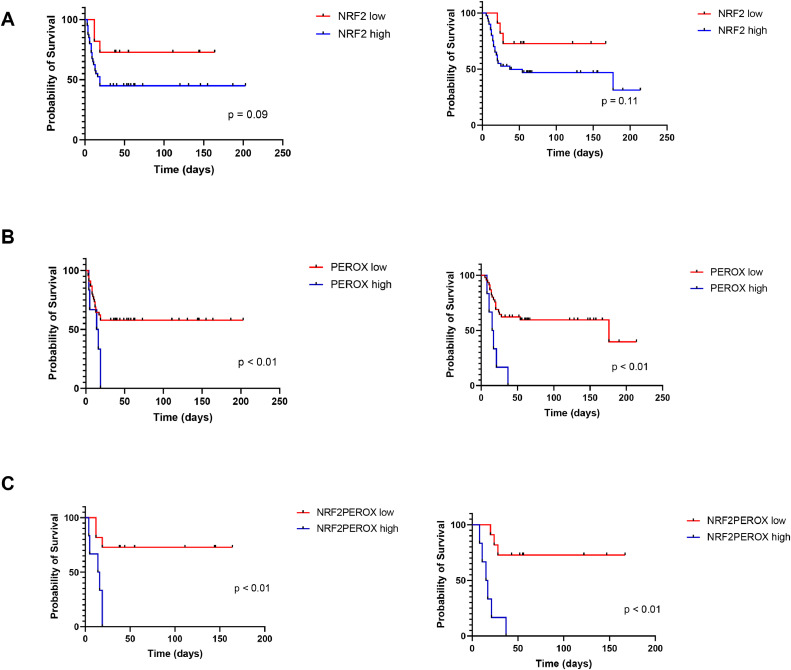 Figure 4
Peer Reviews
No public reviews on file for this paper yet. If you reviewed it on a platform where reviews are public (OpenReview, ICLR, NeurIPS, ICML), you can paste yours below so the community can read it here.
Videos
No videos yet. Explain this paper in a talk, walkthrough, or lecture? Add one.
Taxonomy
TopicsRedox biology and oxidative stress · Glutathione Transferases and Polymorphisms · Genomics, phytochemicals, and oxidative stress