Homoepitaxial growth of isotopically enriched h10BN layers on h11BN crystals by high-temperature molecular beam epitaxy
Jonathan Bradford, Amy F. M. Collins, Tin S. Cheng, Jialiang Shen, James Kerfoot, Graham A. Rance, Jiahan Li, Christopher J. Mellor, Peter H. Beton, Guillaume Cassabois, Siyuan Dai, James H. Edgar, Sergei V. Novikov

TL;DR
This paper shows how to grow isotopically enriched hBN layers on hBN crystals using high-temperature molecular beam epitaxy for advanced nanophotonic and quantum applications.
Contribution
The study introduces a method for homoepitaxial growth of phase-separated h10BN and h11BN layers using HT-MBE.
Findings
Etching h11BN crystals with molecular hydrogen enabled controlled h10BN epilayer growth with improved surface uniformity.
Lattice alignment and distinct phonon energies between h11BN and h10BN layers were confirmed using AFM and Raman spectroscopy.
No intermixing of van der Waals layers was observed, allowing spatial separation of boron isotopes in the heterostructure.
Abstract
Isotope-enriched bulk hexagonal boron nitride (hBN) crystals have enhanced properties that improve the performance of nanophotonic and quantum technologies. Developing methods to deposit epitaxial layers on such crystals enables the exciting prospects of producing isotope-engineered hBN layers and heterostructures. Here, we demonstrate the homoepitaxial growth of hBN with phase-separated 10B and 11B isotopes by high-temperature molecular beam epitaxy (HT-MBE). Controlled nucleation, improved surface uniformity, and step-flow growth of an h10BN epilayer were achieved by etching the h11BN bulk crystals with molecular hydrogen. The alignment of the h10BN epilayer and host h11BN lattices was confirmed by lattice-resolved atomic force microscopy. Micro-Raman spectroscopy and scattering-type scanning near-field optical microscopy show that the bulk h11BN and h10BN epilayer have distinct…
Genes, proteins, chemicals, diseases, species, mutations and cell lines named across the full text — each resolved to its canonical identifier and authoritative record.
Click any figure to enlarge with its caption.
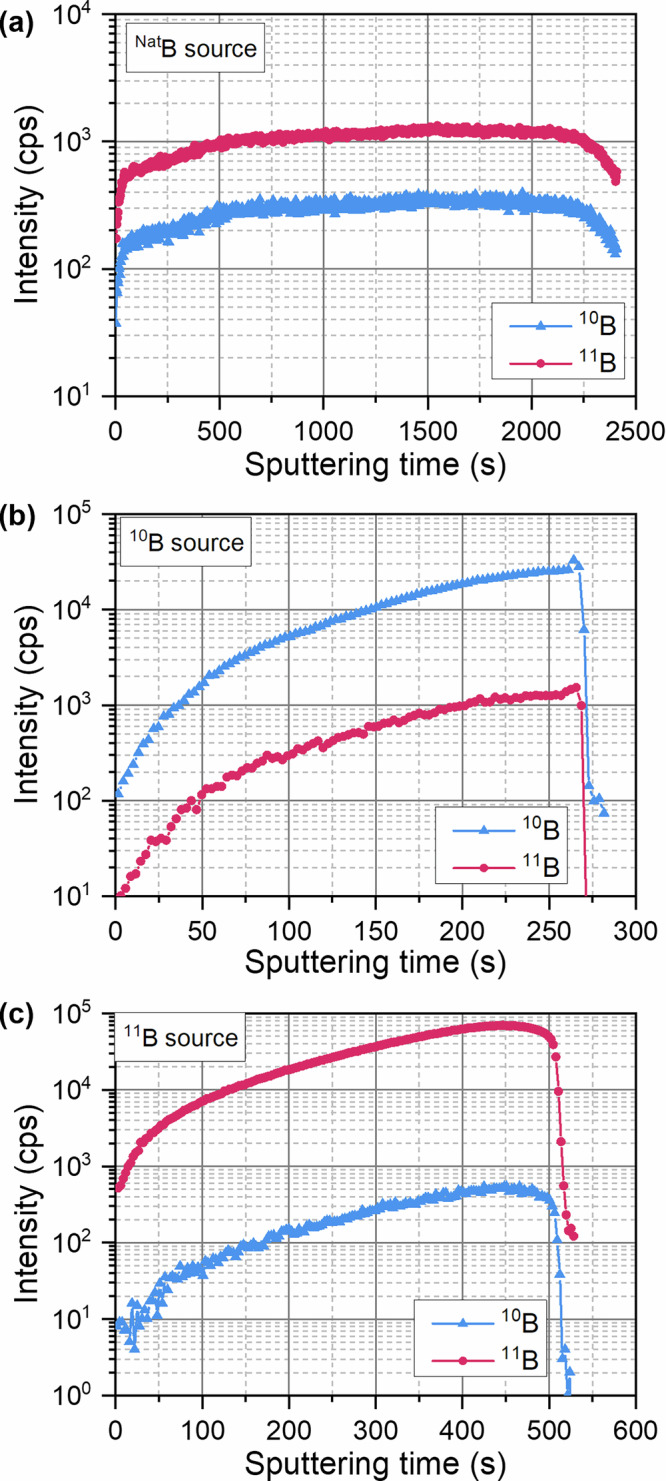 Figure 1
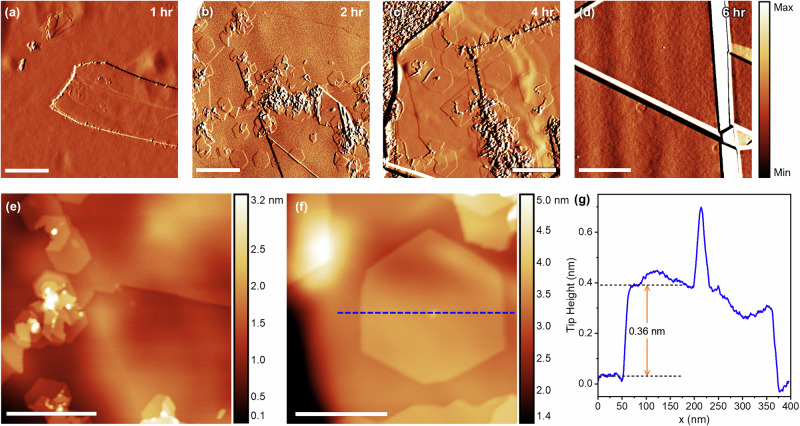 Figure 2
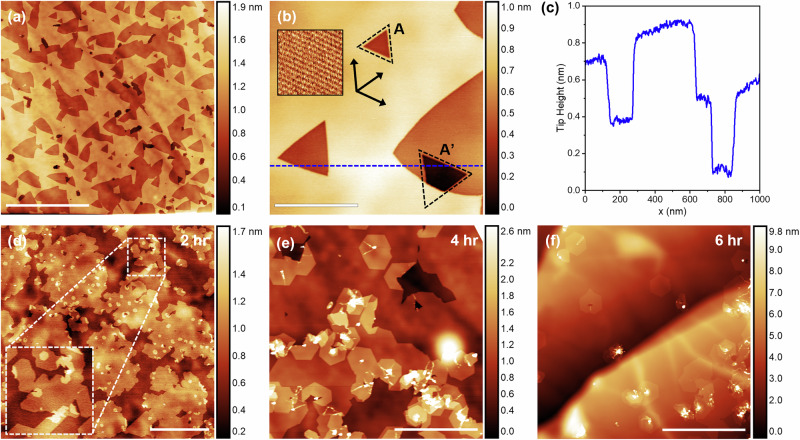 Figure 3
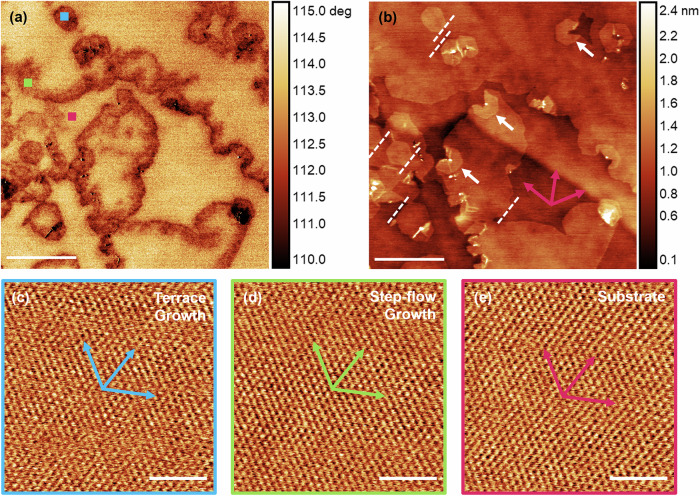 Figure 4
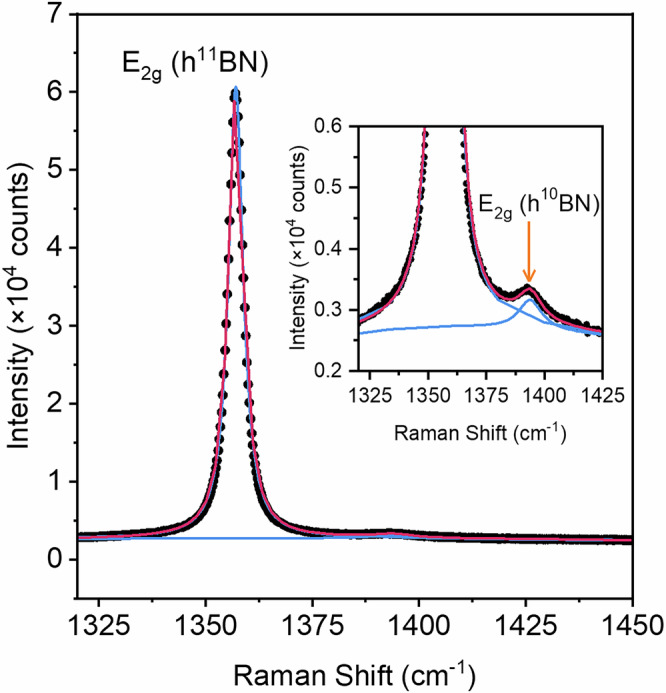 Figure 5
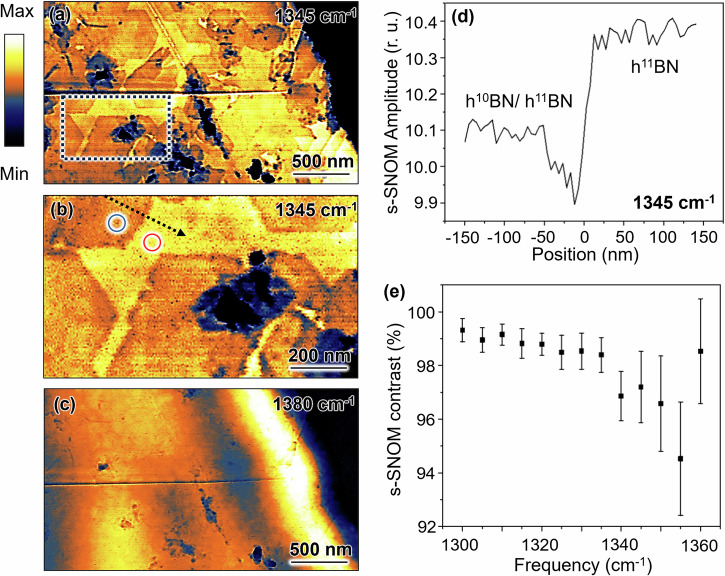 Figure 6
Peer Reviews
No public reviews on file for this paper yet. If you reviewed it on a platform where reviews are public (OpenReview, ICLR, NeurIPS, ICML), you can paste yours below so the community can read it here.
Videos
No videos yet. Explain this paper in a talk, walkthrough, or lecture? Add one.
Taxonomy
TopicsGraphene research and applications · Boron and Carbon Nanomaterials Research · 2D Materials and Applications