Fibrinogen triggers perivascular fibroblast activation in a mouse model of cortical ischemic stroke
Jose C. Martínez Santamaría, Corey Fehlberg, Pasquale Conforti, Jan N. Ness, Francesca Garafulic Justiniano, Pedro Manzitti, Felicitas Bucher, Jae K. Lee, Christian Schachtrup

TL;DR
This study shows that fibrinogen, a blood protein, triggers scar formation after stroke by activating fibroblasts, which hinders brain repair.
Contribution
The paper identifies fibrinogen as a key driver of fibroblast activation and scar formation in ischemic stroke.
Findings
Fibrinogen deposits in the perivascular space after stroke and activates fibroblasts.
Fibrinogen-induced myeloid cells contribute to fibroblast activation via β1 integrin signaling.
Fibrinogen depletion reduces fibrotic scarring and promotes neuronal survival and plasticity.
Abstract
Fibrotic scar formation caused by stromal cells is often associated with chronic, non-healing pathology impeding repair of the central nervous system (CNS). Perivascular fibroblasts (PVFs) in the perivascular space are activated, express and deposit excess collagen I (Col I), and form a fibrotic scar following CNS disease. Here we show that blood-derived fibrinogen deposition in the perivascular space following photothrombosis, a mouse model for ischemic stroke, initially induces PVF activation. Pharmacological fibrinogen depletion reduces PVF activation and migration away from blood vessels to build up the fibrotic scar. Fibrinogen-induced beta1 integrin signaling in PVF regulates Col I expression. Single-cell RNA sequencing and genetic approches revealed a contribution of fibrinogen-induced myeloid cells to PVF activation. Fibrinogen depletion abrogates PVF-astrocyte signaling and…
Genes, proteins, chemicals, diseases, species, mutations and cell lines named across the full text — each resolved to its canonical identifier and authoritative record.
Click any figure to enlarge with its caption.
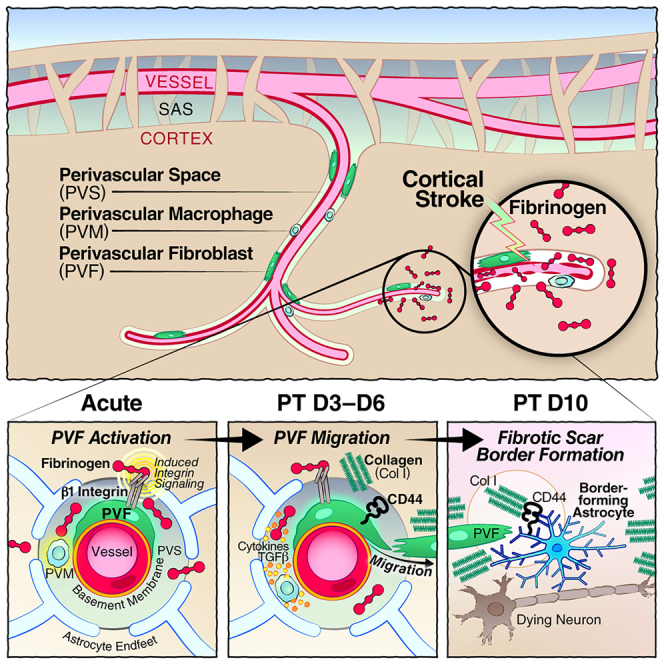 Figure 1
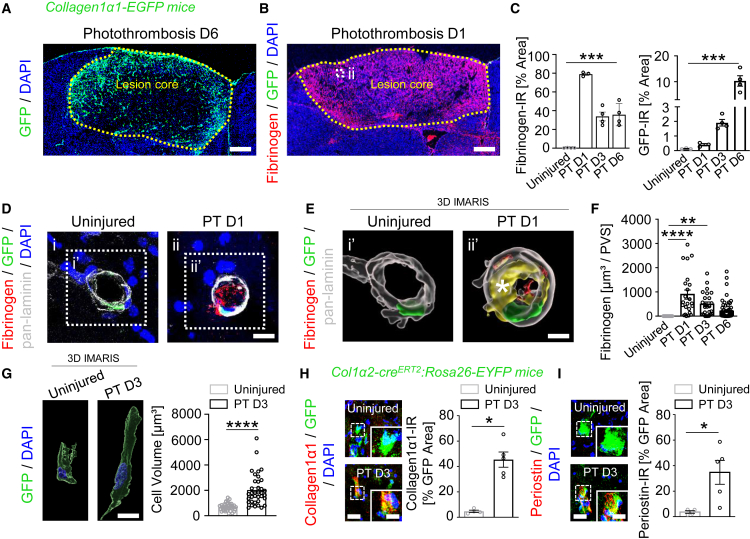 Figure 2
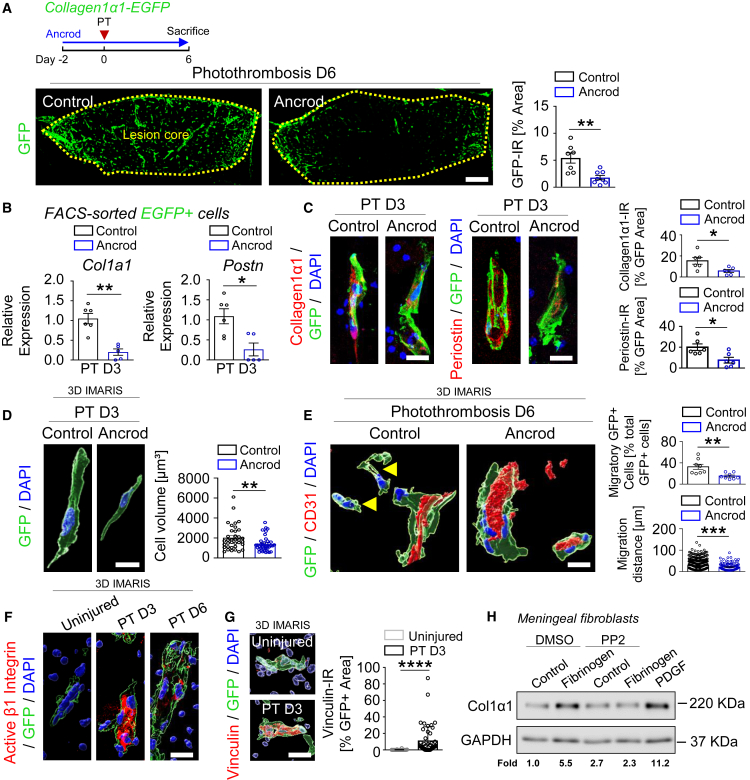 Figure 3
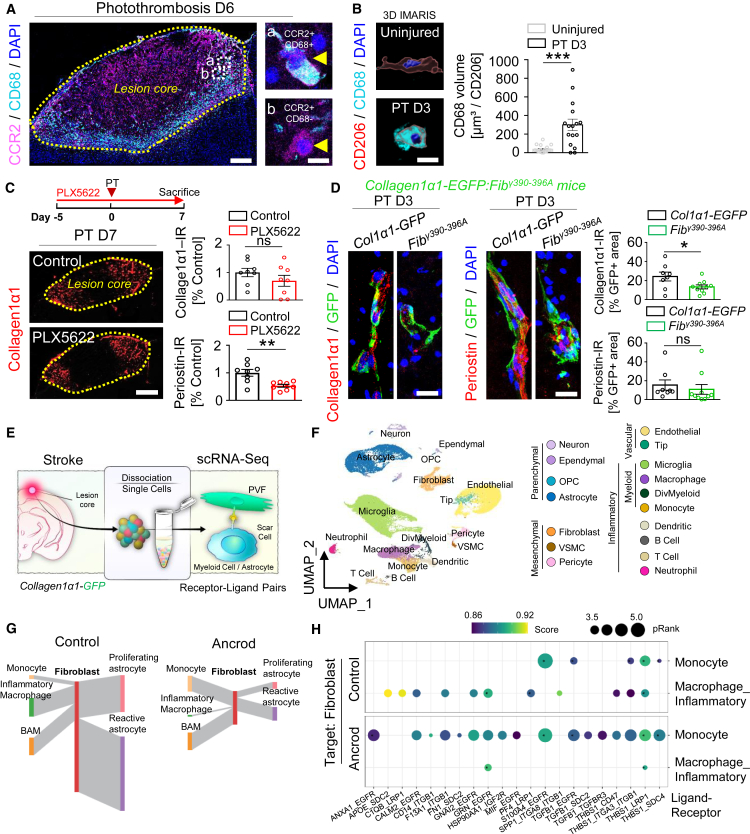 Figure 4
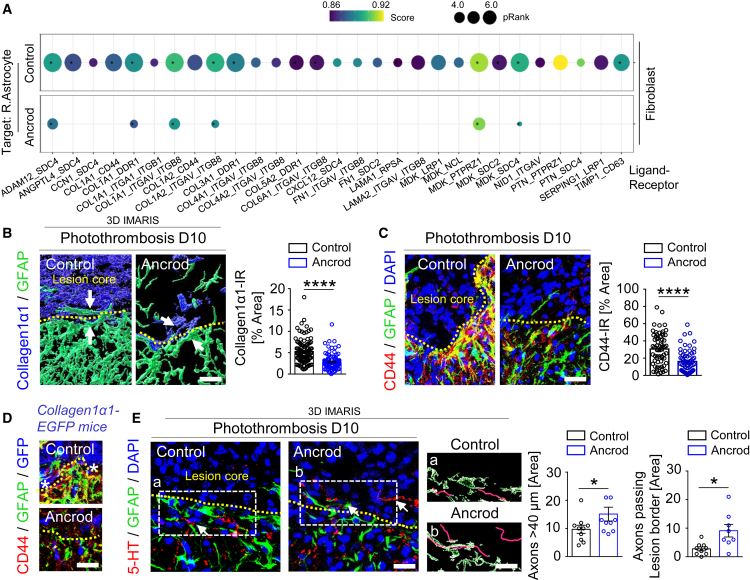 Figure 5
Peer Reviews
No public reviews on file for this paper yet. If you reviewed it on a platform where reviews are public (OpenReview, ICLR, NeurIPS, ICML), you can paste yours below so the community can read it here.
Videos
No videos yet. Explain this paper in a talk, walkthrough, or lecture? Add one.
Taxonomy
TopicsNeurological Disorders and Treatments · Neurogenesis and neuroplasticity mechanisms · Intracranial Aneurysms: Treatment and Complications