A new screening framework to support the identification of exogenous particles and suspect microplastics in situ in pathological tissue samples
Stephanie L. Wright, Claire Gwinnett, Ian S. Mudway, Yukari Ishikawa, Henry Blake, James M. Kinross, Frank J. Kelly, Jon Salisbury

TL;DR
This study develops a method to detect microplastics in human intestinal tissue, finding some evidence they may enter the body.
Contribution
A new screening framework is introduced to identify microplastics in human tissues, validated with polarized light microscopy and chemical analysis.
Findings
Subepithelial birefringent particles were found in some ileal tissue sections.
Most observed particles were due to procedural contamination, but a few may have entered via persorption.
Chemical data confirmed the presence of polypropylene and polyvinylchloride in samples.
Abstract
Microplastics are ubiquitous environmental pollutants that have been detected in various human tissues. Often the particle sizes reported challenge established theory in toxicokinetics, and fundamental data on whether exogenous microparticles can enter tissues (and which tissues) is needed. This observational and method validation study aimed to develop a screening framework to determine whether particles including microplastics can access tissues using human ileal tissue sections and to investigate the presence of exogenous particles within the subepithelial mucosa. As proof of concept that exogenous particles may translocate into tissues, a screening framework was established using polarised light microscopy (PLM), to identify birefringent particles in ileal tissue sections from 101 subjects. The population included adults who had undergone endoscopy and biopsy for the investigation…
Genes, proteins, chemicals, diseases, species, mutations and cell lines named across the full text — each resolved to its canonical identifier and authoritative record.
Click any figure to enlarge with its caption.
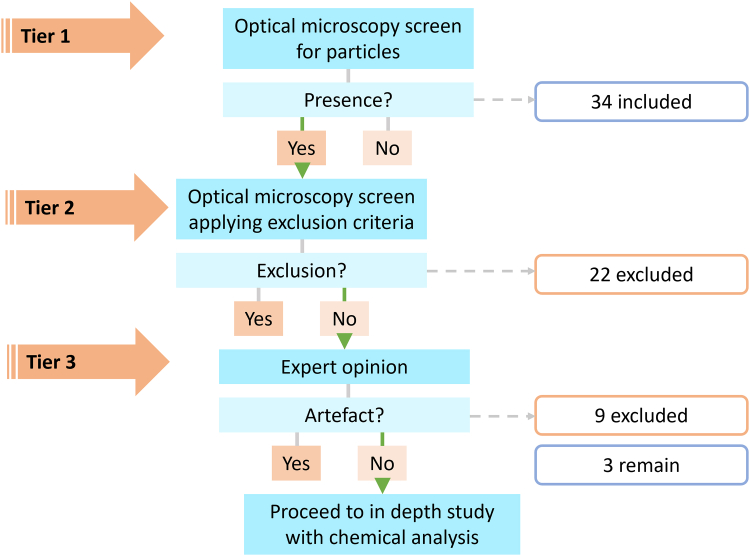 Figure 1
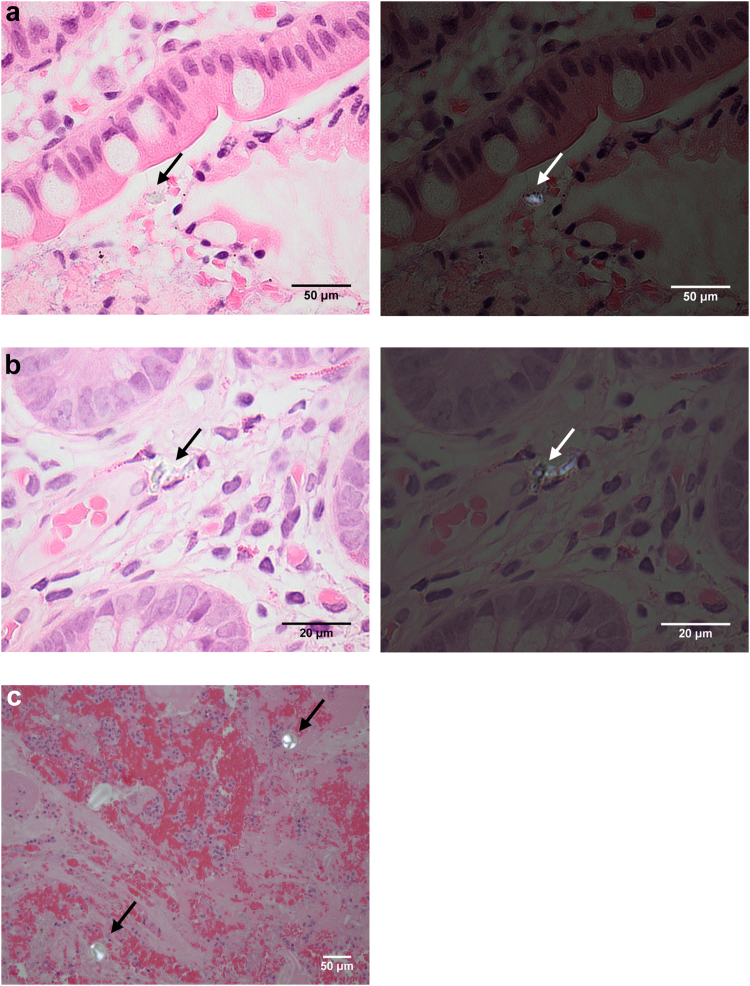 Figure 2
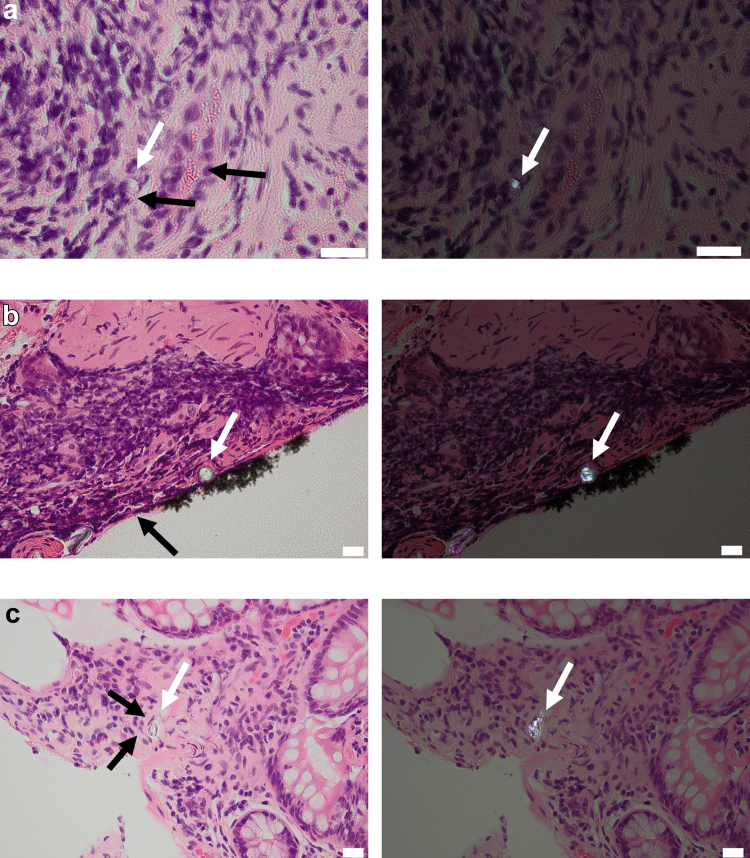 Figure 3
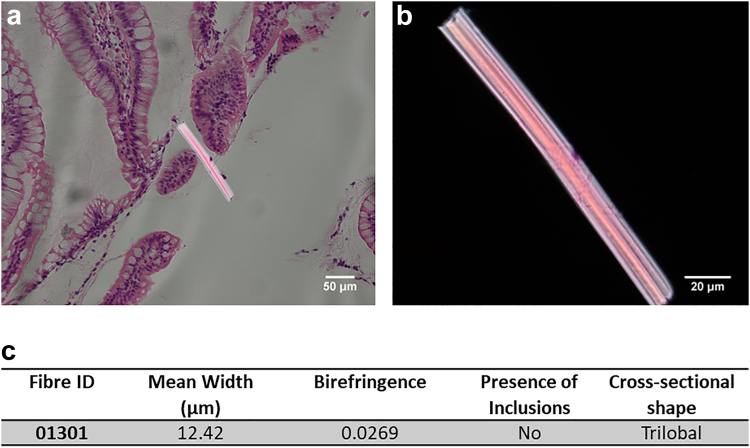 Figure 4
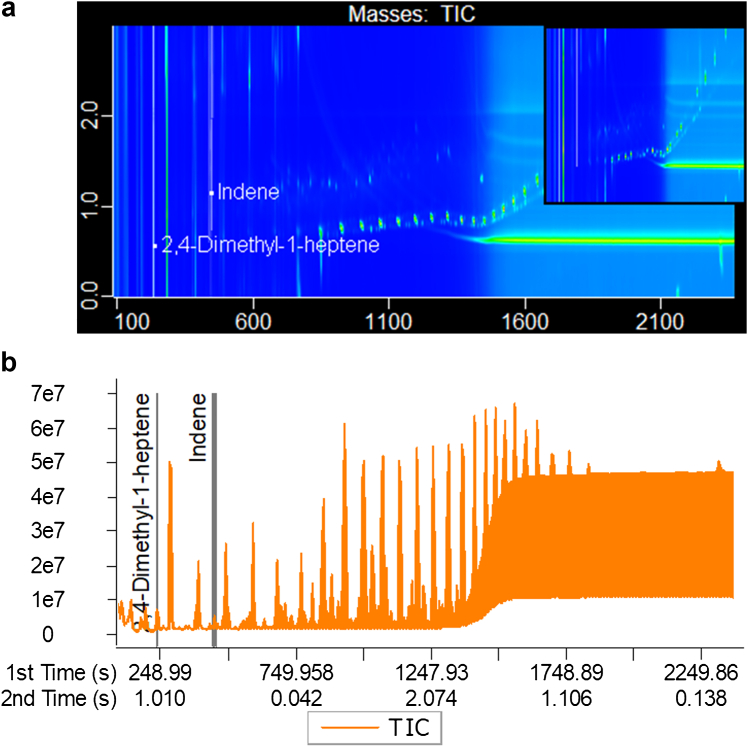 Figure 5
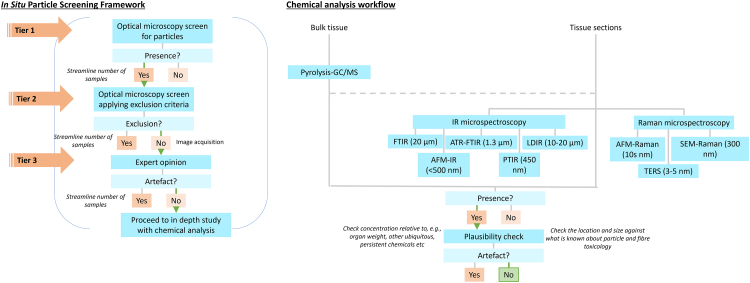 Figure 6
Peer Reviews
No public reviews on file for this paper yet. If you reviewed it on a platform where reviews are public (OpenReview, ICLR, NeurIPS, ICML), you can paste yours below so the community can read it here.
Videos
No videos yet. Explain this paper in a talk, walkthrough, or lecture? Add one.
Taxonomy
TopicsMicroplastics and Plastic Pollution · Molecular Biology Techniques and Applications · Effects and risks of endocrine disrupting chemicals