Development of a Predictive Model for Large‐Volume Pleural Effusion After Separation Surgery in Patients With Spinal Metastatic Tumors
Haochen Mou, Keyi Wang, Hao Qu, Yaling Jiang, Meng Liu, Xiaobo Yan, Xin Huang, Nong Lin, Zhaoming Ye

TL;DR
This study develops a predictive model to identify patients at risk of large-volume pleural effusion after spinal tumor surgery, aiming to improve treatment outcomes.
Contribution
A high-accuracy predictive nomogram for large-volume pleural effusion after separation surgery in spinal metastasis patients is developed.
Findings
Advanced age, intraoperative blood loss, and low preoperative albumin are significant risk factors for large-volume pleural effusion.
The predictive model achieved high accuracy with AUC values of 0.953 (training) and 0.927 (testing).
Early identification of high-risk patients can improve prognosis by enabling timely interventions.
Abstract
Separation surgery followed by radiotherapy has emerged as a prevalent approach for managing spinal metastatic tumors. However, large‐volume postoperative pleural effusion (POPE) represents a challenging complication, as it potentially delays subsequent treatments and increases morbidity. This study aims to identify risk factors for large‐volume POPE and develop a predictive model for early identification to improve patient prognosis. This retrospective study analyzed 443 patients who underwent separation surgery for spinal metastases at our center between January 2014 and January 2022. High‐resolution CT‐based 3D modeling was utilized for accurate pleural effusion (PE) volume quantification. Variables including patient demographics, surgical details, and laboratory results were examined to identify risk factors associated with large‐volume POPE (≥ 1000 mL). A predictive nomogram was…
Genes, proteins, chemicals, diseases, species, mutations and cell lines named across the full text — each resolved to its canonical identifier and authoritative record.
Click any figure to enlarge with its caption.
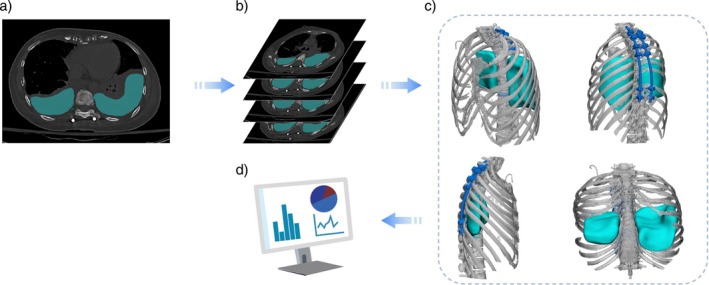 Figure 1
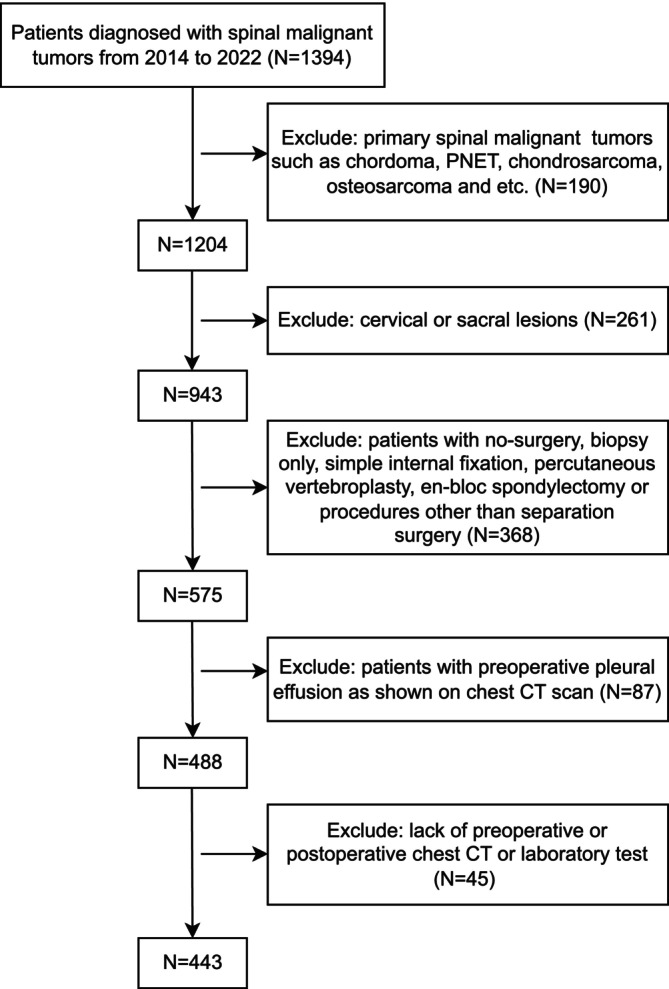 Figure 2
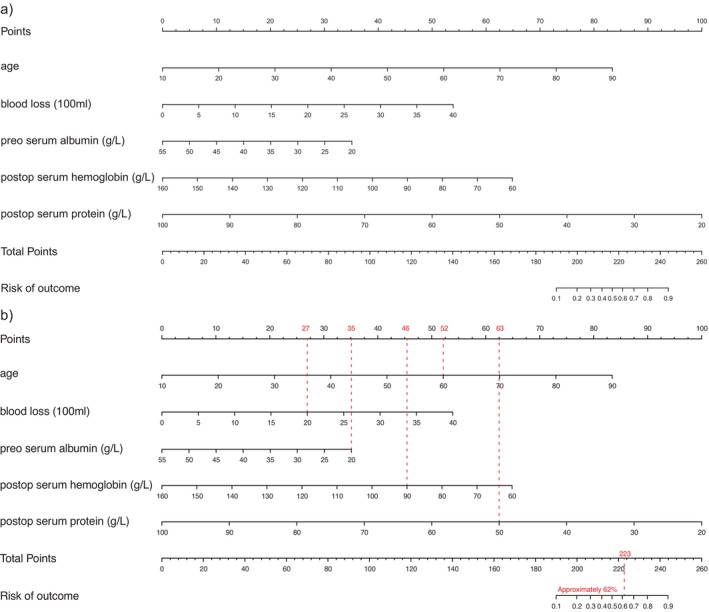 Figure 3
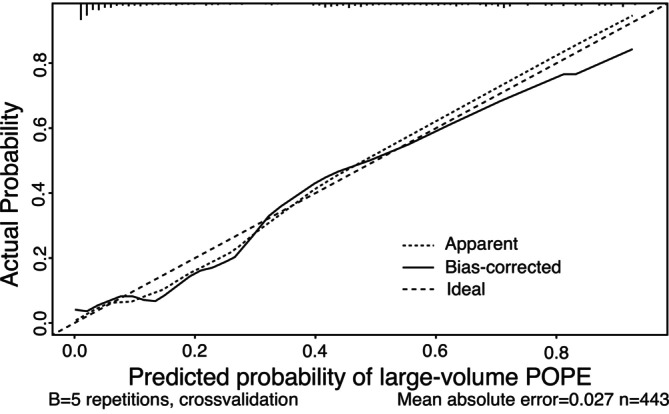 Figure 4
Peer Reviews
No public reviews on file for this paper yet. If you reviewed it on a platform where reviews are public (OpenReview, ICLR, NeurIPS, ICML), you can paste yours below so the community can read it here.
Videos
No videos yet. Explain this paper in a talk, walkthrough, or lecture? Add one.
Taxonomy
TopicsManagement of metastatic bone disease · Spinal Fractures and Fixation Techniques · Spine and Intervertebral Disc Pathology