Role of TLR4 in Enteric Glia Response to Clostridioides Difficile Toxins: Insights From In Vivo and In Vitro Studies
Maria Lucianny Lima Barbosa, Deiziane Viana da Silva Costa, Dvison Melo de Pacífico, Conceição da Silva Martins Rebouças, Cirle Alcantara Warren, Renata Ferreira Carvalho de Leitão, Gerly Anne de Castro Brito

TL;DR
This study shows that TLR4 contributes to intestinal inflammation and cell death caused by Clostridioides difficile toxins, and blocking TLR4 reduces these effects.
Contribution
The study reveals TLR4's role in C. difficile-induced inflammation and cell death in enteric glial cells, and demonstrates that inhibiting TLR4 mitigates these responses.
Findings
TLR4 expression increases in C. difficile-infected intestinal tissue and toxin-exposed enteric glial cells.
Blocking TLR4 reduces NFκB p65 nuclear translocation and TNF-α expression but does not affect IL-6 upregulation.
TLR4 inhibition mitigates toxin-induced cell death in enteric glial cells.
Abstract
Clostridioides difficile ( C. difficile ) is a Gram‐positive anaerobic bacillus that causes intestinal disorders. Toll‐like receptor 4 (TLR4) plays a key role in innate immunity. This study examines the role of TLR4 in the response to C. difficile toxins, which induce cell death and inflammatory responses in enteric glial cells (EGCs). Male C57BL/6 mice were infected with C. difficile , and cecum samples were analysed 3 days post‐infection for TLR4 expression. In vitro, EGCs were exposed to C. difficile toxins with or without C34, a TLR4 antagonist, or pre‐exposed to TLR4‐specific 21‐nt small interfering RNAs (siRNA). TLR4 expression was assessed by immunocytochemistry, immunofluorescence, qPCR, and Western blotting. NFκB p65, TNF‐α, IL‐6, cleaved caspase‐3, and phosphatidylserine binding to annexin‐V were evaluated. TLR4 expression increased in infected intestinal tissue and…
Genes, proteins, chemicals, diseases, species, mutations and cell lines named across the full text — each resolved to its canonical identifier and authoritative record.
Click any figure to enlarge with its caption.
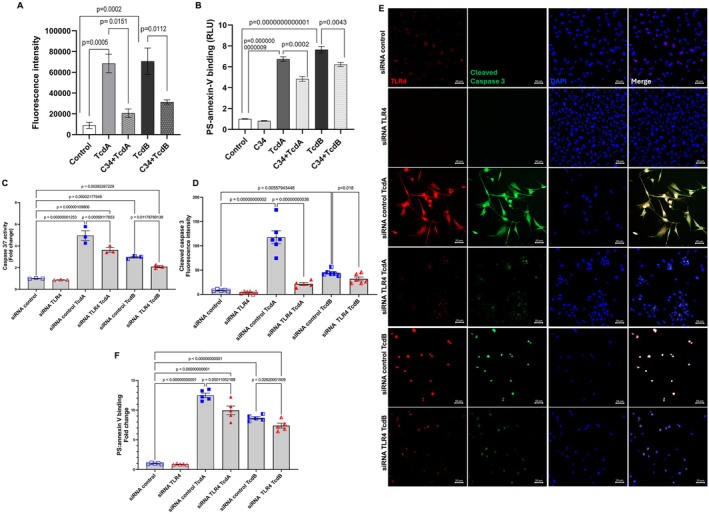 Figure 1
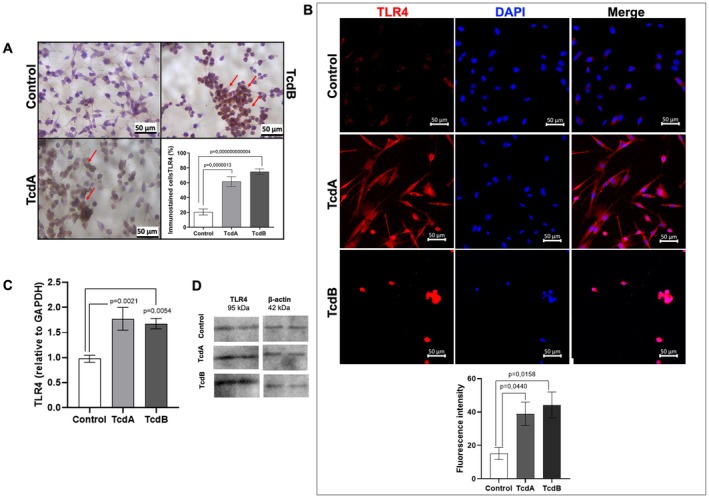 Figure 2
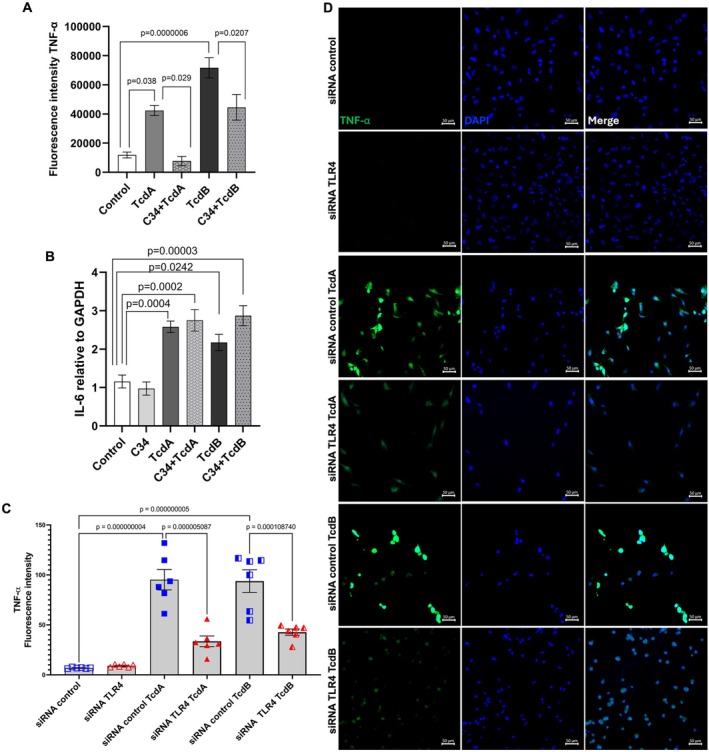 Figure 3
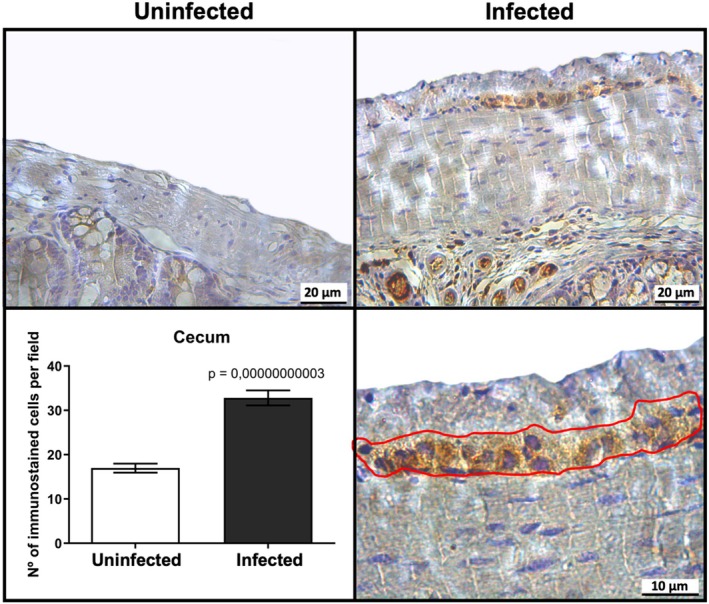 Figure 4
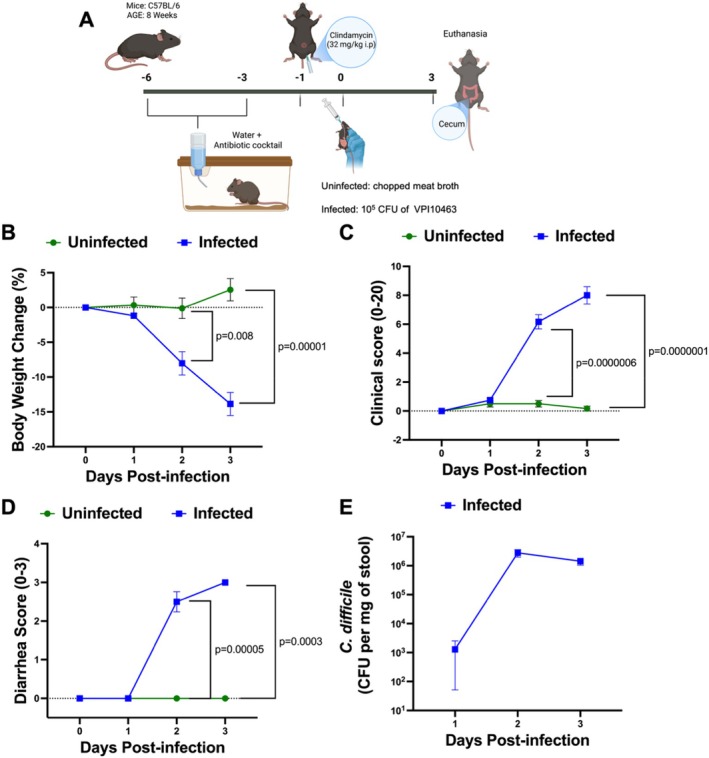 Figure 5
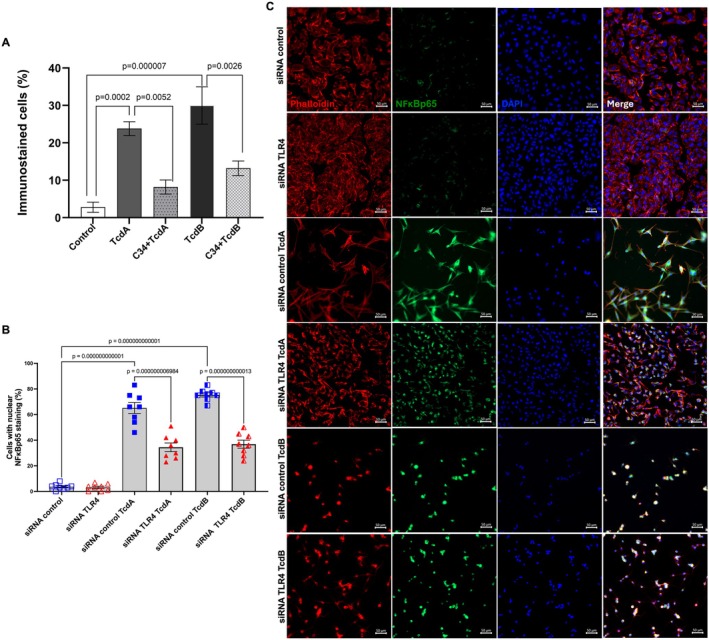 Figure 6
Peer Reviews
No public reviews on file for this paper yet. If you reviewed it on a platform where reviews are public (OpenReview, ICLR, NeurIPS, ICML), you can paste yours below so the community can read it here.
Videos
No videos yet. Explain this paper in a talk, walkthrough, or lecture? Add one.
Taxonomy
TopicsClostridium difficile and Clostridium perfringens research · Gastrointestinal motility and disorders · Helicobacter pylori-related gastroenterology studies