Isotype conversion of Staphylococcal-specific IgG into IgM broadens the reactivity to other bacterial pathogens
Remy M. Muts, Astrid Hendriks, Josefien W. Hommes, Max L.B. Grönloh, Douwe J. Dijkstra, Carla J.C. de Haas, Piet C. Aerts, Eduard H.T.M. Ebberink, Albert J.R. Heck, Zhen Wang, Haoru Zhuang, Jeroen D.C. Codée, Bas G.J. Surewaard, Dani A.C. Heesterbeek, Nina M. van Sorge

TL;DR
Changing specific IgG antibodies into IgM form makes them react to more bacteria, which could improve treatments for infections.
Contribution
Converting anti-staphylococcal IgG into IgM broadens reactivity to other bacterial pathogens while maintaining functionality.
Findings
Converted IgMs cross-react with Gram-negative bacteria like E. coli and N. meningitidis.
IgM antibodies induce complement effects on both Gram-positive and Gram-negative bacteria.
IgM cross-reactivity relies on multivalent binding and can be mimicked by IgG engineering.
Abstract
Therapeutic antibodies are actively explored as alternative to treat or prevent bacterial infections. However, the narrow antigen specificity of IgG in combination with broad diversity in bacterial surface structures currently hampers the development of therapeutic antibodies against bacteria. Here we reveal that isotype conversion of three highly specific anti-staphylococcal antibodies from IgG into IgM does not only affect Fc effector functions but also modifies the interaction of Fab domains with bacterial surface antigens. These converted IgMs gain cross-reactivity for a broad range of bacterial species, including Gram-negatives such as Escherichia coli and Neisseria meningitidis and even protect against invasive infection with Streptococcus pyogenes in vivo. Mechanistic studies show that enhanced cross-specificity by IgM is conferred by changed ligand specificity and multivalent…
Genes, proteins, chemicals, diseases, species, mutations and cell lines named across the full text — each resolved to its canonical identifier and authoritative record.
Click any figure to enlarge with its caption.
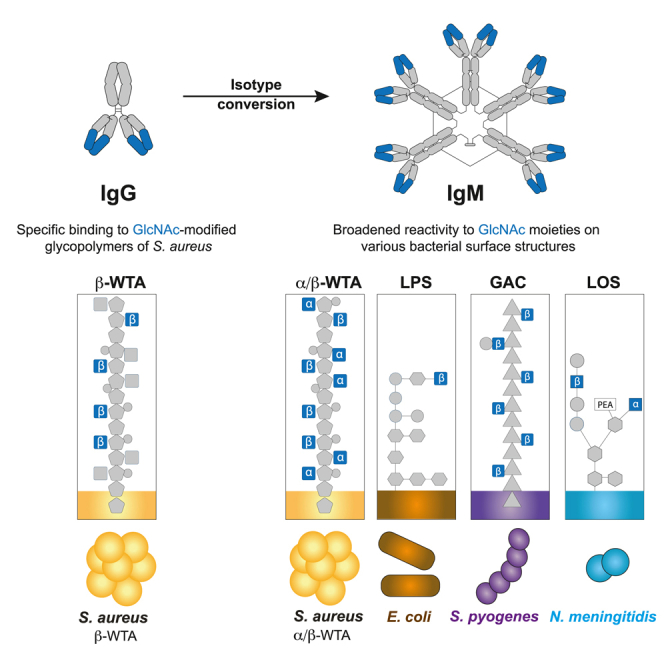 Figure 1
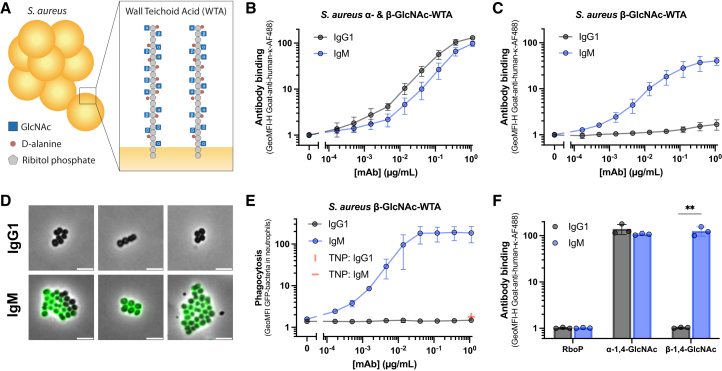 Figure 2
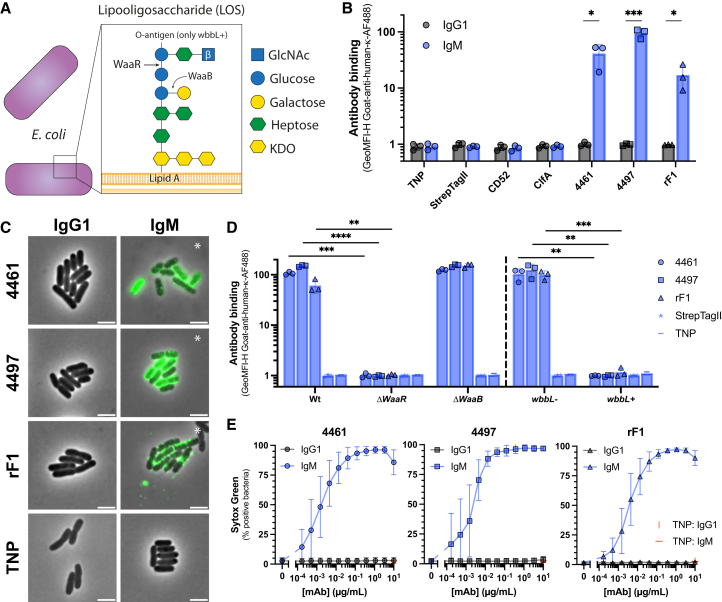 Figure 3
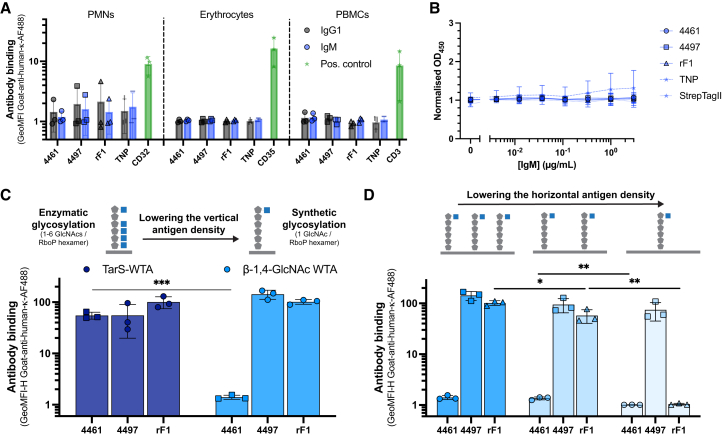 Figure 4
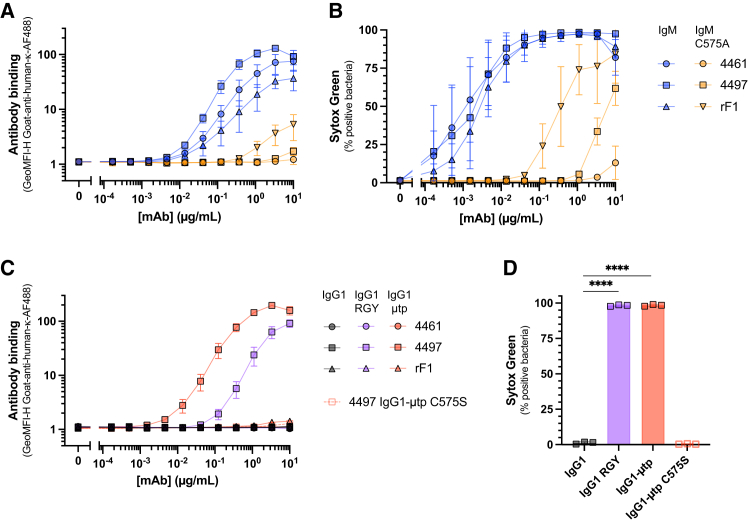 Figure 5
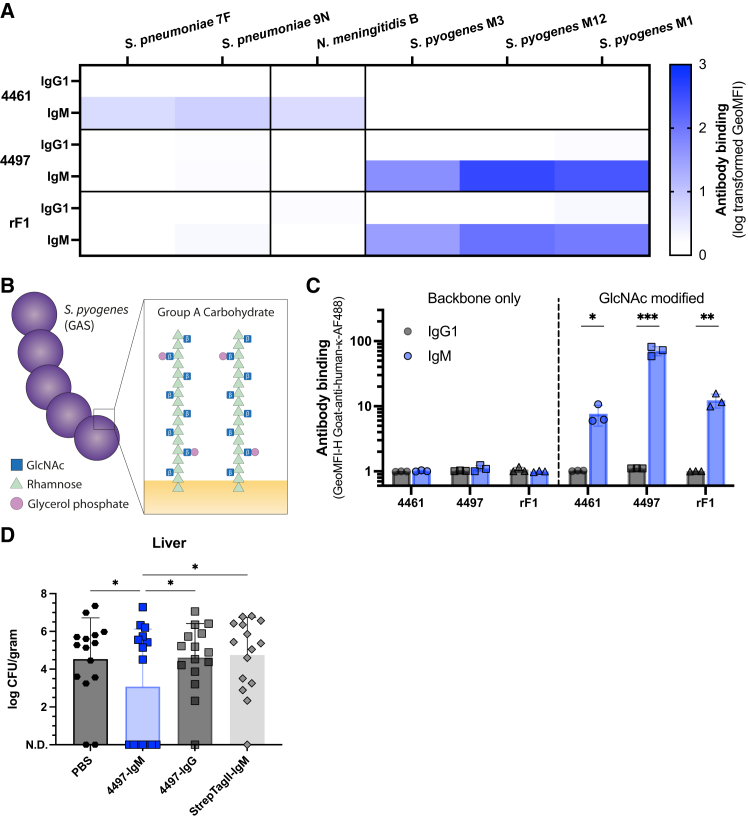 Figure 6
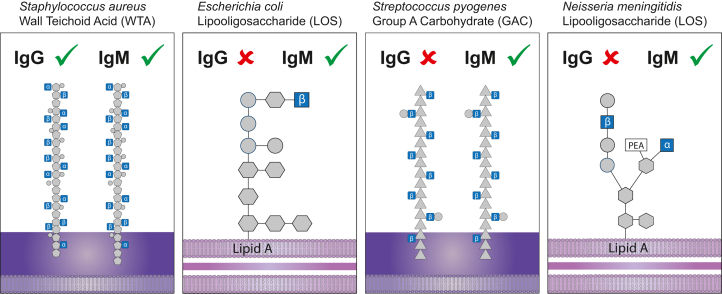 Figure 7
Peer Reviews
No public reviews on file for this paper yet. If you reviewed it on a platform where reviews are public (OpenReview, ICLR, NeurIPS, ICML), you can paste yours below so the community can read it here.
Videos
No videos yet. Explain this paper in a talk, walkthrough, or lecture? Add one.
Taxonomy
TopicsClostridium difficile and Clostridium perfringens research · Monoclonal and Polyclonal Antibodies Research · Escherichia coli research studies