Multiplex base editing of BCL11A regulatory elements to treat sickle cell disease
Letizia Fontana, Pierre Martinucci, Simone Amistadi, Tristan Felix, Margaux Mombled, Alexandra Tachtsidi, Guillaume Corre, Anne Chalumeau, Giulia Hardouin, Jeanne Martin, Oriana Romano, Mario Amendola, Panagiotis Antoniou, Annarita Miccio

TL;DR
The paper introduces a new gene editing method to treat sickle cell disease by reactivating fetal hemoglobin without causing harmful DNA breaks.
Contribution
Multiplex base editing of BCL11A enhancers achieves higher fetal hemoglobin levels with minimal DNA damage compared to CRISPR-Cas9.
Findings
Base editing disrupts DNA motifs in BCL11A enhancers without generating double-strand breaks.
Combined editing of +58-kb and +55-kb enhancers boosts fetal hemoglobin induction in red blood cells.
Base editing is safe and durable in long-term repopulating hematopoietic stem cells.
Abstract
Sickle cell disease (SCD) is a genetic anemia caused by the production of an abnormal adult hemoglobin. Elevated levels of fetal hemoglobin (HbF) in adulthood reduce disease severity. A promising therapy involves the treatment of hematopoietic stem/progenitor cells (HSPCs) with CRISPR-Cas9 to downregulate the HbF repressor BCL11A via generation of double-strand breaks (DSBs) in the +58-kb enhancer. To improve safety and HbF induction, we use base editors to target both the +58-kb and +55-kb enhancers without generating DSBs. We dissect key DNA motifs recognized by transcriptional activators and identify critical nucleotides. Multiplex base editing efficiently disrupts these sites, reactivating HbF to levels exceeding those achieved with CRISPR-Cas9-induced editing, while minimizing DSBs and genomic rearrangements. Base editing is effective in long-term repopulating HSPCs and results in…
Genes, proteins, chemicals, diseases, species, mutations and cell lines named across the full text — each resolved to its canonical identifier and authoritative record.
Click any figure to enlarge with its caption.
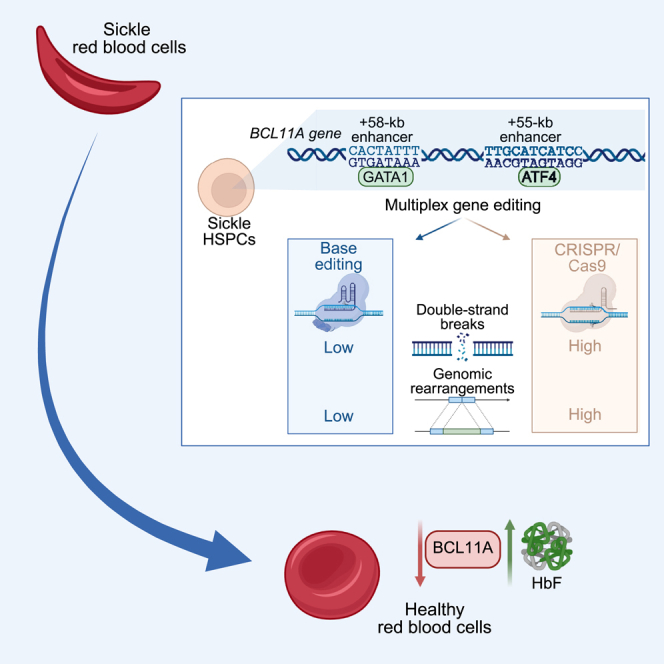 Figure 1
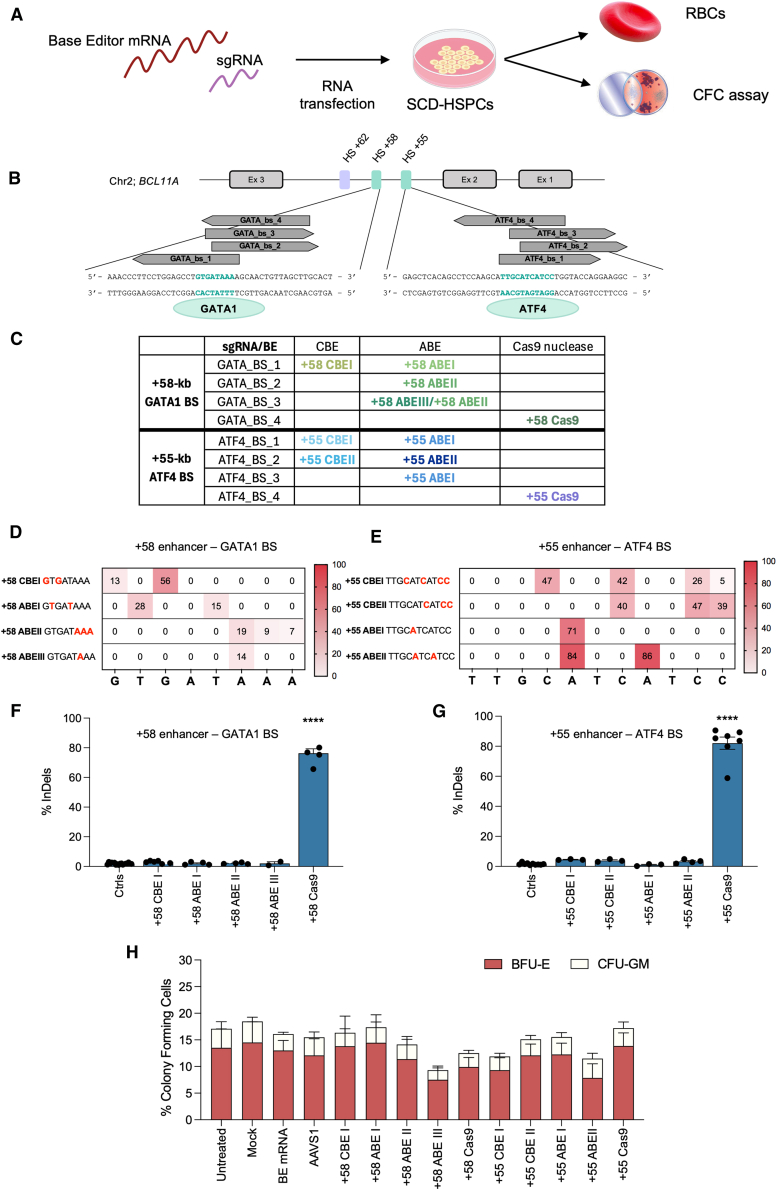 Figure 2
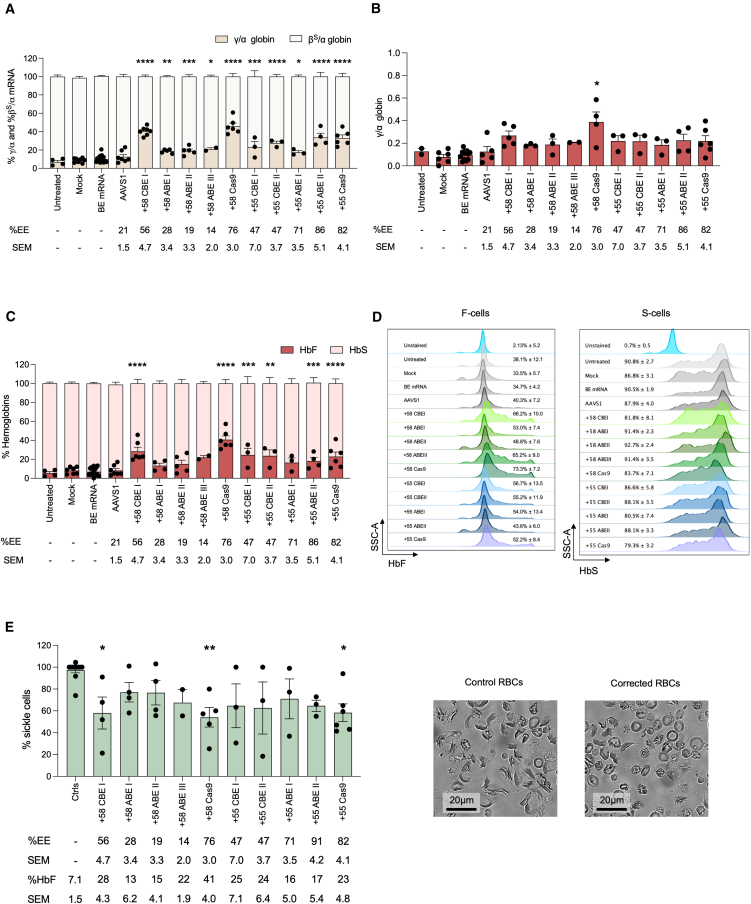 Figure 3
 Figure 4
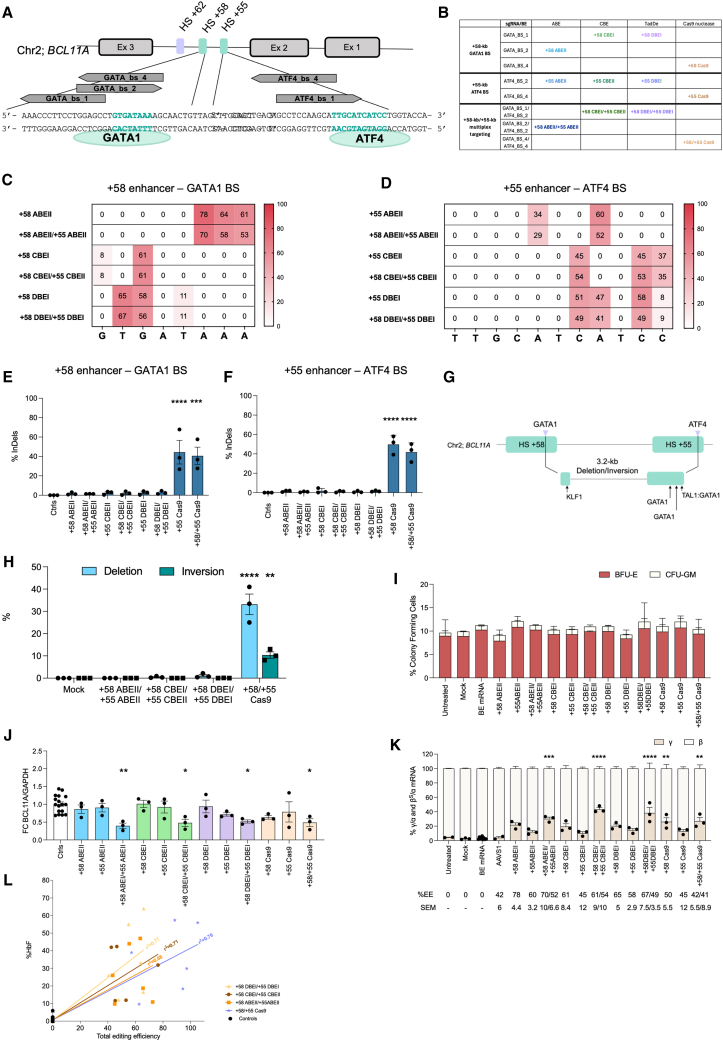 Figure 5
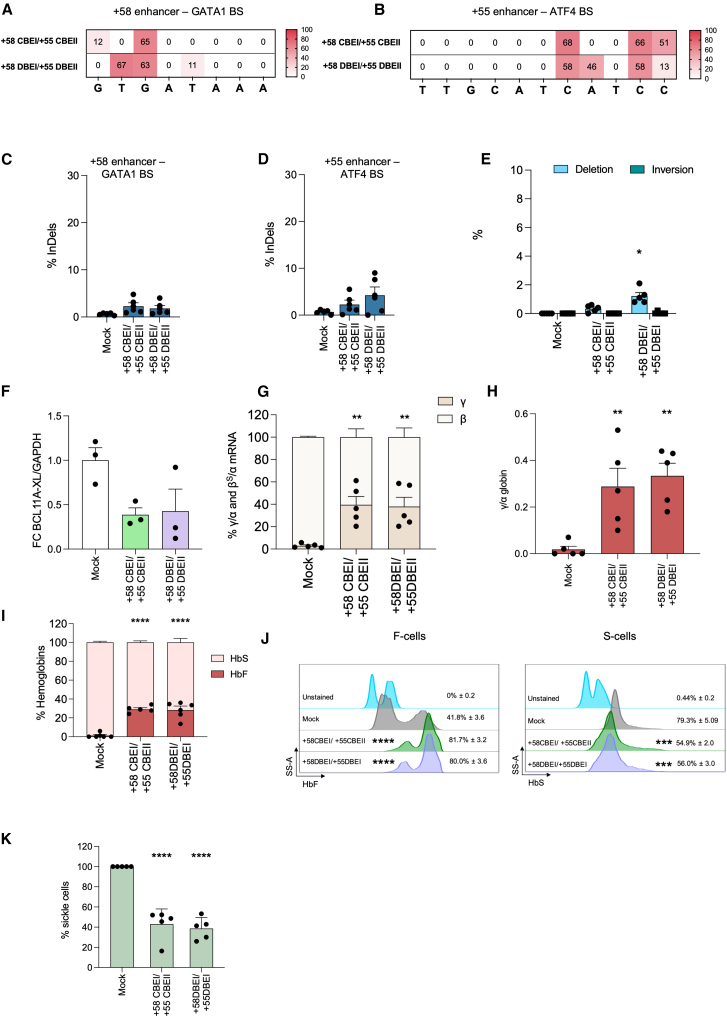 Figure 6
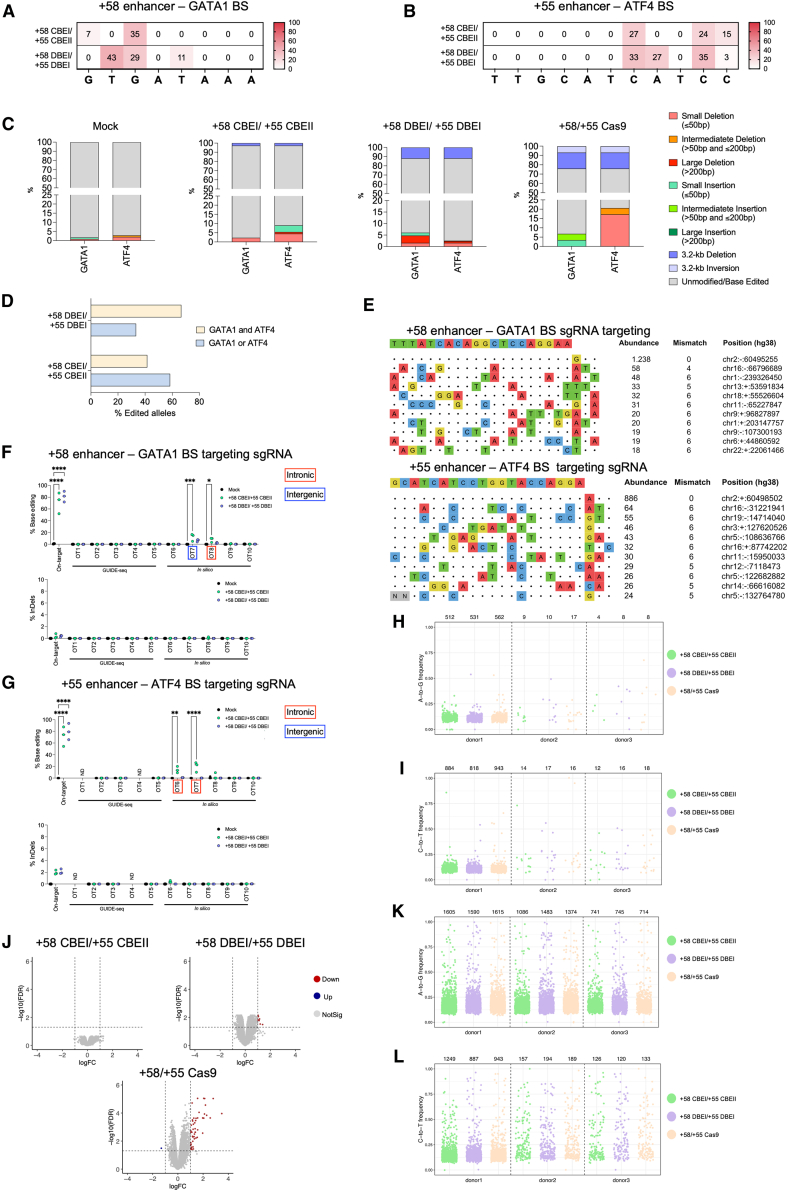 Figure 7
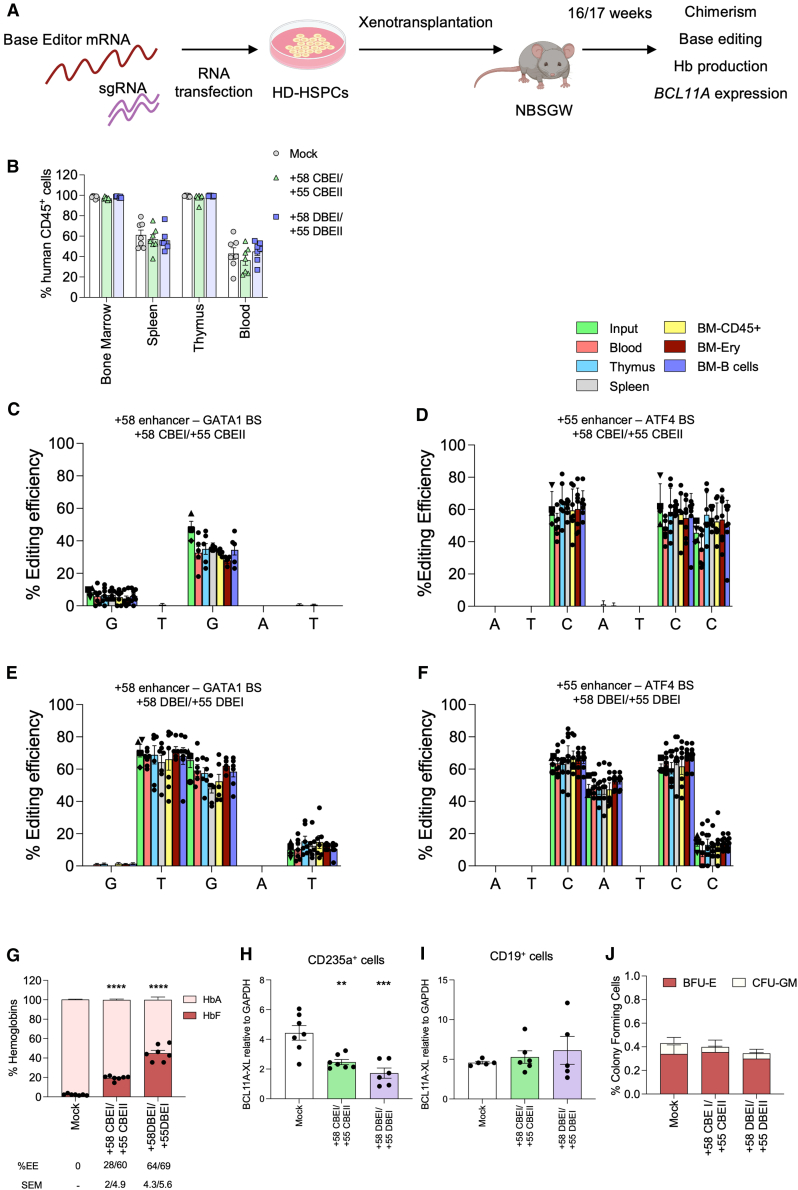 Figure 8
Peer Reviews
No public reviews on file for this paper yet. If you reviewed it on a platform where reviews are public (OpenReview, ICLR, NeurIPS, ICML), you can paste yours below so the community can read it here.
Videos
No videos yet. Explain this paper in a talk, walkthrough, or lecture? Add one.
Taxonomy
TopicsCRISPR and Genetic Engineering · RNA regulation and disease · Hemoglobinopathies and Related Disorders