Lentiviral vectors for hematopoietic stem cell gene therapy restore α-globin expression in α-thalassemia red blood cells
Eva E.R. Segura, Kevyn Hart, Beatriz Campo Fernandez, Devin Brown, Kevin Tam, Andrea Gutierrez Garcia, Eva Seigneurbieux, Karen Li, Carol Mulumba, Emma Blakely, Katelyn Masiuk, Roshani Sinha, Devesh Sharma, John Everett, Matthew Hogenauer, M. Kyle Cromer, Frederic Bushman

TL;DR
Researchers developed a gene therapy using lentiviral vectors to restore alpha-globin expression in red blood cells of patients with alpha thalassemia major, offering a potential cure without needing a donor.
Contribution
A novel gene therapy approach using optimized β-globin regulatory elements to restore α-globin expression in hematopoietic stem cells for alpha thalassemia.
Findings
Lentiviral vectors achieved up to 100% transduction efficiency in hematopoietic stem and progenitor cells.
Treatment restored α/β-globin mRNA ratios and increased hemoglobin levels by 50%–100% in patient-derived cells.
Vector integration was safe and within optimal copy numbers for clinical application.
Abstract
Alpha thalassemia major (ATM) is an inherited blood disorder caused by the absence of all four α-globin genes (HBA2/1), resulting in severe anemia and lifelong transfusion dependence. While allogeneic hematopoietic stem cell transplantation (HSCT) offers a potential cure, donor availability remains limited. We present a gene therapy approach for autologous HSCT using lentiviral vectors (LVs) to deliver HBA2 under the regulation of optimized β-globin locus control region (LCR) enhancers, restoring α-globin expression in red blood cells. The best-performing LVs, erythroid vector-alpha (EV-α) and EV-α-UV, achieved up to 100% transduction efficiency in human hematopoietic stem and progenitor cells (HSPCs), optimal vector copy numbers, and safe integration profiles. ATM-derived HSPCs from three donors treated with these LVs yielded α/β-globin mRNA and chain ratios within the therapeutic…
Genes, proteins, chemicals, diseases, species, mutations and cell lines named across the full text — each resolved to its canonical identifier and authoritative record.
Click any figure to enlarge with its caption.
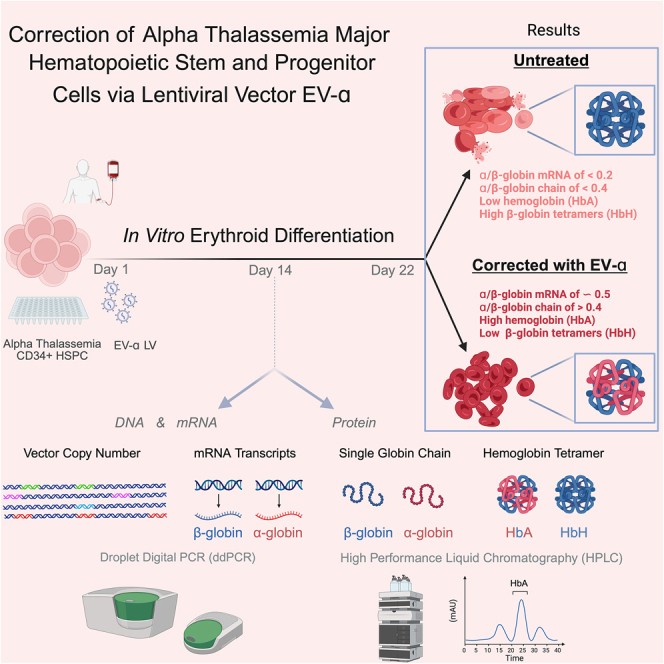 Figure 1
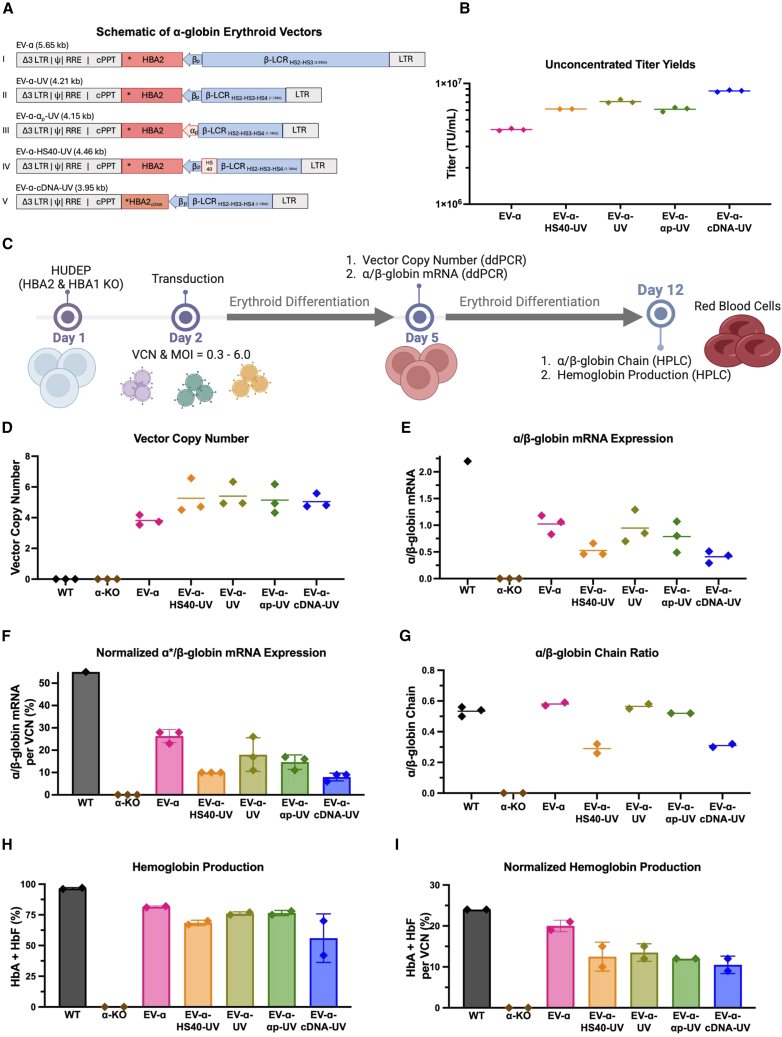 Figure 2
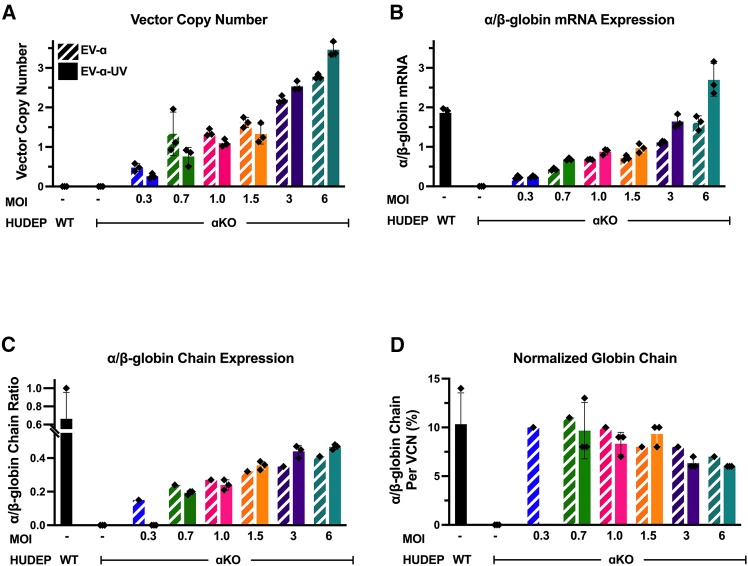 Figure 3
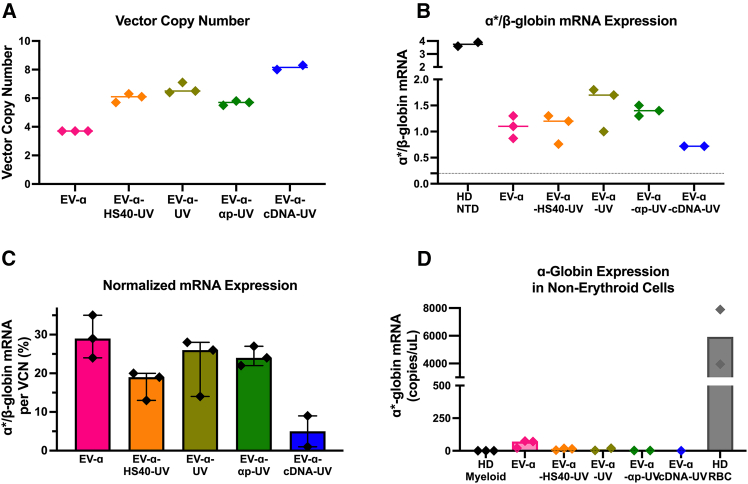 Figure 4
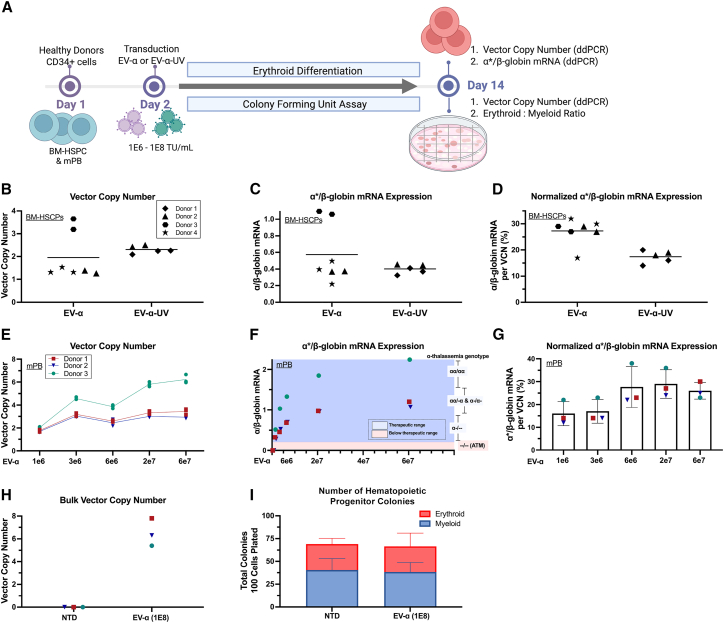 Figure 5
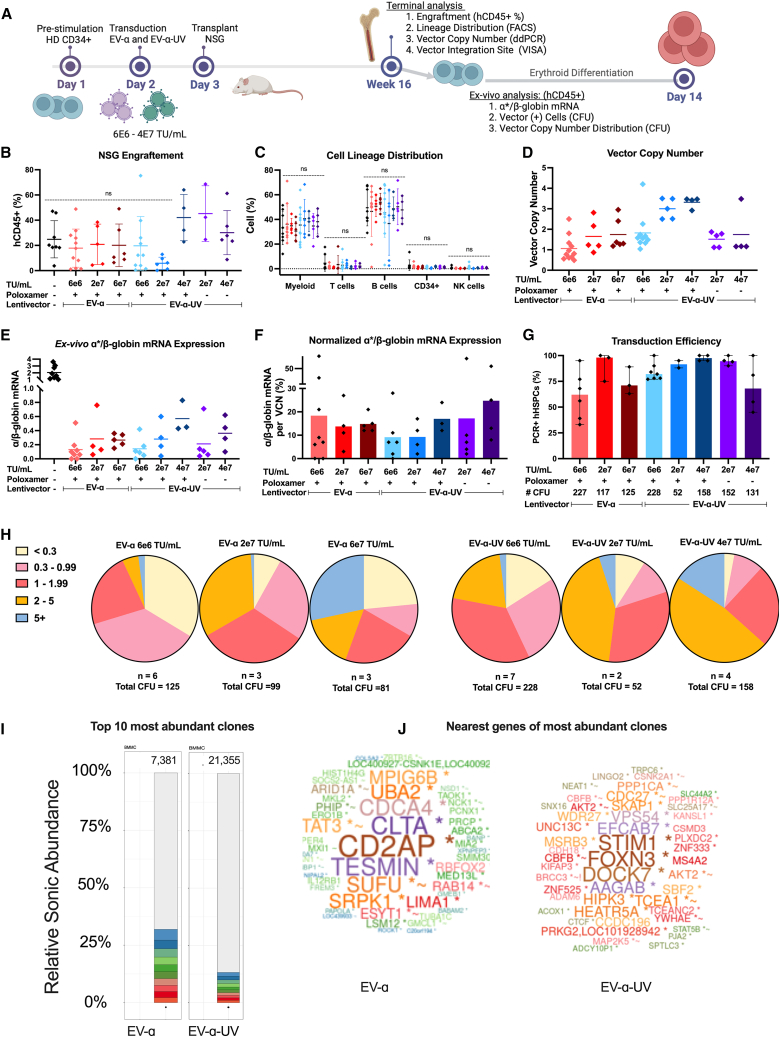 Figure 6
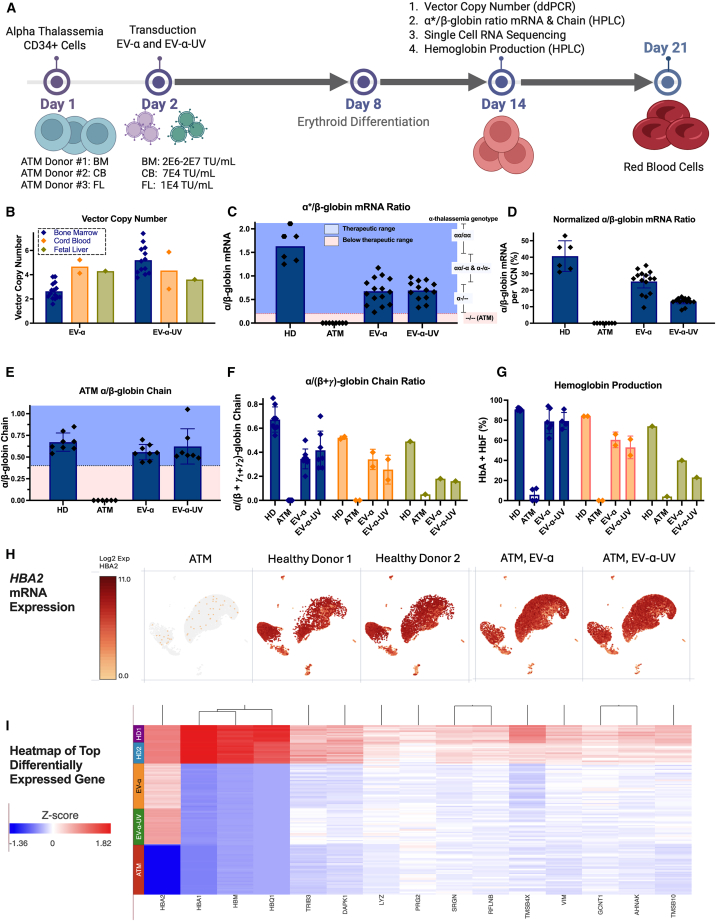 Figure 7
Peer Reviews
No public reviews on file for this paper yet. If you reviewed it on a platform where reviews are public (OpenReview, ICLR, NeurIPS, ICML), you can paste yours below so the community can read it here.
Videos
No videos yet. Explain this paper in a talk, walkthrough, or lecture? Add one.
Taxonomy
TopicsVirus-based gene therapy research · Parvovirus B19 Infection Studies · RNA Interference and Gene Delivery