Associations of lifetime stressors and health behaviors with inflammation in young adults previously placed in youth residential care
David Bürgin, Kristen Nishimi, Vera Clemens, Maria Meier, Eva Unternaehrer, Laura Gurri, Evelyne Bruttin, Nicolas Rohleder, Paul Klauser, Daniella Dwir, Nimmy Varghese, Anne Eckert, Süheyla Seker, Delfine d’Huart, Cyril Boonmann, Marc Schmid, Aoife O'Donovan

TL;DR
This study found that health behaviors, not stressors, were linked to inflammation in young adults with high stress exposure.
Contribution
The study reveals that health behaviors, not stressor exposure, influence inflammation in highly stress-exposed individuals.
Findings
Stressors were not significantly associated with inflammatory markers.
Risky behaviors increased pro-inflammatory markers and reduced anti-inflammatory markers.
Protective behaviors were linked to lower pro-inflammatory markers.
Abstract
Early life stressors (ELS) and stressful life events (SLEs) increase the risk for various physical health conditions, and health behaviors can modulate stress-associated risks. A key mechanism linking both lifetime stress and health behaviors with physical health outcomes is chronic low-grade inflammation. However, it is unclear how both stressor exposure and more proximal health behaviors are associated with inflammation in highly stress-exposed groups. Here, we investigated associations of lifetime stressors and health behaviors with peripheral inflammation in a highly stress exposed sample of young adults previously placed within youth residential care in Switzerland. We examined 126 young adults (MAge = 26.3 years; 31 % female) who completed questionnaires to assess ELS, SLEs, and risky and protective health behaviors. Inflammatory markers (C-reactive protein [CRP], interleukin…
Genes, proteins, chemicals, diseases, species, mutations and cell lines named across the full text — each resolved to its canonical identifier and authoritative record.
Click any figure to enlarge with its caption.
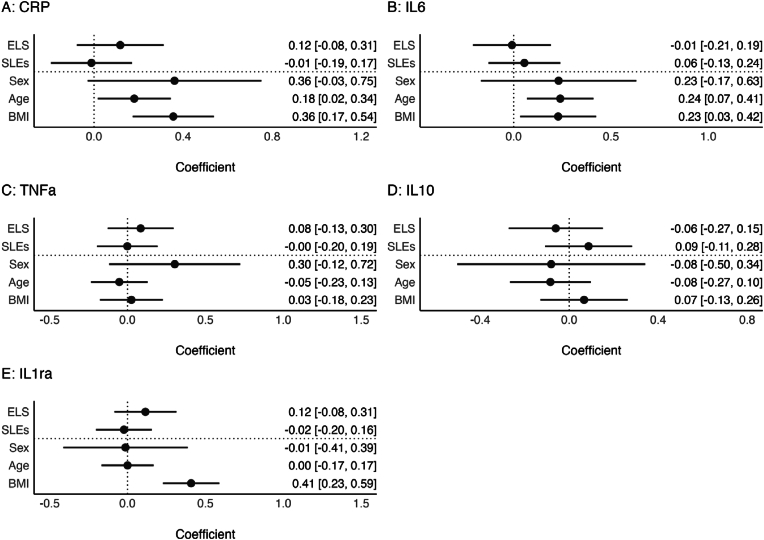 Figure 1
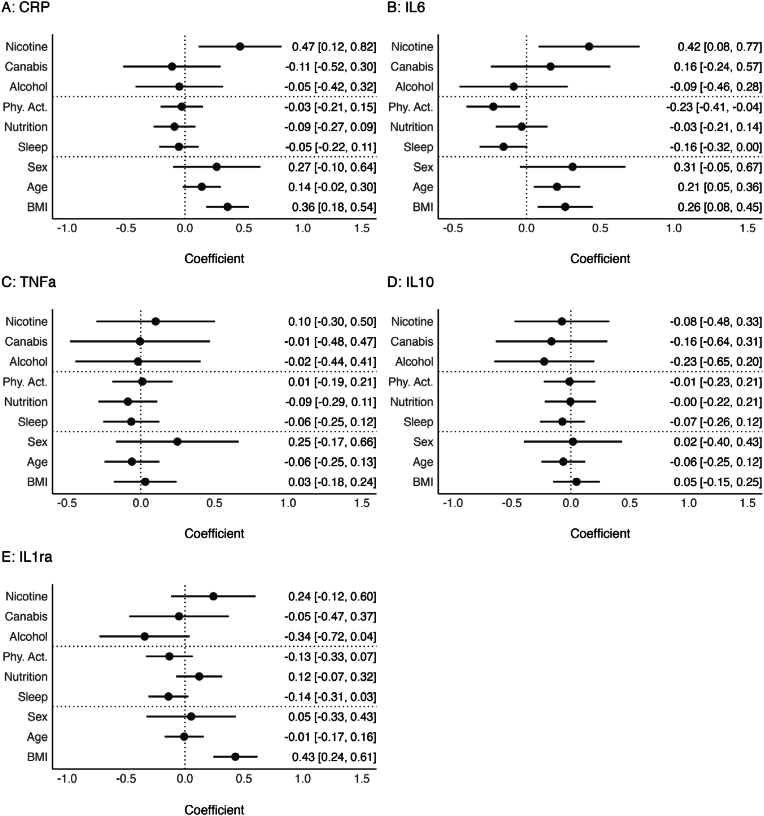 Figure 2
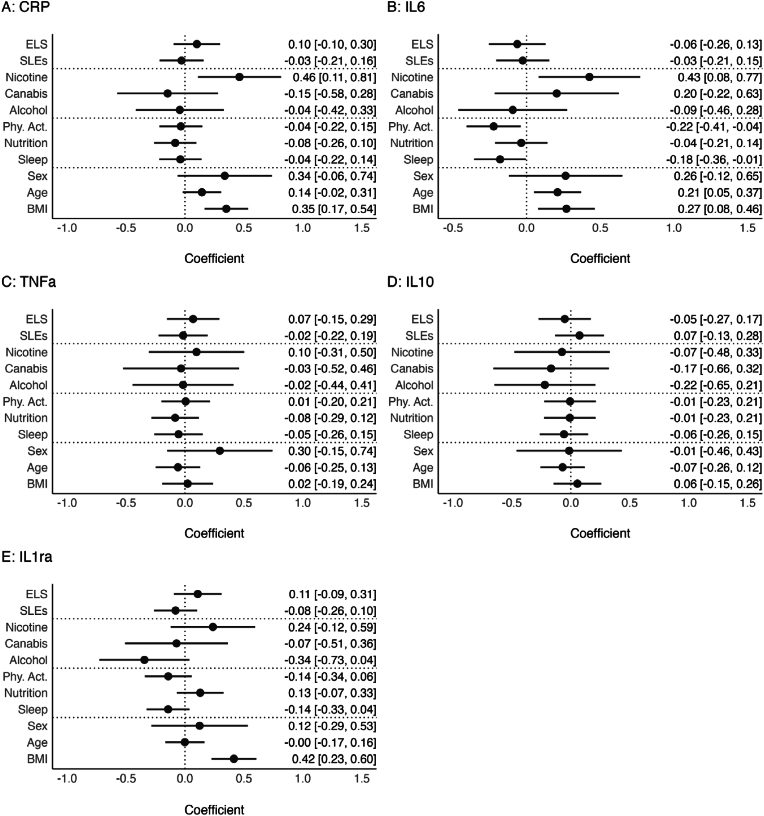 Figure 3
Peer Reviews
No public reviews on file for this paper yet. If you reviewed it on a platform where reviews are public (OpenReview, ICLR, NeurIPS, ICML), you can paste yours below so the community can read it here.
Videos
No videos yet. Explain this paper in a talk, walkthrough, or lecture? Add one.
Taxonomy
TopicsChild Abuse and Trauma · Health, psychology, and well-being · Family Support in Illness