A Novel Technique to Prevent Femoral Artery Occlusion With Impella CP Sheaths: Case Report
Kristina Khaw, Said Ashraf, Howard Levite, Jeffrey Van Hook, Kenneth Khaw

TL;DR
A new technique is described to prevent leg ischemia when using Impella CP in small femoral arteries.
Contribution
A novel method using a parallel catheter to prevent femoral artery occlusion is introduced.
Findings
A small catheter placed parallel to the Impella CP insertion site prevents total femoral artery occlusion.
The technique was successfully used in a patient with cardiogenic shock following a heart attack.
Antegrade access to the superficial femoral artery can be achieved using an adjacent wedge catheter if needed.
Abstract
Impella CP use in small femoral arteries has increased vascular and ischemic complications. Various techniques have been described to lessen leg ischemia. Our technique uses a small catheter placed below the Impella CP insertion site and runs parallel with it to prevent total occlusion in the femoral artery. This could be a primary technique to try first. If more distal flow to the leg is needed, antegrade access to the superficial femoral artery can be obtained with connection to the adjacent wedge catheter. We describe this use for first time in a patient with cardiogenic shock after myocardial infarction with mitral regurgitation.
Genes, proteins, chemicals, diseases, species, mutations and cell lines named across the full text — each resolved to its canonical identifier and authoritative record.
Click any figure to enlarge with its caption.
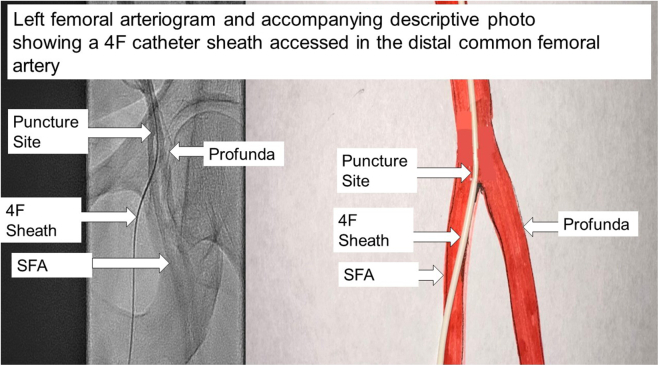 Figure 1
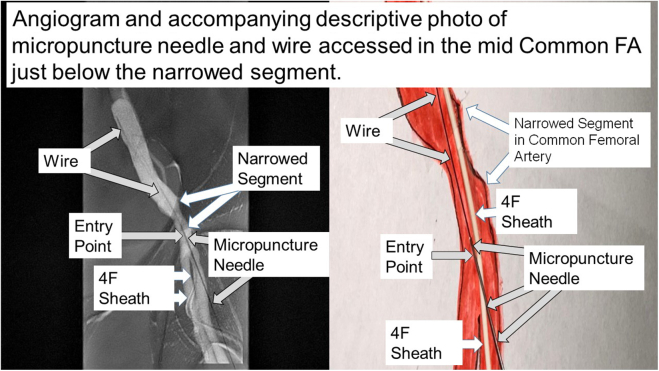 Figure 2
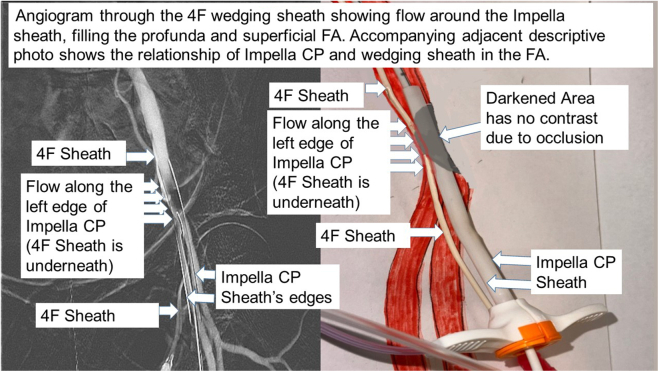 Figure 3
Peer Reviews
No public reviews on file for this paper yet. If you reviewed it on a platform where reviews are public (OpenReview, ICLR, NeurIPS, ICML), you can paste yours below so the community can read it here.
Videos
No videos yet. Explain this paper in a talk, walkthrough, or lecture? Add one.
Taxonomy
TopicsVascular Procedures and Complications · Cardiac Valve Diseases and Treatments · Mechanical Circulatory Support Devices