Prostatic Abscess due to Ureaplasma parvum in a Heart Transplant Recipient: Diagnostic Challenges and Clinical Utility of Metagenomics Next-Generation Sequencing (NGS)
Natalia E. Castillo Almeida, Andre C. Kalil, Carlos A. Gomez

TL;DR
A heart transplant patient developed a rare prostate abscess caused by Ureaplasma parvum, identified using next-generation sequencing.
Contribution
This case highlights the clinical utility of metagenomic NGS in diagnosing rare infections in immunocompromised patients.
Findings
Ureaplasma parvum was identified as the cause of a prostate abscess in a heart transplant recipient.
Next-generation sequencing proved effective in diagnosing rare and fastidious bacterial infections.
The case expands the known clinical manifestations of Ureaplasma spp. in immunocompromised individuals.
Abstract
Ureaplasma spp. are small and fastidious bacteria that may cause urogenital infections in healthy adults and, in rare cases, invasive disease. These bacteria have been increasingly recognized in immunocompromised patients and have been associated with hyperammonemia syndrome, particularly in lung transplant recipients. In this context, we present a unique clinical case of Ureaplasma parvum prostate abscess, a condition rarely observed in heart transplant recipients, diagnosed using next-generation sequencing (NGS).
Genes, proteins, chemicals, diseases, species, mutations and cell lines named across the full text — each resolved to its canonical identifier and authoritative record.
Click any figure to enlarge with its caption.
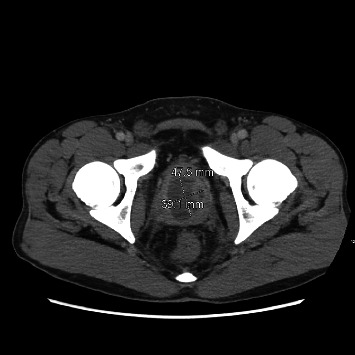 Figure 1
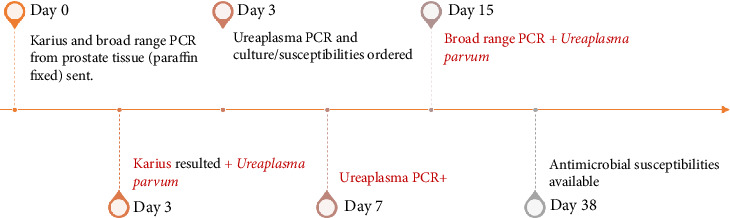 Figure 2
Peer Reviews
No public reviews on file for this paper yet. If you reviewed it on a platform where reviews are public (OpenReview, ICLR, NeurIPS, ICML), you can paste yours below so the community can read it here.
Videos
No videos yet. Explain this paper in a talk, walkthrough, or lecture? Add one.
Taxonomy
TopicsMetabolism and Genetic Disorders · Pediatric Urology and Nephrology Studies · Infective Endocarditis Diagnosis and Management