Barn swallows and purple martins convert precursors to long-chain polyunsaturated fatty acids: implications for conservation of riparian- vs inland-nesting habitats
Corrine S V Génier, Matthias Pilecky, Martin J Kainz, Christopher G Guglielmo, Keith A Hobson

TL;DR
Barn swallows and purple martins efficiently convert dietary fatty acids into essential long-chain forms, suggesting they may be more adaptable to changes in insect availability and habitat.
Contribution
The study reveals high conversion rates of fatty acid precursors in two aerial insectivores, indicating potential resilience to dietary and habitat changes.
Findings
Barn swallow nestlings converted 76% of ALA and 46% of LA to LC-PUFA.
Purple martin nestlings converted 88% of ALA and 44% of LA to LC-PUFA.
Both species showed higher ALA conversion to DHA than previously observed in tree swallows.
Abstract
For aerial insectivorous birds, whose populations have declined significantly in North America, long-chain polyunsaturated fatty acids (LC-PUFA) that are more abundant in aquatic-emergent insects than terrestrial insects, are important for the development, somatic growth, and health of young birds. Some bird species, however, can convert shorter chain PUFA that occur abundantly in terrestrial insects into LC-PUFA. Our study aimed to evaluate the ability of two aerial insectivore species to synthesize their own LC-PUFA. We hypothesized that terrestrially associated aerial insectivores rely on higher fatty acid conversion rates compared to those associated with wetlands and riparian habitats. We fed wild barn swallow (Hirundo rustica) and purple martin (Progne subis) nestlings 13C-labelled essential omega-3 (α-linolenic acid; ALA) or omega-6 (linoleic acid; LA) fatty acids to trace…
Genes, proteins, chemicals, diseases, species, mutations and cell lines named across the full text — each resolved to its canonical identifier and authoritative record.
Click any figure to enlarge with its caption.
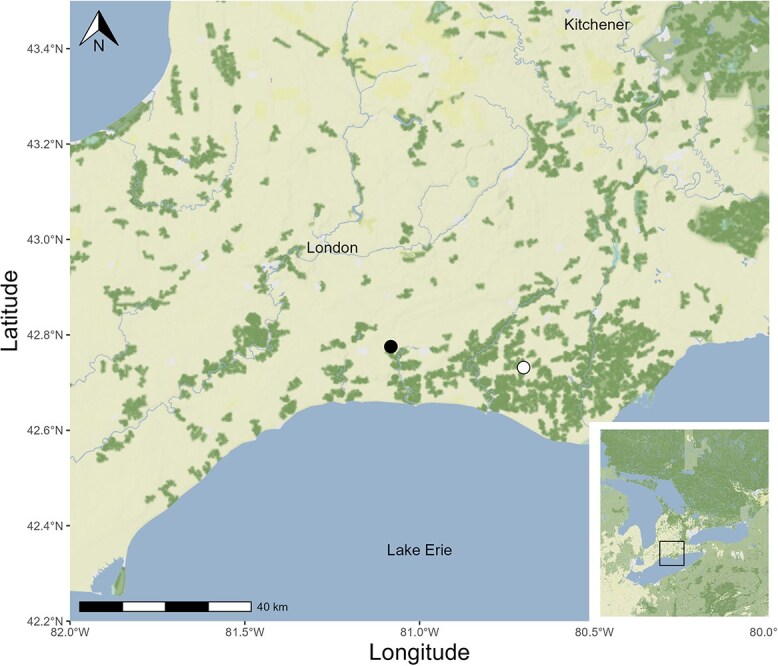 Figure 1
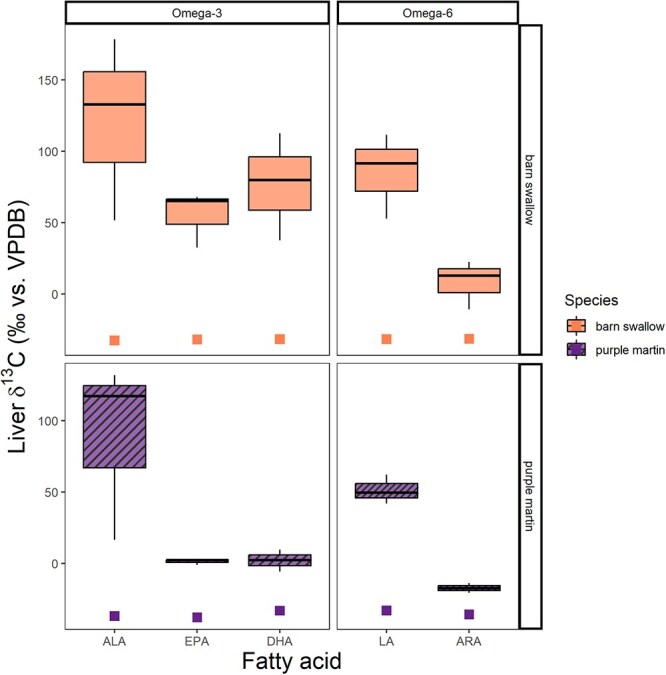 Figure 2
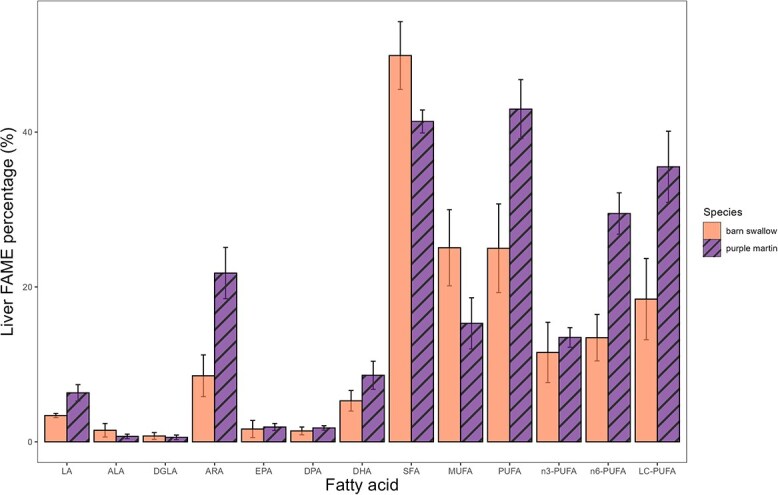 Figure 3
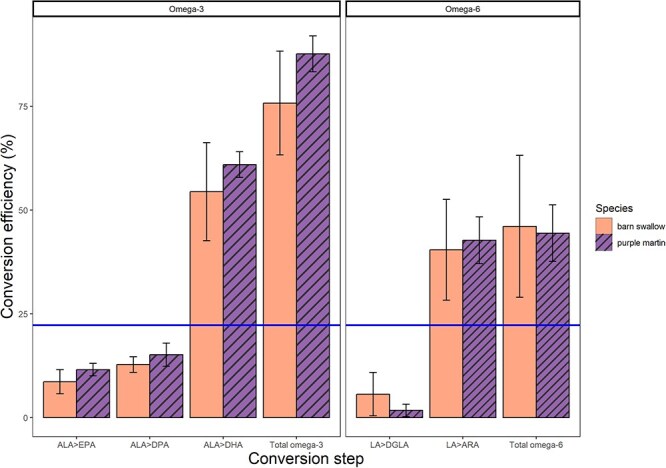 Figure 4
Peer Reviews
No public reviews on file for this paper yet. If you reviewed it on a platform where reviews are public (OpenReview, ICLR, NeurIPS, ICML), you can paste yours below so the community can read it here.
Videos
No videos yet. Explain this paper in a talk, walkthrough, or lecture? Add one.
Taxonomy
TopicsIsotope Analysis in Ecology · Avian ecology and behavior · Fish Ecology and Management Studies