A multi-query, multimodal, receiver-augmented solution to extract contemporary cardiology guideline information using large language models
Robert M Radke, Gerhard-Paul Diller, Rohan G Reddy, Pushpa Shivaram, David A Danford, Shelby Kutty

TL;DR
This paper introduces a new system using large language models to provide accurate, transparent cardiology guidelines for clinicians, outperforming existing models like GPT-3.5 and GPT-4.
Contribution
A novel multi-query, multimodal, receiver-augmented system that improves guideline-based cardiology recommendations with higher accuracy and transparency.
Findings
The system achieved 73.53% accuracy on a 306-question cardiology exam, outperforming GPT-3.5 and GPT-4.
The system outperformed other models in multiple cardiology categories including coronary artery disease and arrhythmia.
The system provided traceable and documented recommendations based on up-to-date clinical guidelines.
Abstract
The aim of the current study was to assess the utility of a state-of-the-art large language model (LLM) based on curated, defined clinical practice recommendations to support clinicians in obtaining point-of-care guidelines for individual patient treatment while maintaining transparency. We combined cloud-based and locally run LLMs with versatile open-source tools to form a multi-query, multimodal, retrieval-augmented generation chain that closely reflects European cardiology guidelines in its responses. We compared the performance of this generation chain to other LLMs including GPT-3.5 and GPT-4 on a 306-question multiple-choice exam with questions consisting of short patient vignettes from various cardiology subspecialties, originally written to prepare candidates for the European Exam in Core Cardiology. On the multiple-choice test, our system demonstrated overall accuracy of…
Genes, proteins, chemicals, diseases, species, mutations and cell lines named across the full text — each resolved to its canonical identifier and authoritative record.
Click any figure to enlarge with its caption.
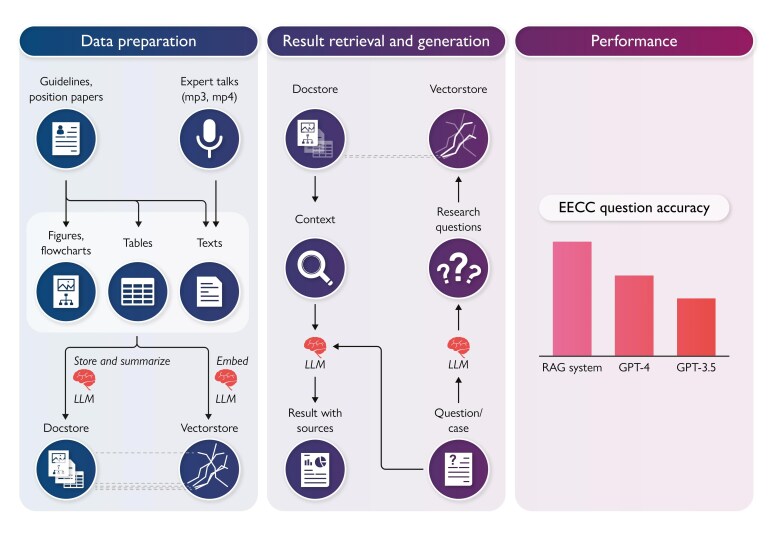 Figure 1
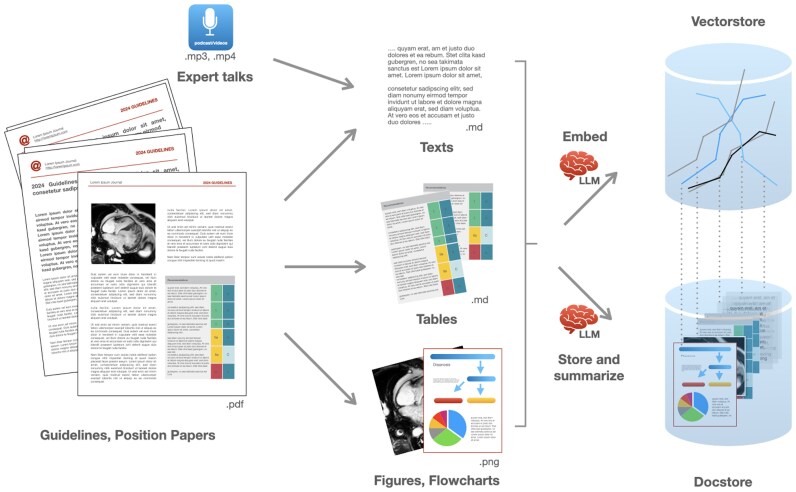 Figure 2
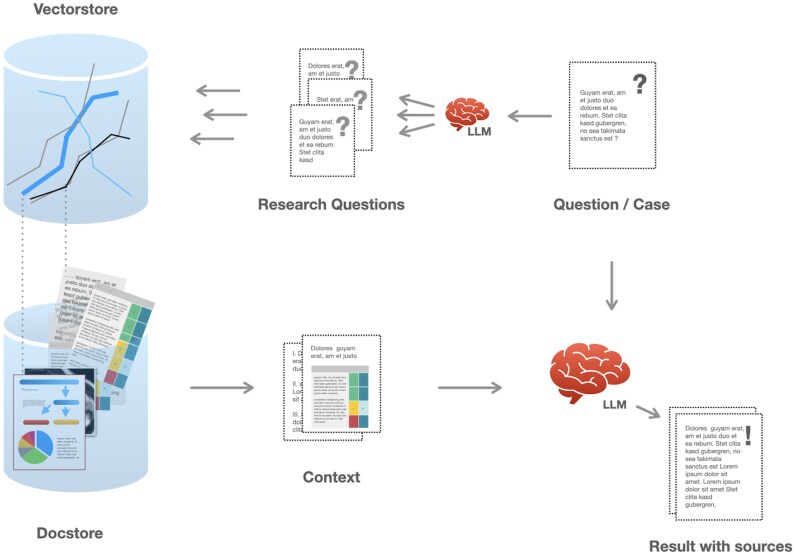 Figure 3
Peer Reviews
No public reviews on file for this paper yet. If you reviewed it on a platform where reviews are public (OpenReview, ICLR, NeurIPS, ICML), you can paste yours below so the community can read it here.
Videos
No videos yet. Explain this paper in a talk, walkthrough, or lecture? Add one.
Taxonomy
TopicsBiomedical Text Mining and Ontologies · Clinical practice guidelines implementation