MetaGradient driven strategy decomposition for accelerated equilibrium in large scale logistics networks
Dandan Wang, Ni Sun

TL;DR
This paper introduces a new optimization framework that improves efficiency and reduces emissions in large logistics networks by achieving faster equilibrium and better resource utilization.
Contribution
The novel contribution is a gradient-driven framework combining sparse gradient, tensor decomposition, and constrained multi-objective optimization for real-time logistics optimization.
Findings
The framework reduces costs by 28.3%, transit time by 37.3%, and CO₂ emissions by 27.7%.
It achieves a capacity matching degree of 89.3% with a root mean square error of 0.145 in a 15-node network.
The method enables sub-second equilibrium convergence and anti-disturbance recovery in large-scale logistics.
Abstract
Static models fail to track the fast-changing supply-demand balance in global logistics. For instance, the high-speed rail express corridor exhibits a transport capacity utilisation rate of less than 70% during peak periods, along with a node load imbalance of 0.57. Existing algorithms have been shown to exhibit a 7.8% prediction error and 38% convergence time overruns during sudden demand changes. This study proposes a gradient-driven framework that combines sparse gradient, tensor decomposition, and constrained multi-objective optimization. Cost drops 28.3%, transit time shrinks 37.3%, container turnover rises 41.4%, and CO₂ falls 27.7%. In the 15-node network, the framework achieves a capacity matching degree of 89.3% with a root mean square error of 0.145, which is better than the benchmark performance of traditional methods and reinforcement learning methods. This research…
Genes, proteins, chemicals, diseases, species, mutations and cell lines named across the full text — each resolved to its canonical identifier and authoritative record.
Click any figure to enlarge with its caption.
 Figure 1
 Figure 2
 Figure 3
 Figure 4
 Figure 5
 Figure 6
 Figure 7
 Figure 8
 Figure 9
 Figure 10
 Figure 11
 Figure 12
 Figure 13
 Figure 14
 Figure 15
 Figure 16
 Figure 17
 Figure 18
 Figure 19
 Figure 20
 Figure 21
 Figure 22
 Figure 23
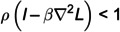 Figure 24
 Figure 25
 Figure 26
 Figure 27
 Figure 28
 Figure 29
 Figure 30
 Figure 31
 Figure 32
 Figure 33
 Figure 34
 Figure 35
 Figure 36
 Figure 37
 Figure 38
 Figure 39
 Figure 40
 Figure 41
 Figure 42
 Figure 43
 Figure 44
 Figure 45
 Figure 46
 Figure 47
 Figure 48
 Figure 49
 Figure 50
Peer Reviews
No public reviews on file for this paper yet. If you reviewed it on a platform where reviews are public (OpenReview, ICLR, NeurIPS, ICML), you can paste yours below so the community can read it here.
Videos
No videos yet. Explain this paper in a talk, walkthrough, or lecture? Add one.
Taxonomy
TopicsVehicle Routing Optimization Methods · Complex Network Analysis Techniques · Traffic control and management