Promises and pitfalls of using LLMs to identify actor stances in political discourse
Viviane Walker, Mario Angst, Thomas Sanchez, Thomas Sanchez, Thomas Sanchez

TL;DR
This paper explores how large language models can detect stances in political discourse, highlighting both their potential and limitations.
Contribution
The paper introduces a method for generalized zero-shot stance detection using LLMs and evaluates its effectiveness across different prompts and models.
Findings
LLMs can achieve adequate performance in stance detection when using appropriate prompt chains.
Results vary significantly depending on the LLM and the specific normative statement being analyzed.
Domain-specific evaluation data is crucial for assessing LLMs in stance detection tasks.
Abstract
Empirical research in the social sciences is often interested in understanding actor stances; the positions that social actors take regarding normative statements in societal discourse. In automated text analysis applications, the classification task of stance detection remains challenging. Stance detection is especially difficult due to semantic challenges such as implicitness or missing context but also due to the general nature of the task. In this paper, we explore the potential of Large Language Models (LLMs) to enable stance detection in a generalized (non-domain, non-statement specific) form. Specifically, we test a variety of different general prompt chains for zero-shot stance classifications. Our evaluation data consists of textual data from a real-world empirical research project in the domain of sustainable urban transport. For 1710 German newspaper paragraphs, each…
Genes, proteins, chemicals, diseases, species, mutations and cell lines named across the full text — each resolved to its canonical identifier and authoritative record.
Click any figure to enlarge with its caption.
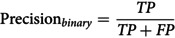 Figure 1
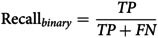 Figure 2
 Figure 3
 Figure 4
 Figure 5
 Figure 6
 Figure 7
 Figure 8
 Figure 9
 Figure 10
 Figure 11
 Figure 12
 Figure 13
 Figure 14
 Figure 15
 Figure 16
 Figure 17
 Figure 18
 Figure 19
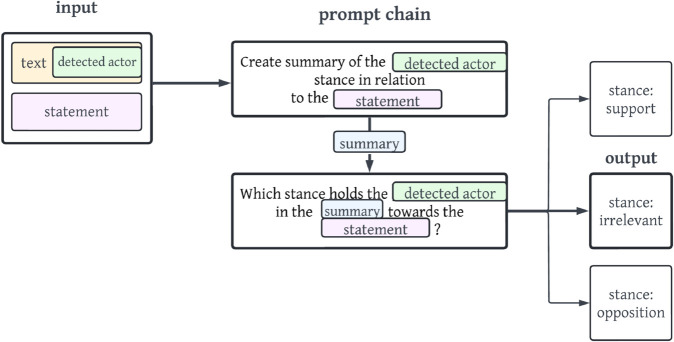 Figure 20
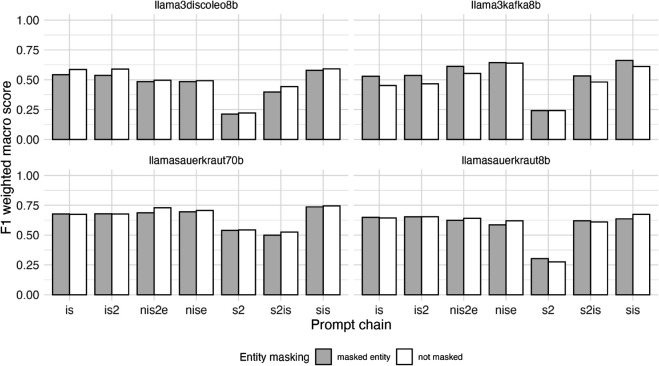 Figure 21
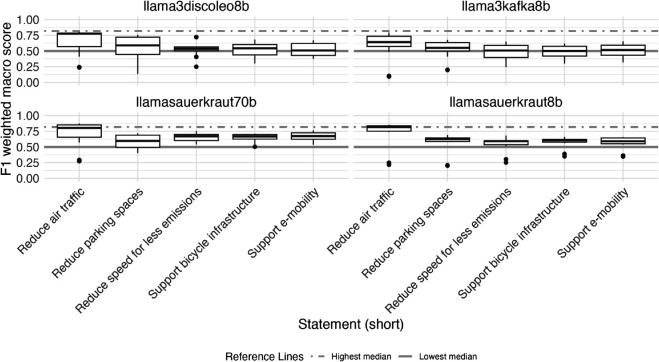 Figure 22
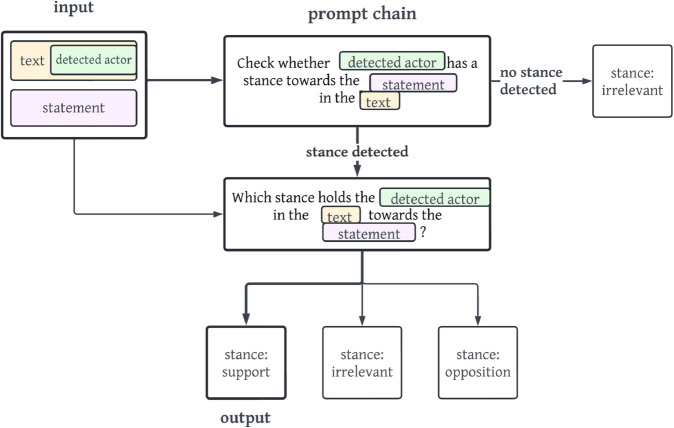 Figure 23
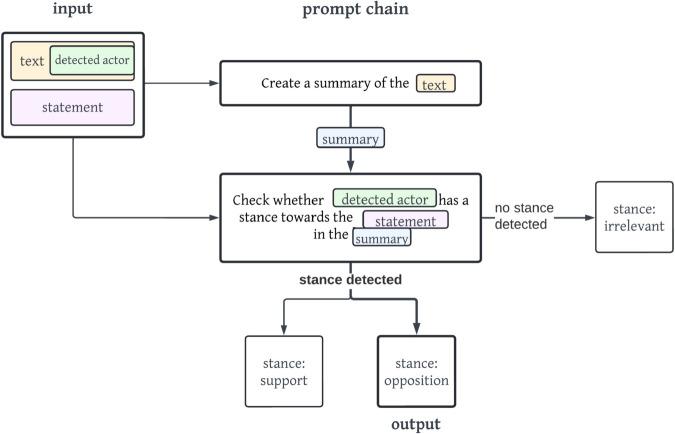 Figure 24
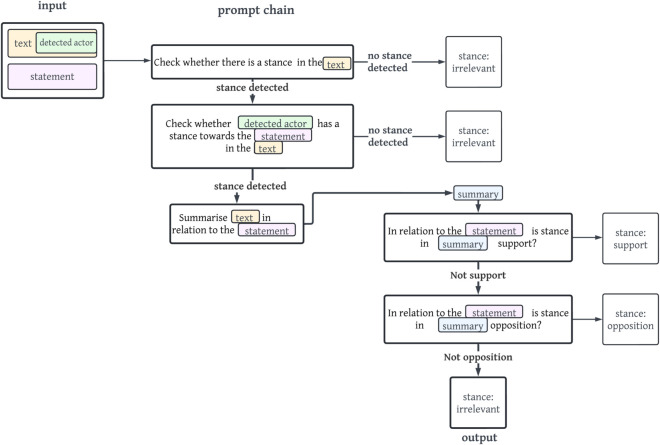 Figure 25
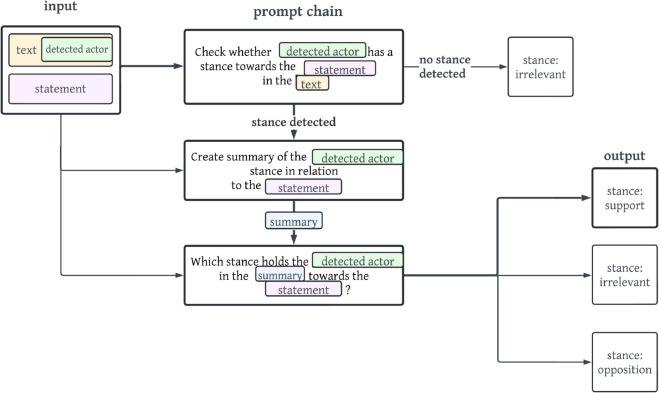 Figure 26
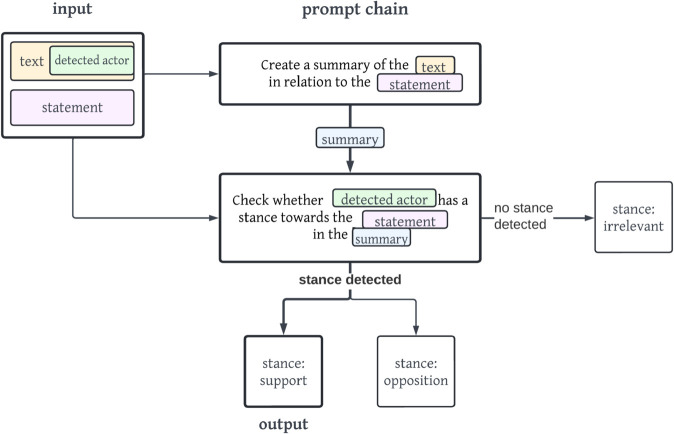 Figure 27
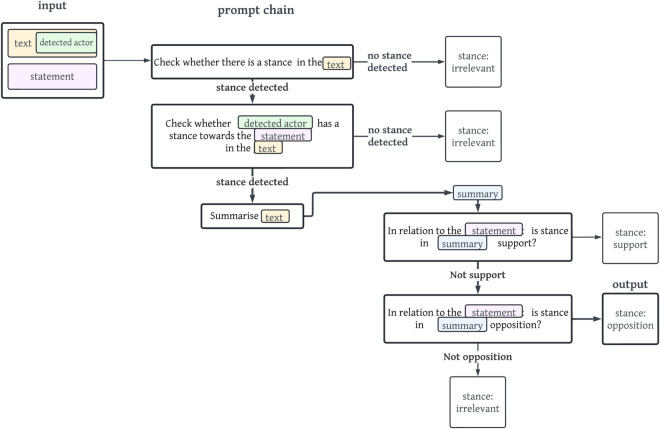 Figure 28
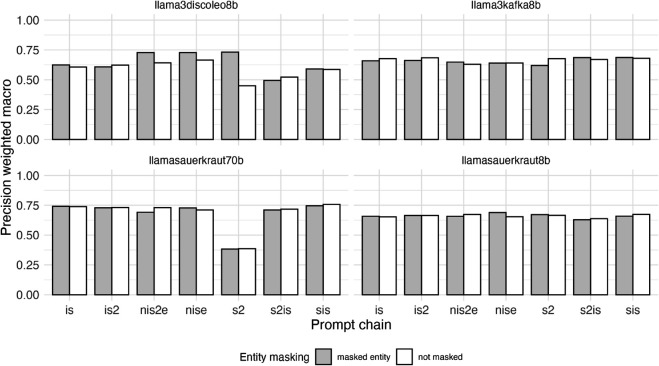 Figure 29
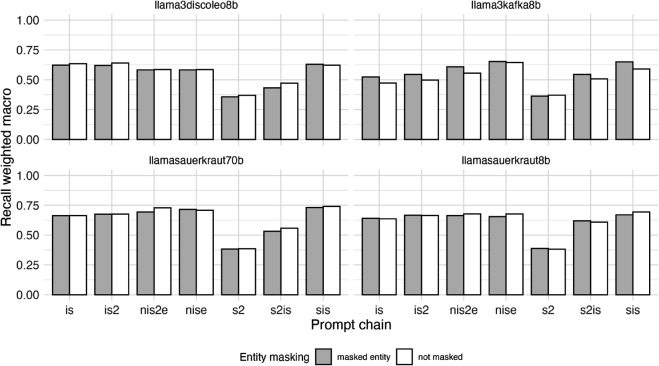 Figure 30
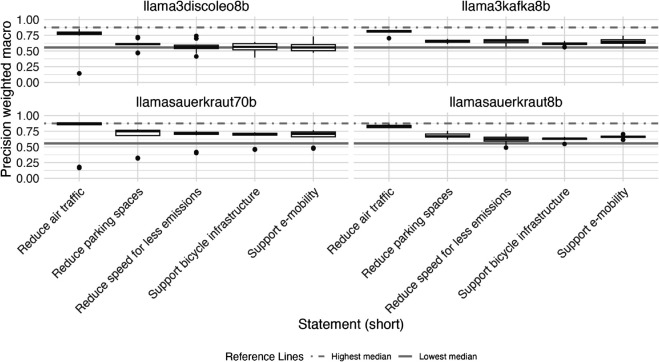 Figure 31
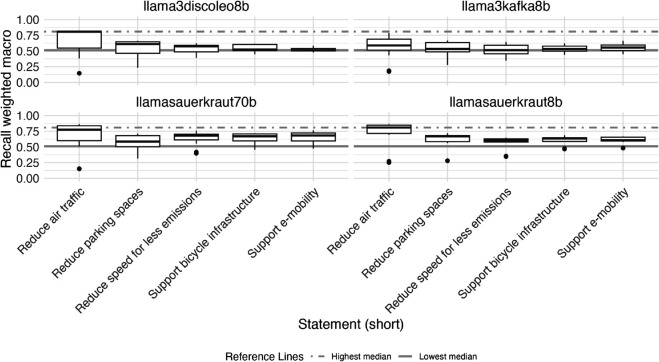 Figure 32
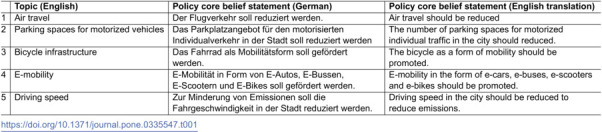 Figure 33
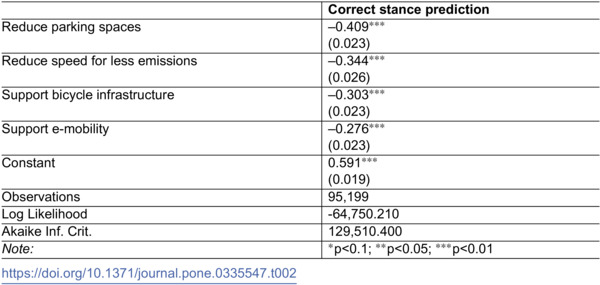 Figure 34
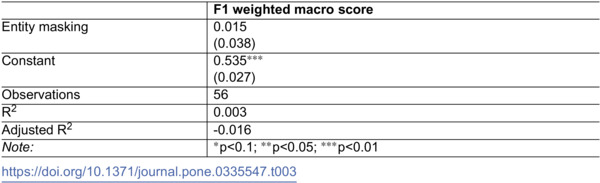 Figure 35
 Figure 36
Peer Reviews
No public reviews on file for this paper yet. If you reviewed it on a platform where reviews are public (OpenReview, ICLR, NeurIPS, ICML), you can paste yours below so the community can read it here.
Videos
No videos yet. Explain this paper in a talk, walkthrough, or lecture? Add one.
Taxonomy
TopicsComputational and Text Analysis Methods · Sentiment Analysis and Opinion Mining · Discourse Analysis in Language Studies