Biphasic effects on human atrial arrhythmogenicity of L-type calcium channel mutations associated with a Brugada/Short QT overlap syndrome - insights from a multiscale simulation study
Yirong Xiang, Jules C. Hancox, Henggui Zhang

TL;DR
This study uses computer models to explore how mutations in calcium channels can both increase and decrease the risk of heart rhythm disorders in the atria.
Contribution
The novel contribution is the discovery of biphasic arrhythmogenic effects of CACNA1C mutations in human atrial tissue through multiscale simulations.
Findings
Reduced L-type calcium channel activity shortened atrial repolarization and altered conduction velocity in a pacing-rate-dependent manner.
Large reductions in calcium channel activity increased arrhythmia risk, while moderate reductions had anti-arrhythmic effects.
Simulation models revealed bi-phasic effects in 1D, 2D, and 3D atrial tissues depending on the severity of channel dysfunction.
Abstract
Patients with abbreviated cardiac repolarization are at increased risk of cardiac arrhythmias including ventricular and atrial fibrillation (AF). In this computational simulation study, we investigated pro-arrhythmic effects of loss-of-function missense mutations in CACNA1C (A39V and G490R Cav1.2) identified in patients with a phenotype combining Brugada syndrome with shorter-than-normal QT intervals. Biophysically-detailed computational models of human atrial cells were modified to incorporate the functional impact of the CACNA1C encoded A39V and G490R mutations on the reduction of the maximal conductance (gCaL) of L-type calcium channels (LTCC). Varying levels of gCaL reduction were considered. Effects of deficient LTCC on atrial excitation and propagation were investigated by using cellular and multi-dimensional tissue models that included a one-dimensional atrial strand, a…
Genes, proteins, chemicals, diseases, species, mutations and cell lines named across the full text — each resolved to its canonical identifier and authoritative record.
Click any figure to enlarge with its caption.
 Figure 1
 Figure 2
 Figure 3
 Figure 4
 Figure 5
 Figure 6
 Figure 7
 Figure 8
 Figure 9
 Figure 10
 Figure 11
 Figure 12
 Figure 13
 Figure 14
 Figure 15
 Figure 16
 Figure 17
 Figure 18
 Figure 19
 Figure 20
 Figure 21
 Figure 22
 Figure 23
 Figure 24
 Figure 25
 Figure 26
 Figure 27
 Figure 28
 Figure 29
 Figure 30
 Figure 31
 Figure 32
 Figure 33
 Figure 34
 Figure 35
 Figure 36
 Figure 37
 Figure 38
 Figure 39
 Figure 40
 Figure 41
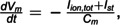 Figure 42
 Figure 43
 Figure 44
 Figure 45
 Figure 46
 Figure 47
 Figure 48
 Figure 49
 Figure 50
Peer Reviews
No public reviews on file for this paper yet. If you reviewed it on a platform where reviews are public (OpenReview, ICLR, NeurIPS, ICML), you can paste yours below so the community can read it here.
Videos
No videos yet. Explain this paper in a talk, walkthrough, or lecture? Add one.
Taxonomy
TopicsCardiac electrophysiology and arrhythmias · Cardiac Arrhythmias and Treatments · Ion channel regulation and function