Functional synergy of heteropentameric B subunits underlies virulence in a Salmonella A2B5 toxin
Dongdong Wang, Zhe Chen, Chunyu Xu, Xuyao Jiao, Min Yue, Xiang Gao

TL;DR
This study reveals how two B subunits in a Salmonella toxin work together to increase its toxicity and how this could help develop new treatments.
Contribution
The study identifies a novel heteropentameric assembly mechanism of B subunits in an A2B5 toxin from Salmonella diarizonae.
Findings
PltBd1 and PltBd2 B subunits form a 3:2 heteropentameric complex essential for toxin function.
PltBd1 aids toxin secretion while PltBd2 targets host cells, showing functional synergy.
Cryo-EM reveals the structural basis of the heteropentameric holotoxin stabilized by the PltA subunit.
Abstract
AB5-type toxins are critical virulence factors in bacterial pathogenesis. Despite the identification of various B subunits in AB5 toxins across different pathogens, their assembly mechanisms and biological significance remain poorly understood. In this study, we identified and characterized a typhoid toxin-like A2B5 toxin, designated diarizonae toxin (DiaT), as a key virulence factor in Salmonella diarizonae. The DiaT genomic islet encodes two distinct B subunits, PltBd1 and PltBd2, which exhibit unique functional roles. Through genetic and functional analyses, we demonstrate that the heteropentameric assembly of PltBd1 and PltBd2 is essential for cytotoxicity, with our data suggesting PltBd1 facilitates toxin secretion and PltBd2 mediates host cell targeting. Cryo-EM structural analysis of endogenously expressed DiaT reveals a heteropentameric holotoxin with a 3:2 stoichiometry of…
Genes, proteins, chemicals, diseases, species, mutations and cell lines named across the full text — each resolved to its canonical identifier and authoritative record.
Click any figure to enlarge with its caption.
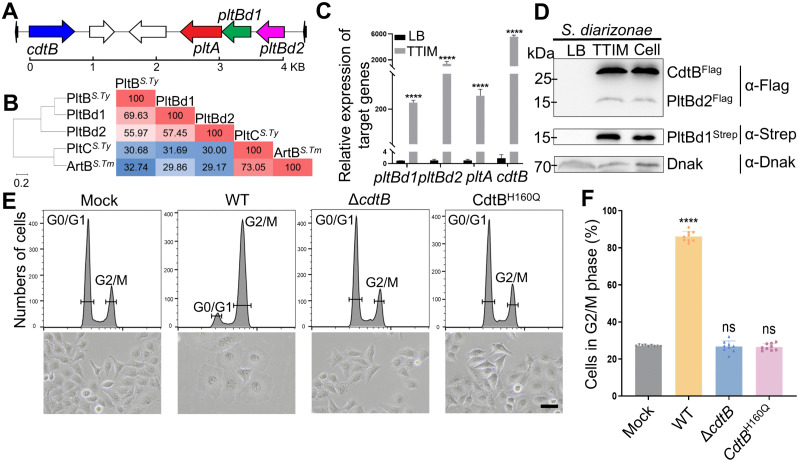 Figure 1
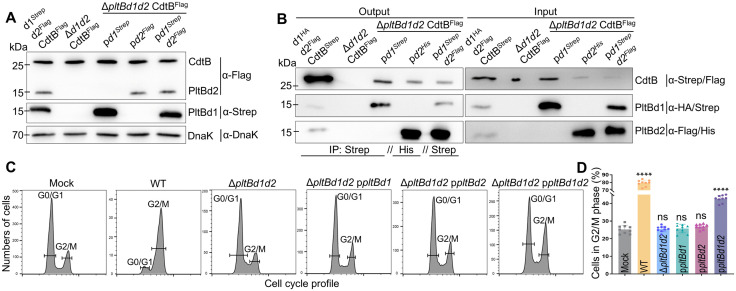 Figure 2
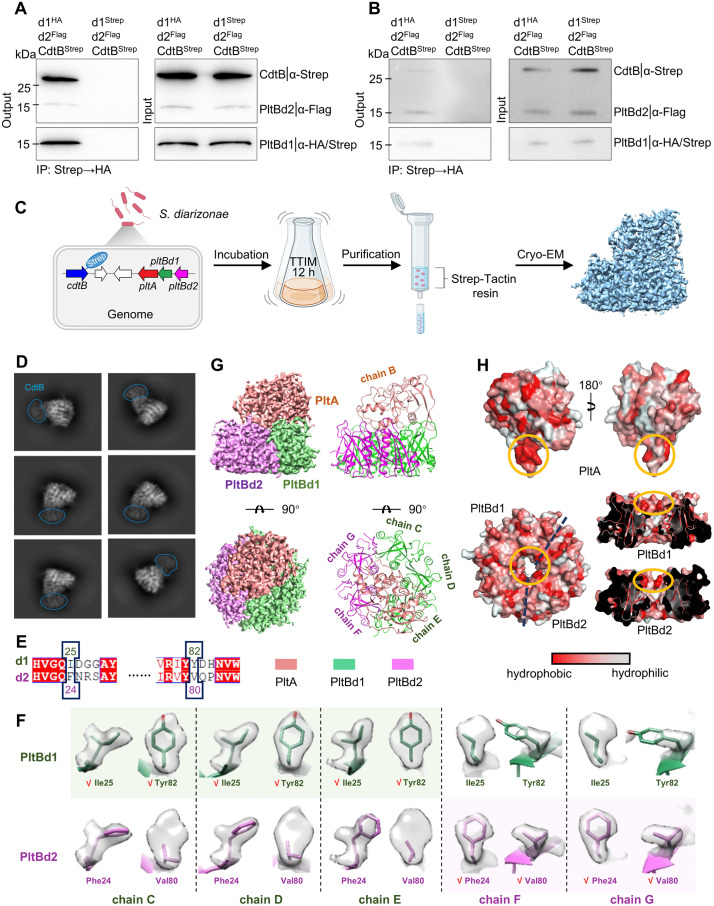 Figure 3
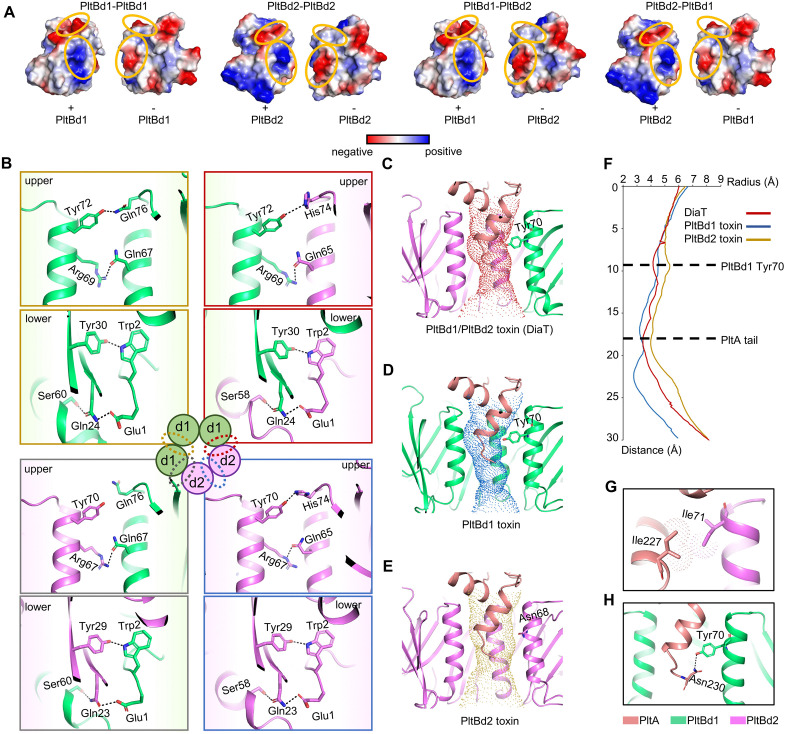 Figure 4
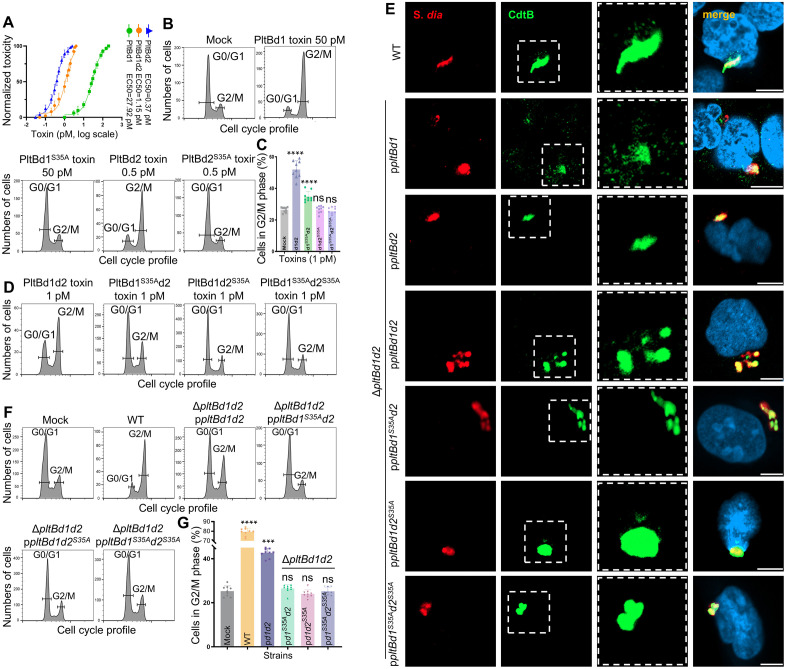 Figure 5
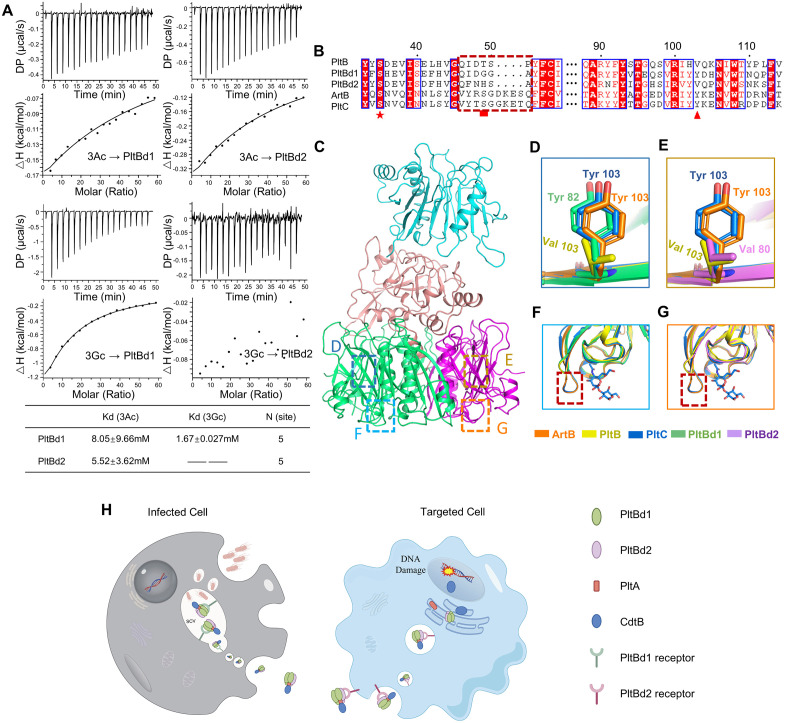 Figure 6
Peer Reviews
No public reviews on file for this paper yet. If you reviewed it on a platform where reviews are public (OpenReview, ICLR, NeurIPS, ICML), you can paste yours below so the community can read it here.
Videos
No videos yet. Explain this paper in a talk, walkthrough, or lecture? Add one.
Taxonomy
TopicsSalmonella and Campylobacter epidemiology · Bacterial Genetics and Biotechnology · Escherichia coli research studies