The percentile-matching technique for synthetic eye tracking signal degradation: A biometric case study
Henry Griffith, Dmytro Katrychuk, Mehedi H. Raju, Samantha Aziz, Dillon J. Lohr, Oleg V. Komogortsev, Elochukwu Ukwandu, Elochukwu Ukwandu, Elochukwu Ukwandu, Elochukwu Ukwandu

TL;DR
This paper introduces a new method to simulate lower-quality eye tracking signals, improving realism for biometric authentication tasks.
Contribution
The novel percentile-matching technique enhances synthetic signal degradation realism for biometric applications.
Findings
The percentile-matching technique outperforms baselines in approximating target signal quality metrics.
The model improves median classification accuracy by 35.7% toward the ideal 50%.
The method is validated using EyeLink 1000 and SMI eye tracker data in a VR platform.
Abstract
This manuscript demonstrates an improved model-based approach for synthetic degradation of pre-recorded eye movement signals. Recordings from a high-quality eye tracking sensor are transformed to make their eye tracking signal quality resemble ones captured on a lower-quality target device. The proposed model improves the realism of the degraded signals versus prior approaches by introducing a mechanism for degrading spatial accuracy and temporal precision. Specifically, a percentile-matching technique is developed for mimicking the relative distributional structure of the target data signal quality characteristics. The model is demonstrated to improve realism on a per-feature and per-recording basis using data from EyeLink 1000 and SMI eye tracker embedded within a virtual reality platform. This study is first to show that the percentile-matching technique enables more accurate…
Genes, proteins, chemicals, diseases, species, mutations and cell lines named across the full text — each resolved to its canonical identifier and authoritative record.
Click any figure to enlarge with its caption.
 Figure 1
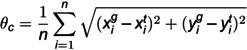 Figure 2
 Figure 3
 Figure 4
 Figure 5
 Figure 6
 Figure 7
 Figure 8
 Figure 9
 Figure 10
 Figure 11
 Figure 12
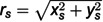 Figure 13
 Figure 14
 Figure 15
 Figure 16
 Figure 17
 Figure 18
 Figure 19
 Figure 20
 Figure 21
 Figure 22
 Figure 23
 Figure 24
 Figure 25
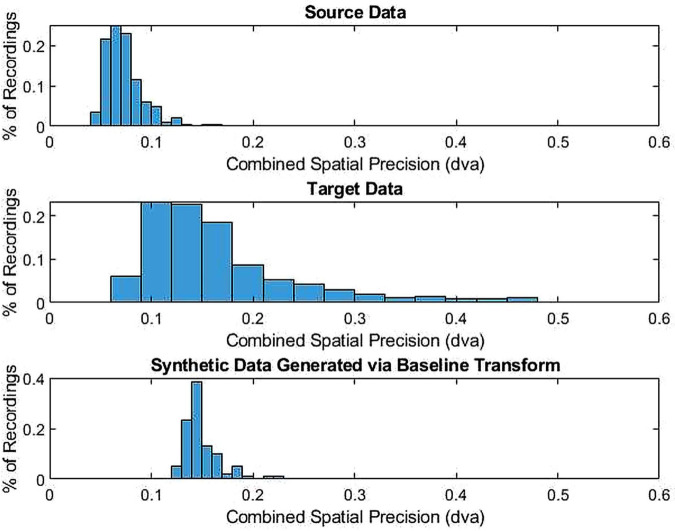 Figure 26
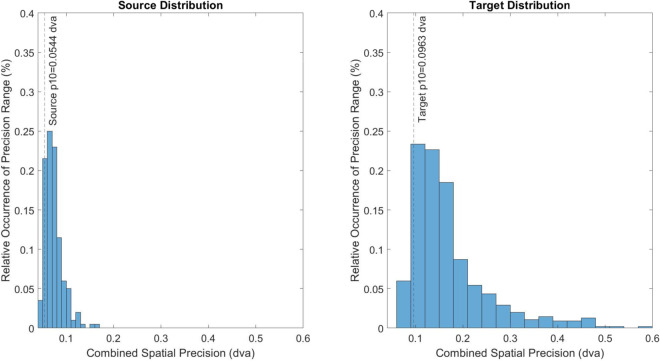 Figure 27
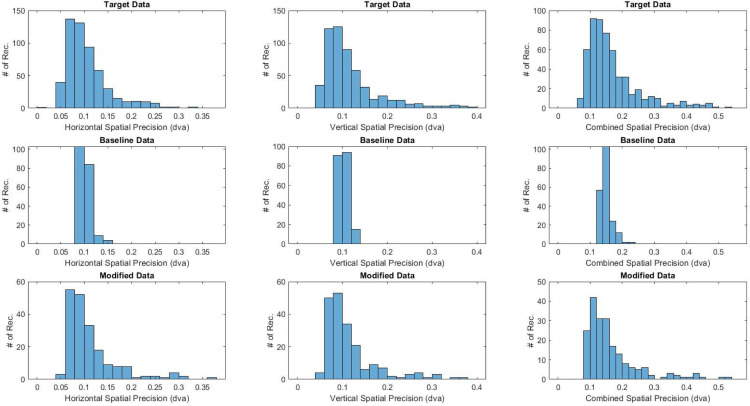 Figure 28
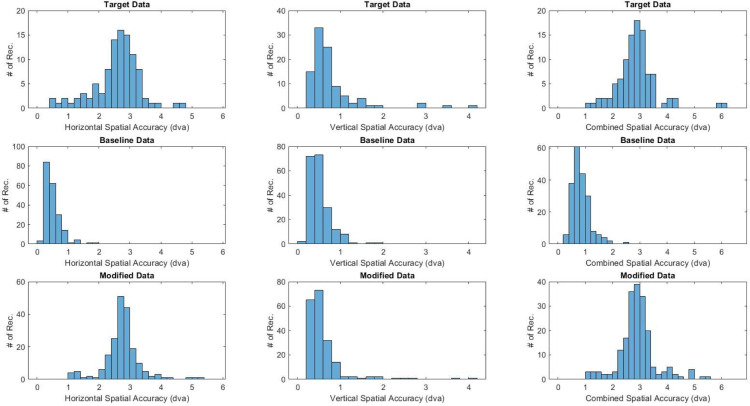 Figure 29
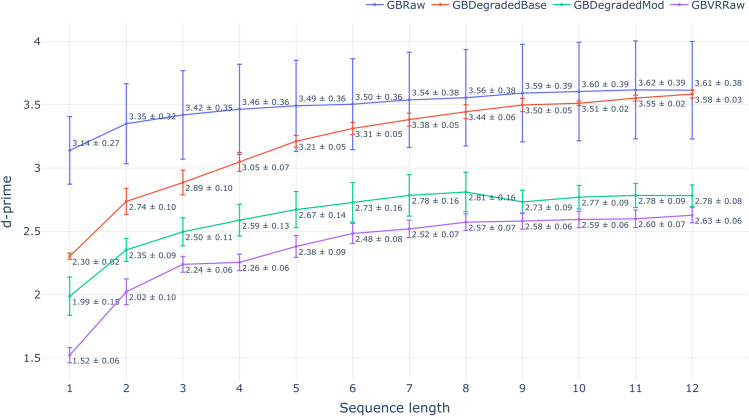 Figure 30
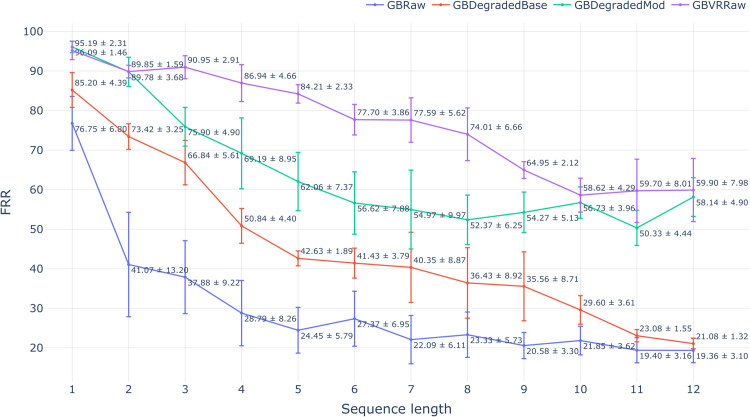 Figure 31
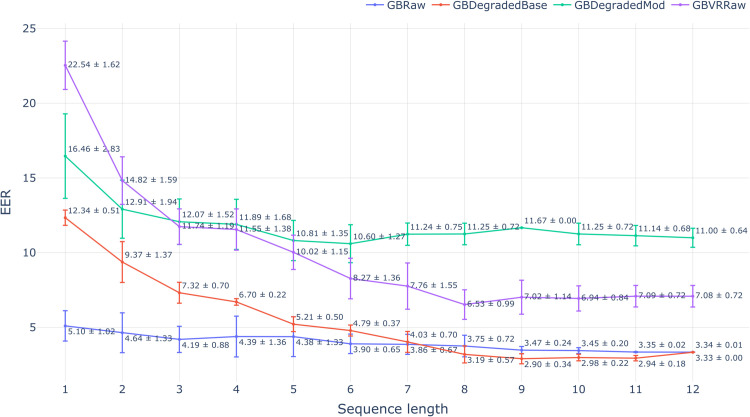 Figure 32
 Figure 33
Peer Reviews
No public reviews on file for this paper yet. If you reviewed it on a platform where reviews are public (OpenReview, ICLR, NeurIPS, ICML), you can paste yours below so the community can read it here.
Videos
No videos yet. Explain this paper in a talk, walkthrough, or lecture? Add one.
Taxonomy
TopicsGaze Tracking and Assistive Technology · EEG and Brain-Computer Interfaces · Visual Attention and Saliency Detection