Safety assessment of cyclin-dependent kinase 4/6 inhibitors and comparison of time to adverse events
Siqi Zhang, Renmin Zhang, Yingzi Xia, Dingwen Cao

TL;DR
This study analyzes safety data for three CDK4/6 inhibitors used in breast cancer treatment, identifying common and unexpected side effects from a large database.
Contribution
The study provides a comprehensive safety assessment of CDK4/6 inhibitors using disproportionality analysis on real-world adverse event reports.
Findings
Palbociclib commonly causes fatigue, decreased white blood cell count, and alopecia.
Abemaciclib is associated with diarrhea, decreased appetite, and dehydration.
Ribociclib is linked to neutropenia and decreased immune responsiveness.
Abstract
Multiple CDK4/6 inhibitors have been approved for the treatment of HR + /HER2- advanced breast cancer. Nevertheless, there is currently a scarcity of safety reports on CDK4/6 inhibitors within large sample cohorts. We employed a disproportionality analysis of the FAERS database to detect safety signals for the three marketed CDK4/6 inhibitors (palbociclib, abemaciclib, and ribociclib). We retrieved pertinent reports from 2004 Q1 to 2023 Q3. Four asymmetric analyses were utilized to assess signals. A total of 459 positive signals were obtained at the preferred term level (146 positive signals for palbociclib, 68 positive signals for abemaciclib, 245 positive signals for ribociclib). Palbociclib-related adverse events were commonly fatigue, white blood cell count decreased, alopecia. Abemaciclib-related adverse events were commonly diarrhea, decreased appetite, dehydration.…
Genes, proteins, chemicals, diseases, species, mutations and cell lines named across the full text — each resolved to its canonical identifier and authoritative record.
Click any figure to enlarge with its caption.
 Figure 1
 Figure 2
 Figure 3
 Figure 4
 Figure 5
 Figure 6
 Figure 7
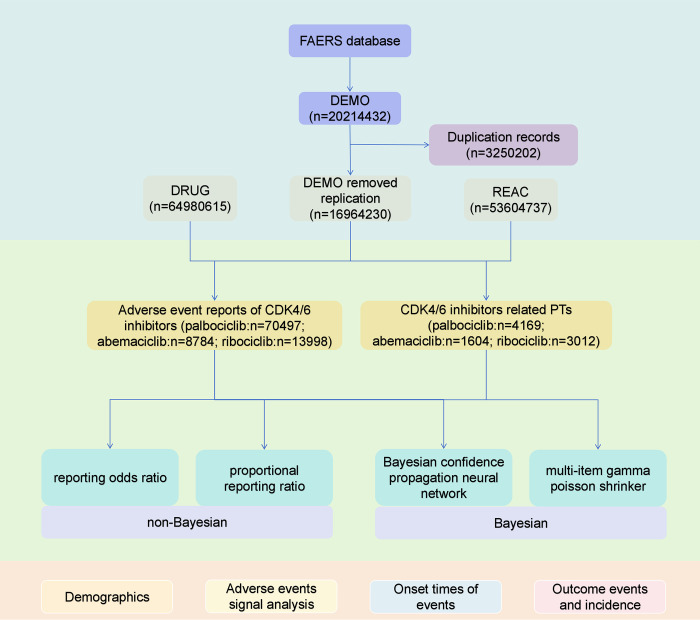 Figure 8
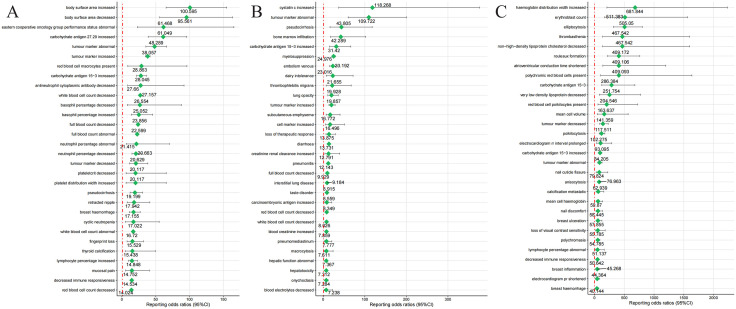 Figure 9
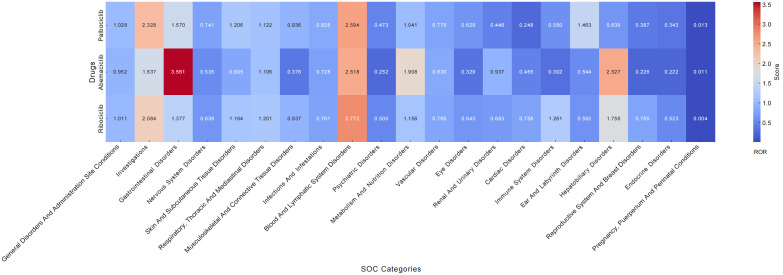 Figure 10
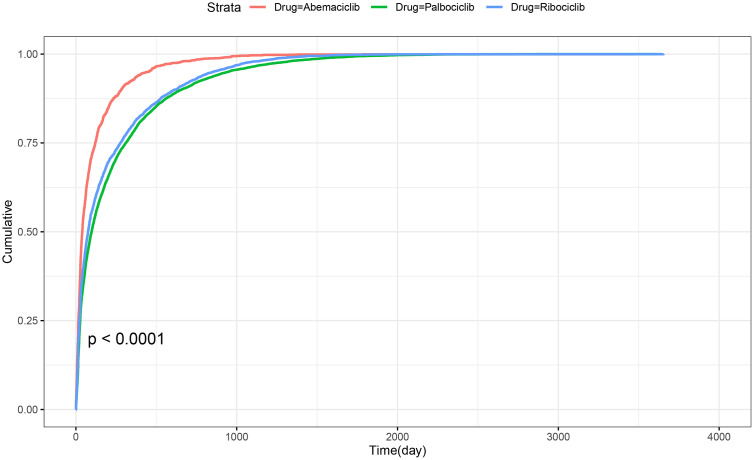 Figure 11
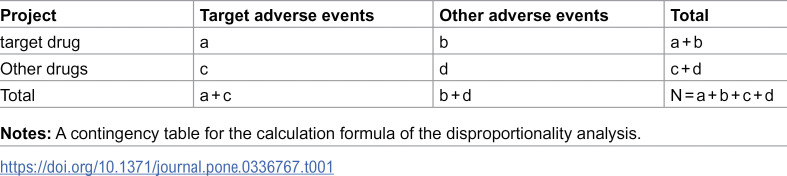 Figure 12
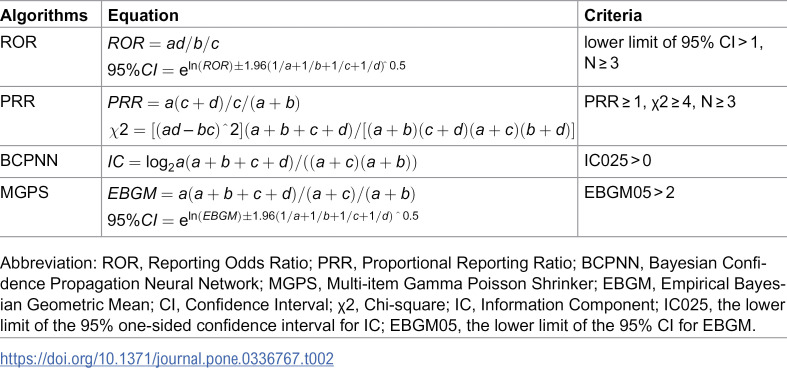 Figure 13
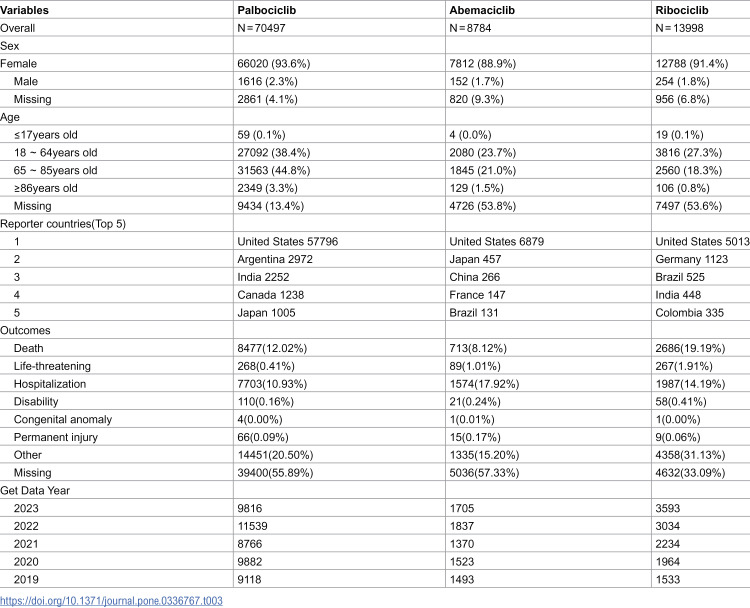 Figure 14
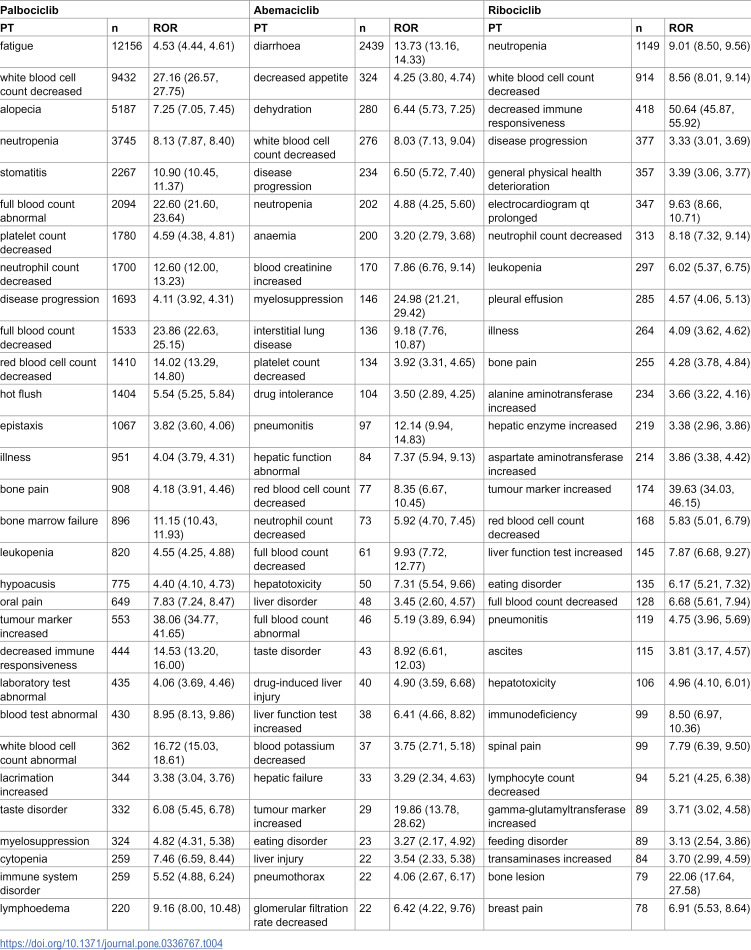 Figure 15
Peer Reviews
No public reviews on file for this paper yet. If you reviewed it on a platform where reviews are public (OpenReview, ICLR, NeurIPS, ICML), you can paste yours below so the community can read it here.
Videos
No videos yet. Explain this paper in a talk, walkthrough, or lecture? Add one.
Taxonomy
TopicsAdvanced Breast Cancer Therapies · Pharmacovigilance and Adverse Drug Reactions · Chronic Myeloid Leukemia Treatments