Warburg-Cinotti disease variant p.Tyr740Cys enhances catalytic activity of DDR2 kinase
Ziteng Hao, Birgit Leitinger, Prasad Dhiwar, Jianhong Zhou, Jianhong Zhou

TL;DR
A specific mutation in the DDR2 kinase enhances its activity, leading to a severe connective tissue disorder called Warburg-Cinotti syndrome.
Contribution
The study provides a structural explanation for how the DDR2-Y740C mutation causes constitutive kinase activation.
Findings
The DDR2-Y740C variant shows ligand-independent constitutive autophosphorylation in mammalian cells.
DDR2-Y740C has enhanced autophosphorylation and substrate phosphorylation rates compared to wild-type DDR2.
The mutation bypasses autoinhibitory constraints, adopting a fully active kinase conformation.
Abstract
The discoidin domain receptor DDR2 is a collagen-binding receptor tyrosine kinase whose dysregulation is associated with a wide range of diseases. Missense mutations in the DDR2 kinase domain cause Warburg-Cinotti syndrome in an autosomal dominant manner. Warburg-Cinotti syndrome is a severe connective tissue disorder, characterised by a range of manifestations including joint contractures of the hand, corneal vascularisation and pannus, skin fusion and infection, keloid plaques and acro-osteolysis. The Warburg-Cinotti variants, p.Leu610Pro and p.Tyr740Cys, were previously hypothesised to cause disease through a gain-of-function mechanism but mechanistic studies addressing this notion have been lacking. Here we show that both disease variants exhibit ligand-independent constitutive autophosphorylation when expressed as full-length proteins in mammalian cells. We also characterised the…
Genes, proteins, chemicals, diseases, species, mutations and cell lines named across the full text — each resolved to its canonical identifier and authoritative record.
Click any figure to enlarge with its caption.
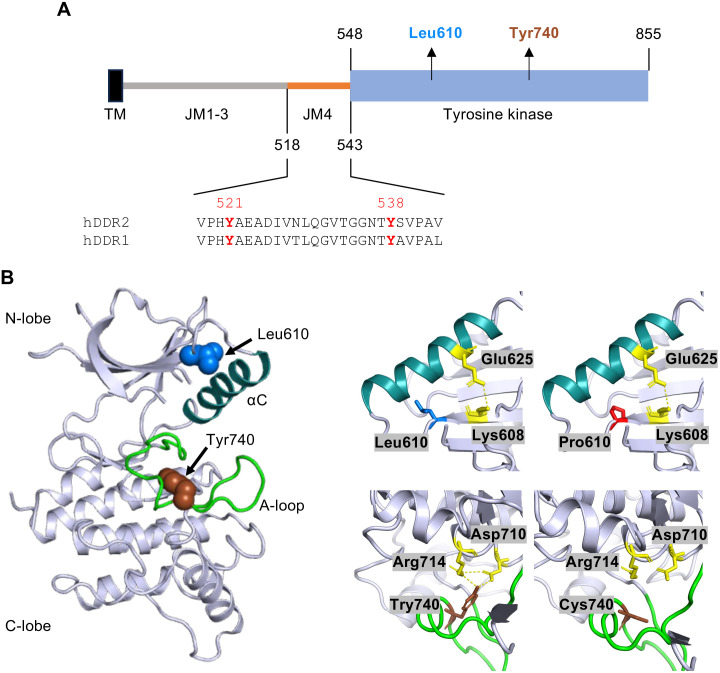 Figure 1
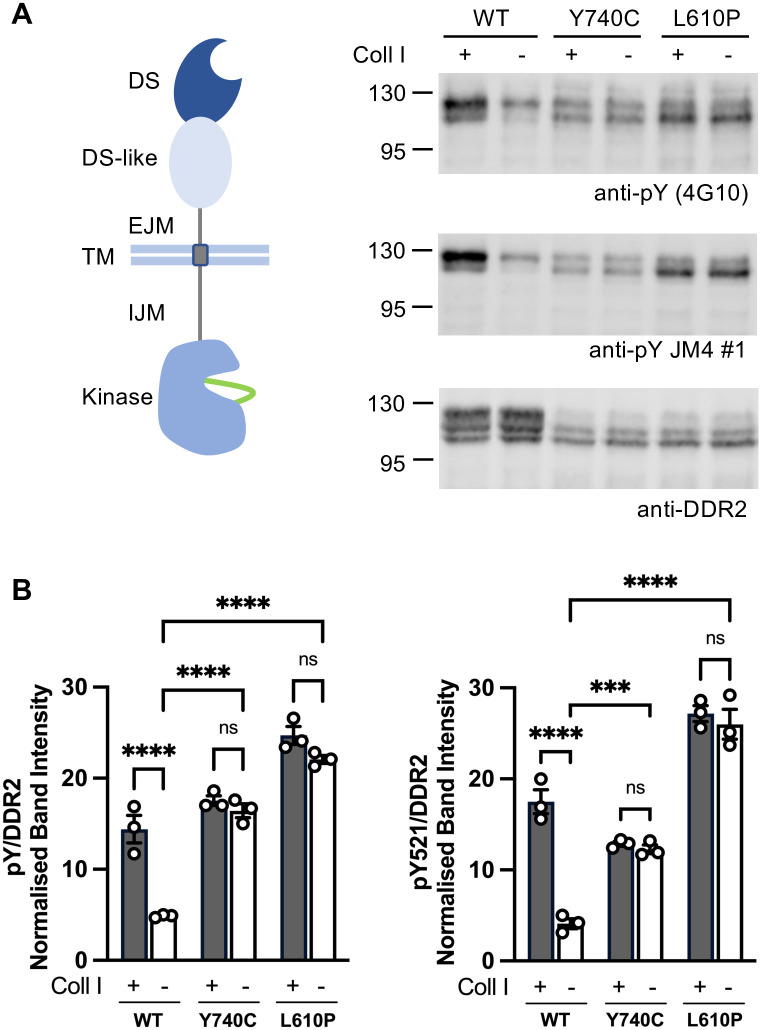 Figure 2
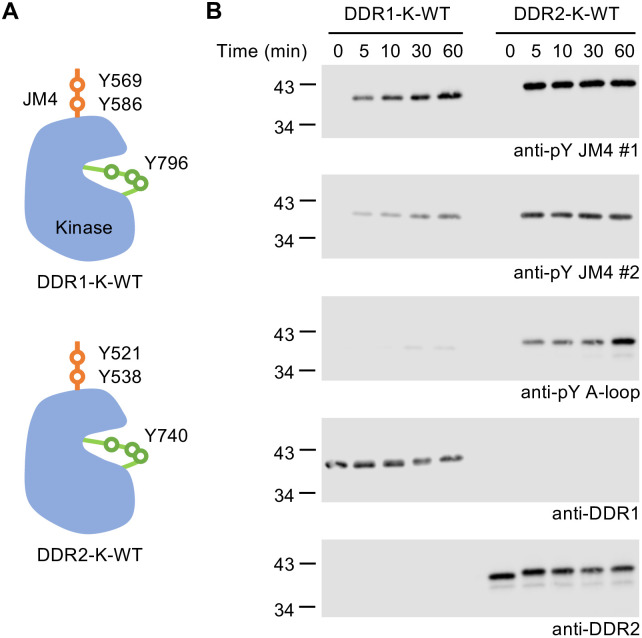 Figure 3
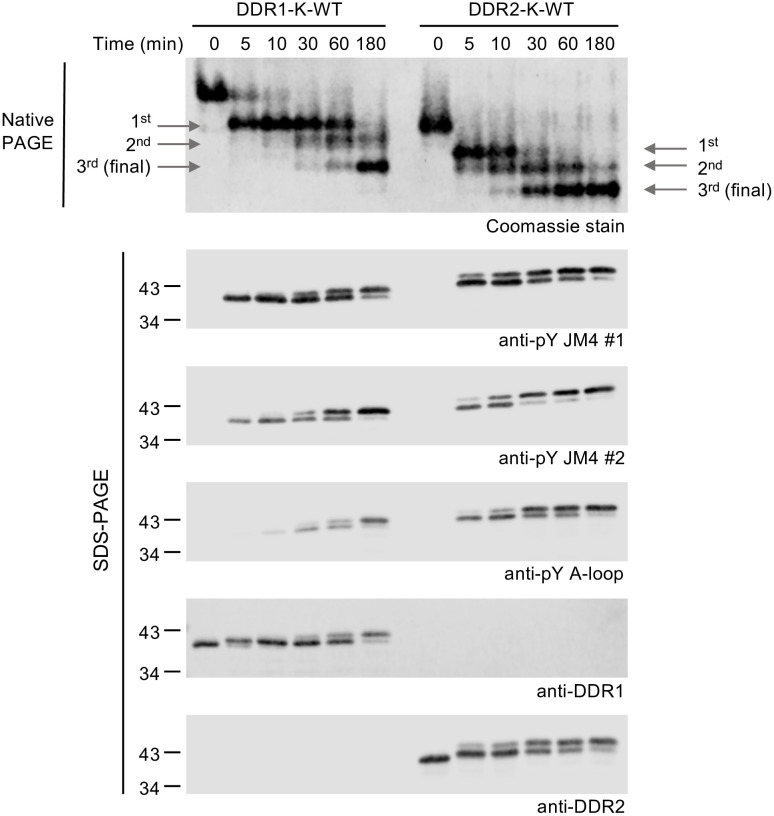 Figure 4
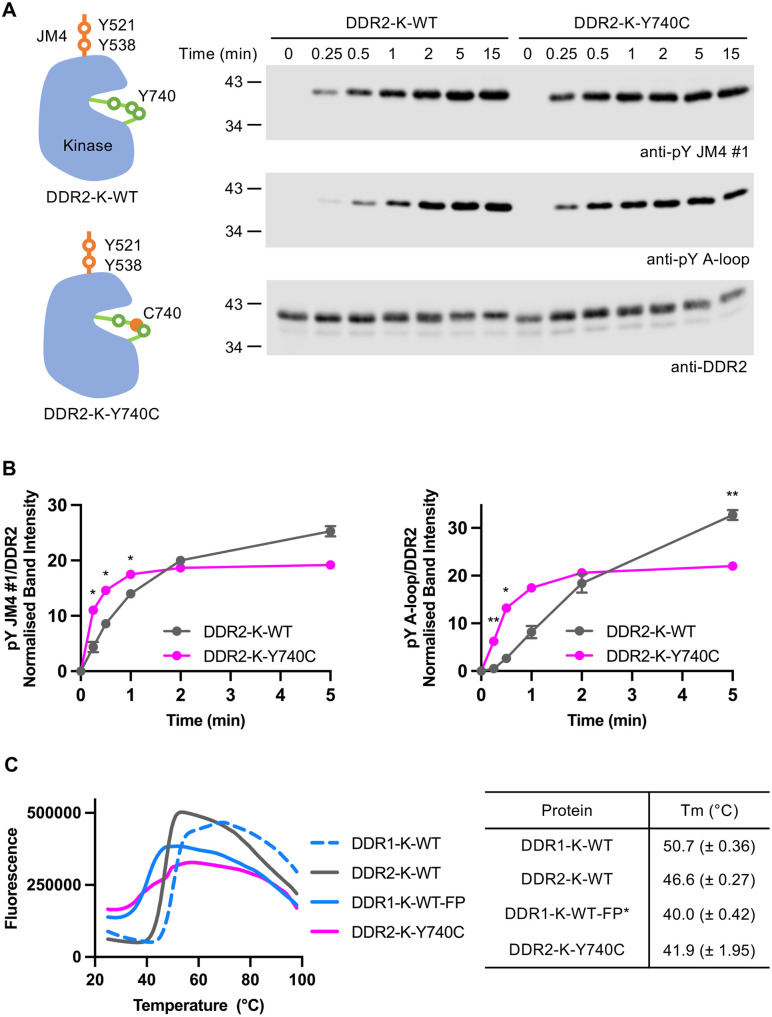 Figure 5
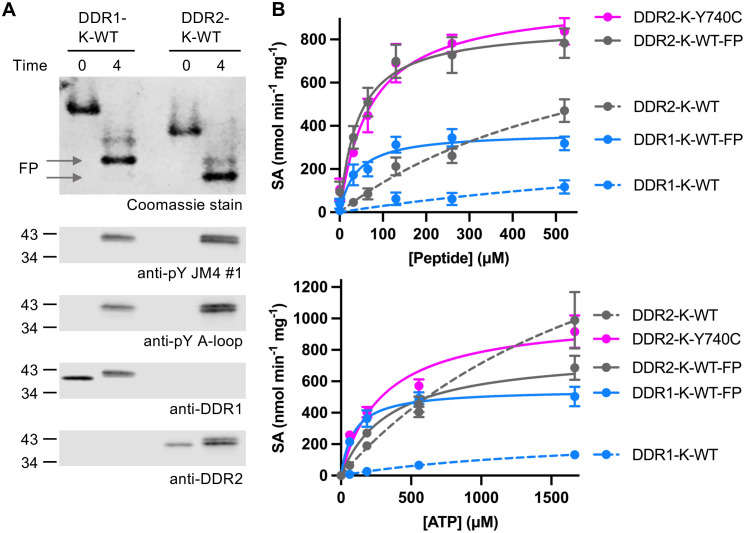 Figure 6
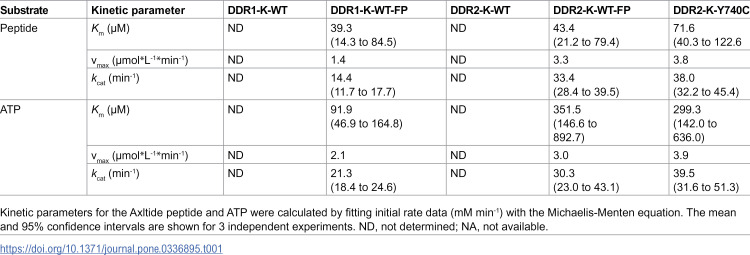 Figure 7
Peer Reviews
No public reviews on file for this paper yet. If you reviewed it on a platform where reviews are public (OpenReview, ICLR, NeurIPS, ICML), you can paste yours below so the community can read it here.
Videos
No videos yet. Explain this paper in a talk, walkthrough, or lecture? Add one.
Taxonomy
TopicsCell Adhesion Molecules Research · Skin and Cellular Biology Research · Wnt/β-catenin signaling in development and cancer