TSLPR deficiency attenuates AHR independently of eosinophilia and mucus secretion in a chronic HDM mouse model of allergic asthma
Latifa Koussih, Sina Taefehshokr, Lianyu Shan, Sujata Basu, Andrew Halayko, Bouchaib Lamkhioued, Abdelilah S. Gounni, Hiroyasu Nakano, Hiroyasu Nakano, Hiroyasu Nakano, Hiroyasu Nakano, Hiroyasu Nakano

TL;DR
This study shows that TSLPR deficiency reduces airway hyperresponsiveness in a mouse model of allergic asthma without affecting inflammation or mucus production.
Contribution
The study reveals a novel role of TSLPR in airway hyperresponsiveness independent of typical asthma markers like eosinophilia.
Findings
TSLPR-/- mice had lower airway resistance and tissue elastance after HDM exposure.
TSLPR deficiency reduced HDM-specific IgE and key cytokines like IL-4 and IL-13.
No significant differences in eosinophil counts, mucus, or collagen production were observed.
Abstract
Asthma is marked by chronic airway inflammation, immune dysregulation, and airway remodeling. While TSLP is known to influence allergic diseases like asthma, the role of TSLPR in airway remodeling is not well-defined. Using TSLPR-deficient (TSLPR-/-) mice in a chronic HDM asthma model, we assessed lung function, inflammatory cell infiltration, cytokine levels, and antibody production in serum and lung tissues. Airway remodeling was evaluated by examining mucus production, goblet cell metaplasia, and collagen deposition. TSLPR-/- mice showed lower airway resistance, tissue resistance, and tissue elastance compared to wild-type mice after chronic HDM exposure. TSLPR-/- mice also had reduced HDM-specific IgE levels and decreased IL-4, IL-13, and IFN-γ in BALF. However, airway and lung inflammation, including inflammatory cell counts and eosinophil infiltration, were similar between…
Genes, proteins, chemicals, diseases, species, mutations and cell lines named across the full text — each resolved to its canonical identifier and authoritative record.
Click any figure to enlarge with its caption.
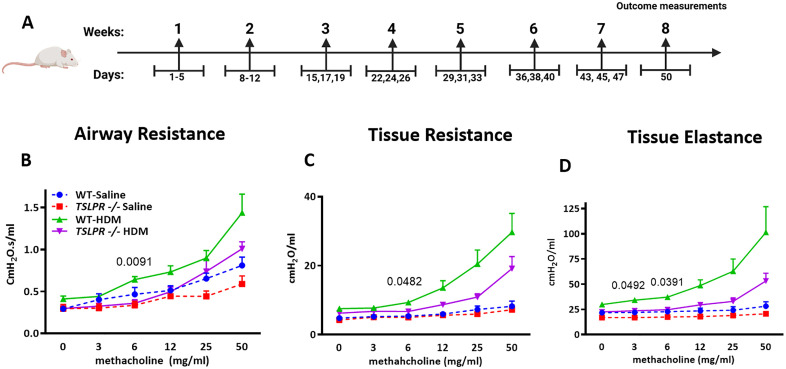 Figure 1
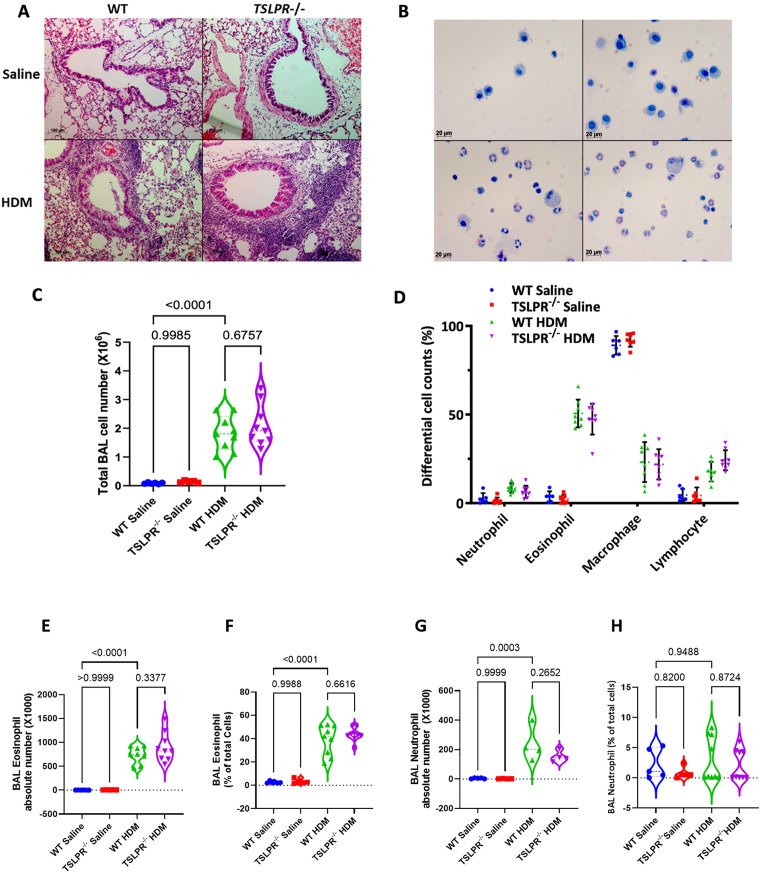 Figure 2
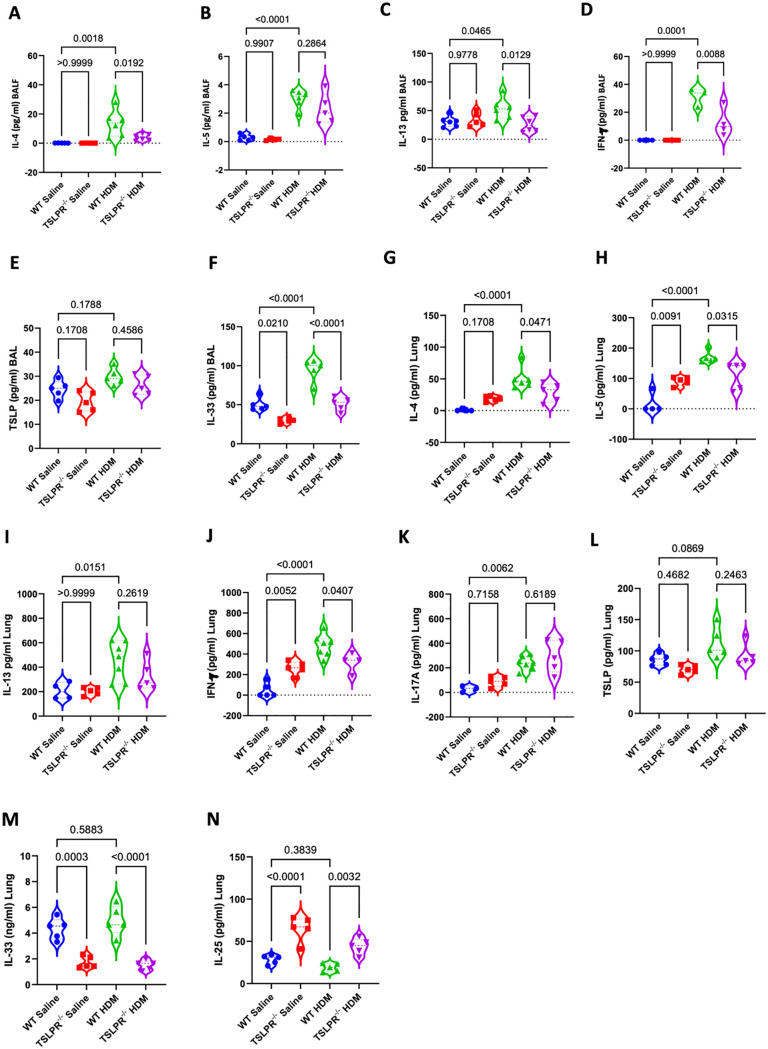 Figure 3
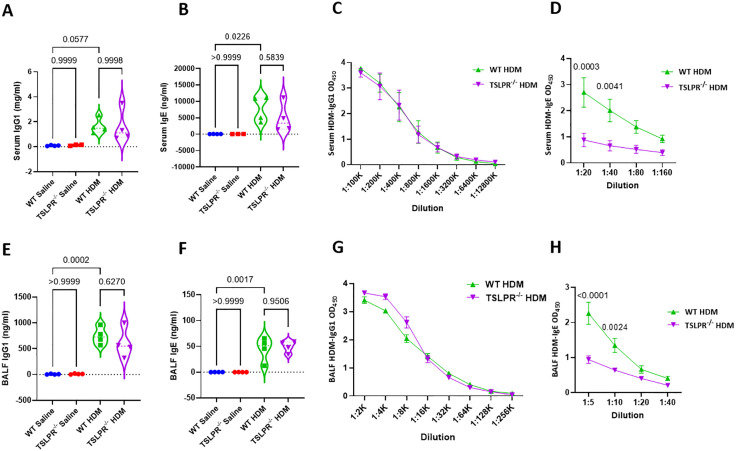 Figure 4
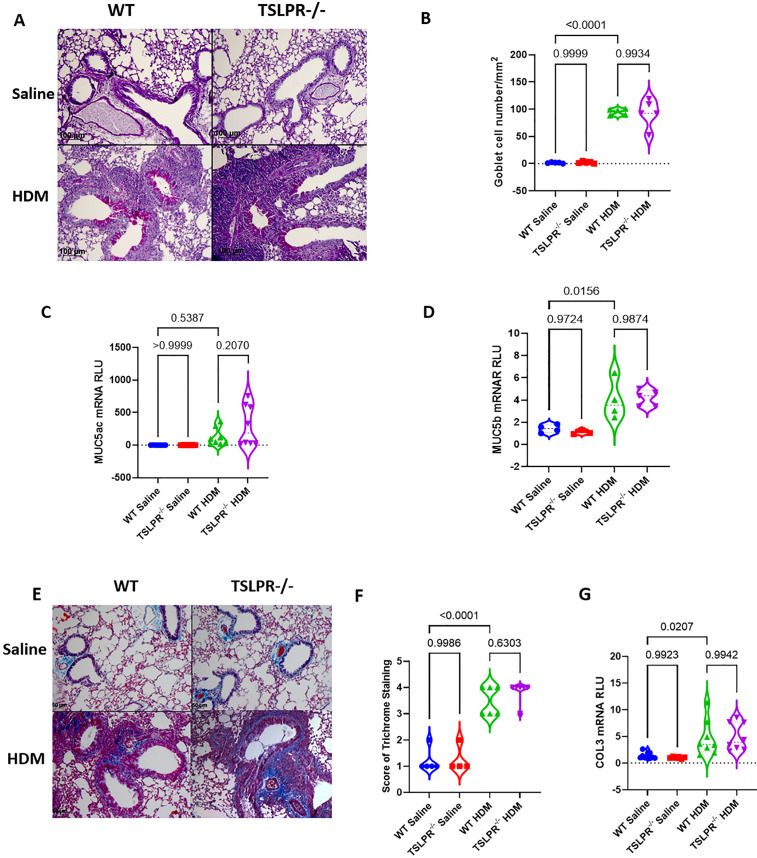 Figure 5
Peer Reviews
No public reviews on file for this paper yet. If you reviewed it on a platform where reviews are public (OpenReview, ICLR, NeurIPS, ICML), you can paste yours below so the community can read it here.
Videos
No videos yet. Explain this paper in a talk, walkthrough, or lecture? Add one.
Taxonomy
TopicsAsthma and respiratory diseases · Dermatology and Skin Diseases · Sphingolipid Metabolism and Signaling