Dysphagia Characteristics in High Versus Low Vagal Unilateral Vocal Fold Paralysis
Madeline Miles Marker, Liam W. Gallagher, Aanish Puri, Jesse Hoffmeister, Scott Lunos, Heather Erickson, Gina Cruciani, Joslyn Kahn, Stephanie Misono, Raluca Gray

TL;DR
This study compares swallowing issues in patients with high and low vagal unilateral vocal fold paralysis and finds that high vagal cases have more severe dysphagia and require more dietary and behavioral changes.
Contribution
The study identifies distinct dysphagia characteristics and treatment outcomes between high and low vagal unilateral vocal fold paralysis.
Findings
High vagal UVFP showed significantly higher rates of swallowing dysfunction compared to low vagal UVFP.
Both high and low vagal UVFP patients improved after injection laryngoplasty, but many still needed behavioral modifications.
Post-treatment, high vagal UVFP had higher residue prevalence than low vagal UVFP.
Abstract
To compare instrumental swallow assessment findings and diet recommendations in high versus low vagal unilateral vocal fold paralysis (UVFP). Retrospective review of patients with UVFP who underwent instrumental swallow assessment, September 2019–February 2024. Demographics, Eating Assessment Tool-10 (EAT-10) score, flexible laryngoscopy findings, instrumental swallow parameters, diet recommendations, treatment modalities, and posttreatment outcomes were analyzed. Ninety-six patients were included: 28 (29%) high-vagal and 68 (71%) low-vagal UVFP. High vagal UVFP had a higher incidence of premature spillage (57% vs. 13%, p < 0.0001); residue (82% vs. 22%, p < 0.0001), penetration (89% vs. 35%, p < 0.0001), aspiration (50% vs. 22%, p = 0.013), modified diet (61% vs. 16%, p < 0.0001), and behavioral modifications (89% vs. 38%, p < 0.001) compared to low vagal UVFP. Thirty-one patients…
Genes, proteins, chemicals, diseases, species, mutations and cell lines named across the full text — each resolved to its canonical identifier and authoritative record.
Click any figure to enlarge with its caption.
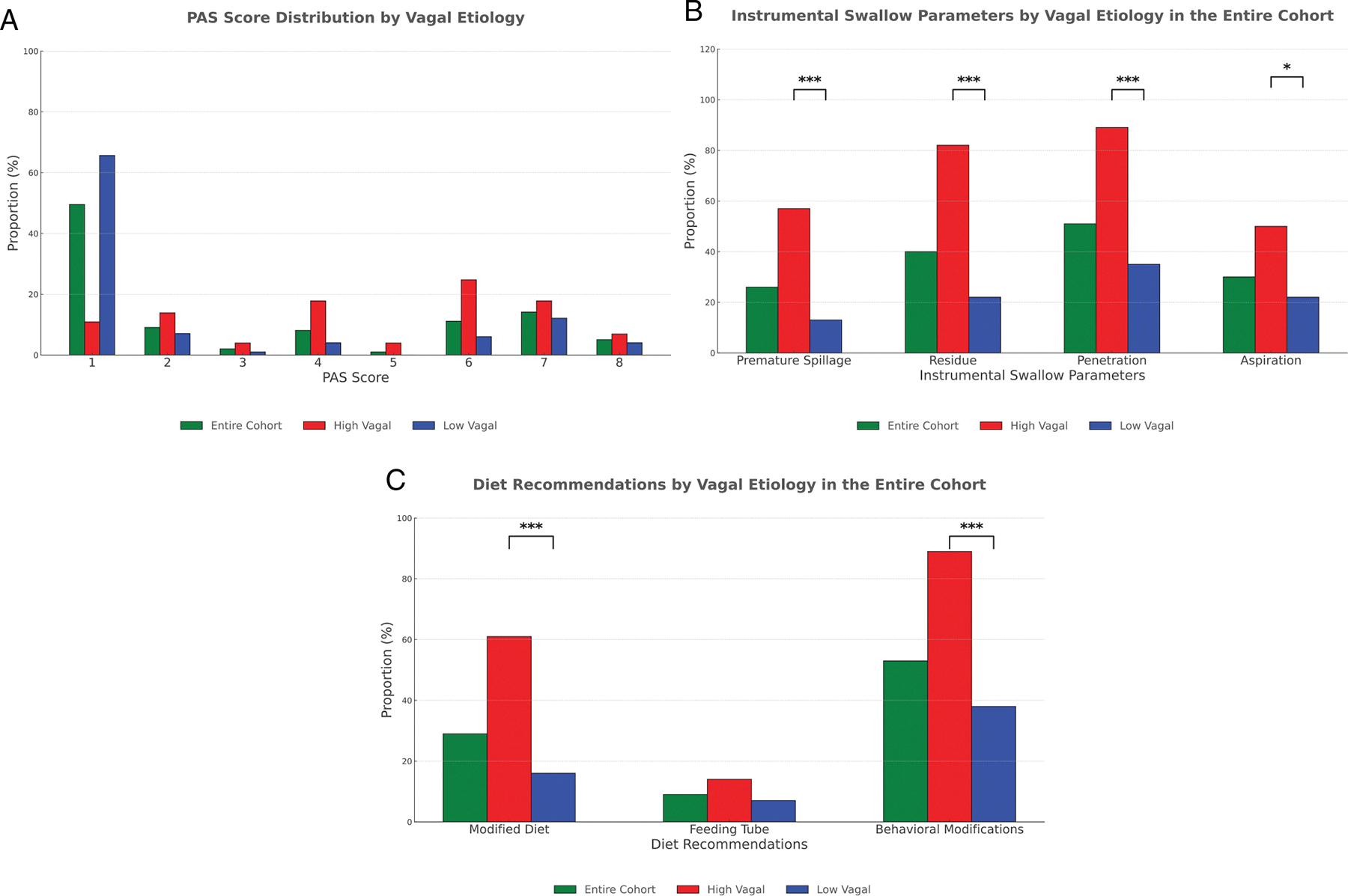 Figure 1
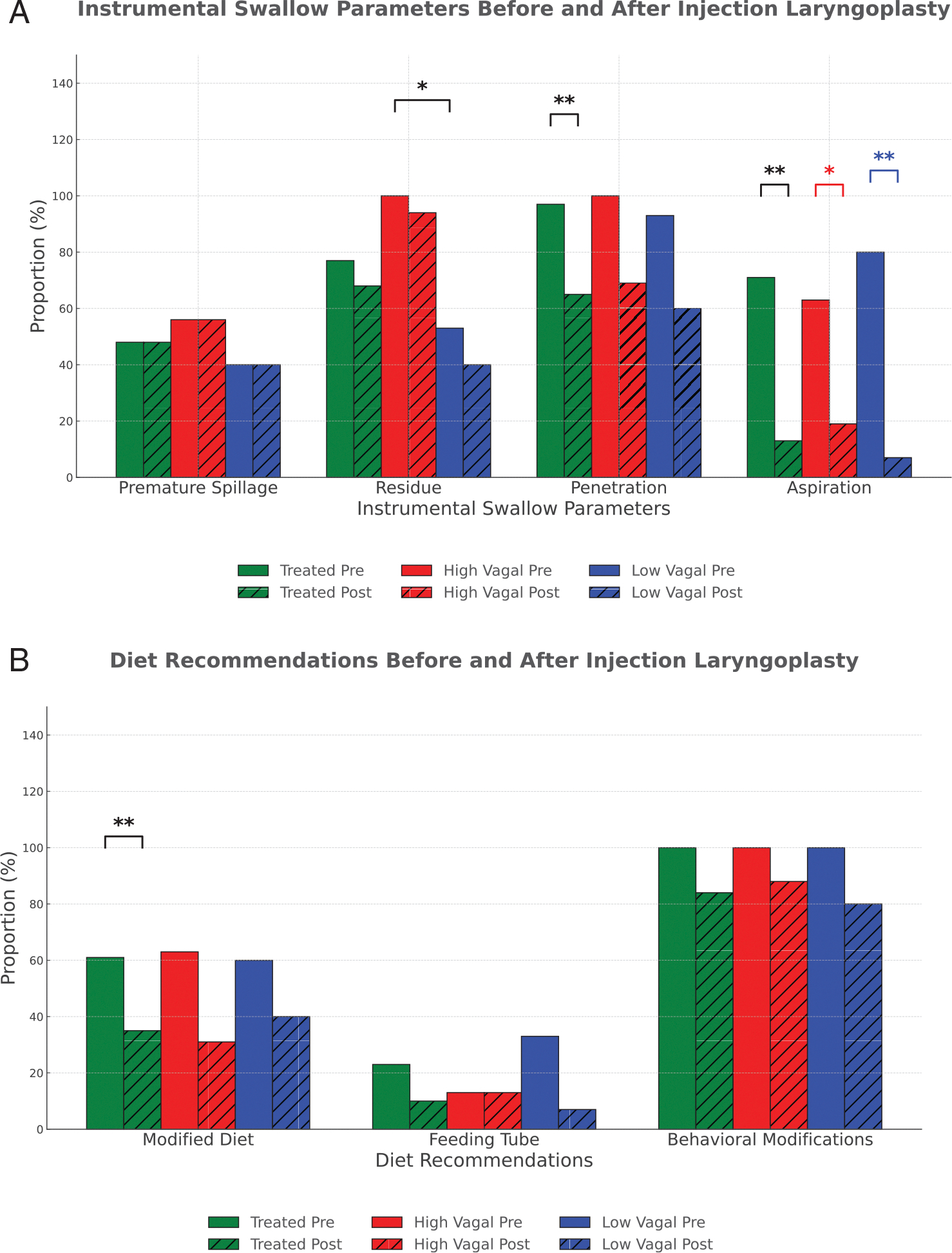 Figure 2
Peer Reviews
No public reviews on file for this paper yet. If you reviewed it on a platform where reviews are public (OpenReview, ICLR, NeurIPS, ICML), you can paste yours below so the community can read it here.
Videos
No videos yet. Explain this paper in a talk, walkthrough, or lecture? Add one.
Taxonomy
TopicsVoice and Speech Disorders · Dysphagia Assessment and Management · Tracheal and airway disorders