Novel roseophages provide insights into a genetically and ecologically diverse phage family
Zuqing Wu, Ying Wu, Chunmei Deng, Hang Xiao, Sige Wang, Songlin Ye, Yanlin Zhao, Zefeng Zhang

TL;DR
This study discovers a new group of marine viruses that infect important ocean bacteria, revealing their genetic diversity and global distribution.
Contribution
The study identifies a novel family-level phage group (CRP-822-type) infecting pelagic Roseobacter cluster bacteria and reveals their ecological and genomic diversity.
Findings
CRP-822-type phages form a new family-level group with five subgroups showing distinct genomic features.
Subgroup IV phages are linked to high G+C host clades and are more abundant in warm coastal regions.
The phages are widely distributed in marine environments with distinct biogeographic patterns among subgroups.
Abstract
Roseobacters are prevalent in marine environments and play a crucial role in global carbon and sulphur cycles. Although many roseophages that infect roseobacters have been characterized, those infecting members of the ecologically dominant pelagic Roseobacter cluster (PRC) remain largely unexplored due to the challenges of culturing these organisms. In this study, we isolated 7 phylogenetically related roseophages from 3 PRC lineages and retrieved 279 uncultured viral genomes (UViGs) related to these roseophages from marine environmental viral databases. Comparative genomic and phylogenetic analyses revealed that these roseophages and their related UViGs form a novel family-level phage group (designated the CRP-822-type group) comprising at least five subgroups. These subgroups display distinct genomic features in terms of G+C content, amino acid usage and codon usage, suggesting…
Genes, proteins, chemicals, diseases, species, mutations and cell lines named across the full text — each resolved to its canonical identifier and authoritative record.
Click any figure to enlarge with its caption.
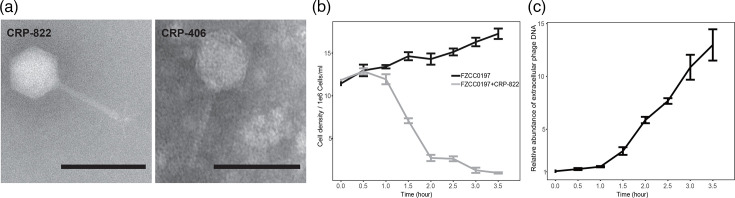 Figure 1
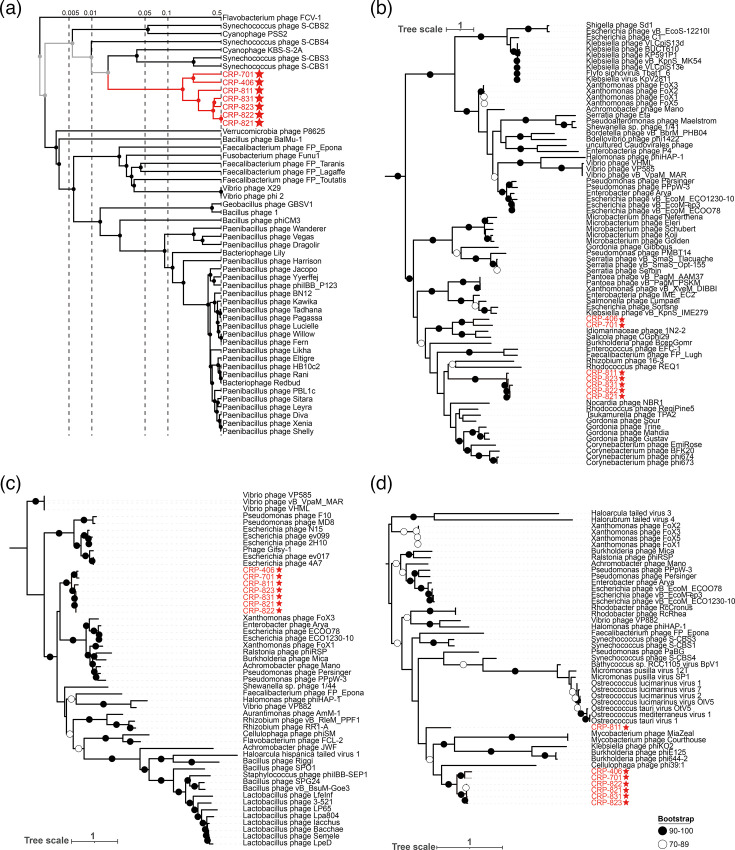 Figure 2
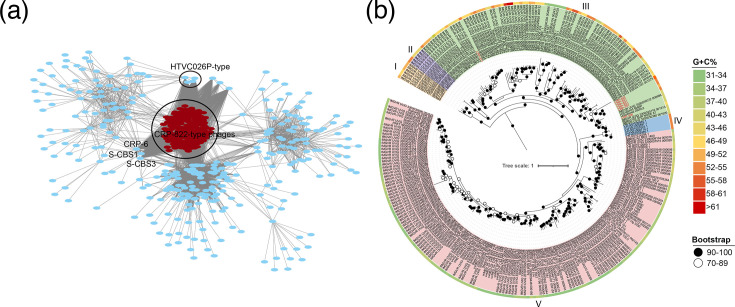 Figure 3
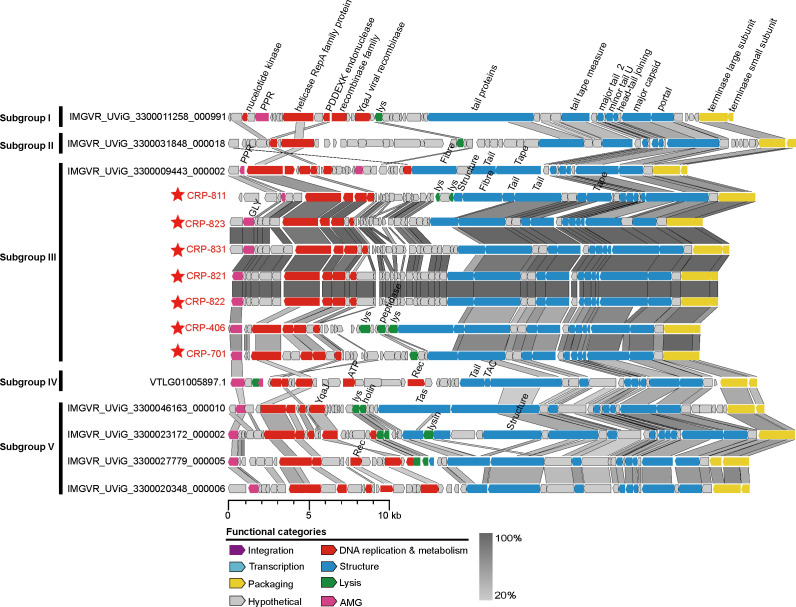 Figure 4
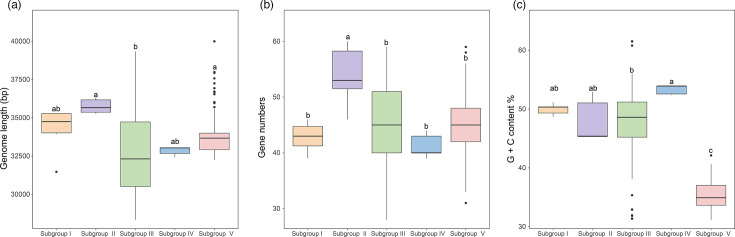 Figure 5
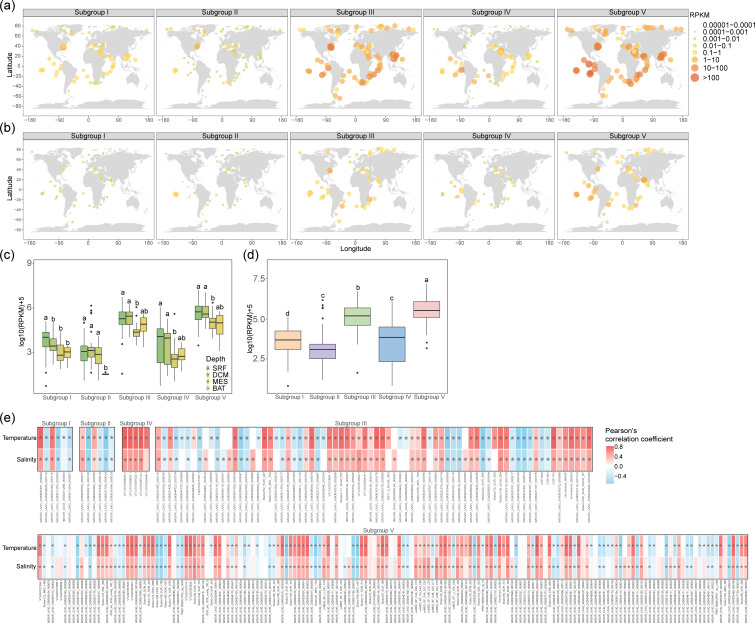 Figure 6
Peer Reviews
No public reviews on file for this paper yet. If you reviewed it on a platform where reviews are public (OpenReview, ICLR, NeurIPS, ICML), you can paste yours below so the community can read it here.
Videos
No videos yet. Explain this paper in a talk, walkthrough, or lecture? Add one.
Taxonomy
TopicsBacteriophages and microbial interactions · Salmonella and Campylobacter epidemiology · Microbial Community Ecology and Physiology