Antiaging, Wound‐Healing Properties and Chemical Characterization of Crude Hydroalcoholic Extract and Fractions of Myrcia neoobscura
Larissa Mascarenhas Krepsky, Ana Helena Loos Moritz, Mayra Alice Corrêa Pitz, Letícia Bachmann, Diogo Alexandre Siebert, Paula Flegar, Stjepan Lešnjak, Ana Tirić, Amanda Tavares Germano, Mayara da Silva, Carlos Rafael Vaz, Larissa Benvenutti, André Luís de Gasper

TL;DR
This study explores the antiaging and wound-healing properties of extracts from Myrcia neoobscura leaves, highlighting their rich phenolic content and potential for phytocosmetic use.
Contribution
The study reports the first identification of several phenolic compounds in the Myrcia genus and evaluates their antiaging and wound-healing potential.
Findings
CHE and AF showed the best antioxidant and collagenase/elastase inhibition results.
EAF exhibited high oxidative glycation inhibition comparable to quercetin.
CHE promoted significant fibroblast migration and was non-irritating in skin tests.
Abstract
The aim of this study was to characterize the phytochemical profile and potential antiaging and wound‐healing activities of 70% hydroalcoholic crude extract (CHE) from Myrcia neoobscura leaves and its fractions—insoluble (IF), ethyl acetate (EAF), and aqueous (AF)—for use in phytocosmetics for skin application. CHE and its fractions showed high concentrations of total phenolics, including flavanols and flavonoids. Ten phenolic compounds were identified, with gallic acid as the major, followed by chlorogenic and p‐coumaric acids. Catechin, isoorientin, taxifolin, resveratrol, naringenin, and eriodictyol were reported for the first time in the genus. CHE and AF showed the best results in antioxidant assays. In antiglycation activity, EAF showed the highest oxidative glycation inhibition, comparable to quercetin. CHE and AF exhibited the strongest collagenase and elastase inhibition. CHE,…
Genes, proteins, chemicals, diseases, species, mutations and cell lines named across the full text — each resolved to its canonical identifier and authoritative record.
Click any figure to enlarge with its caption.
 Figure 1
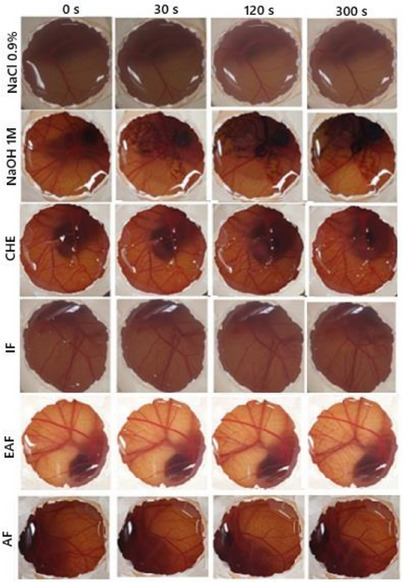 Figure 2
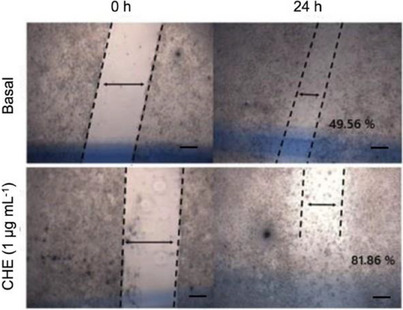 Figure 3
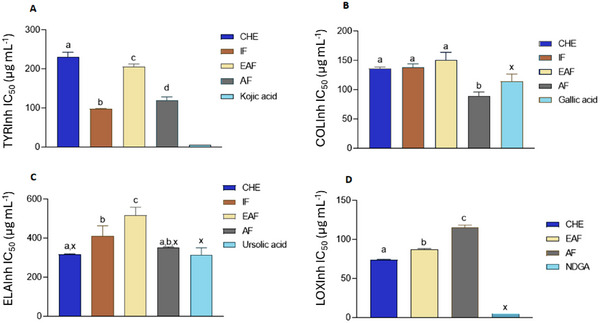 Figure 4
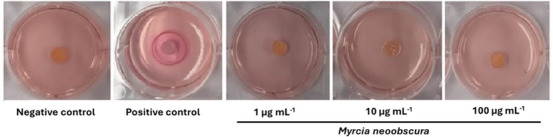 Figure 5
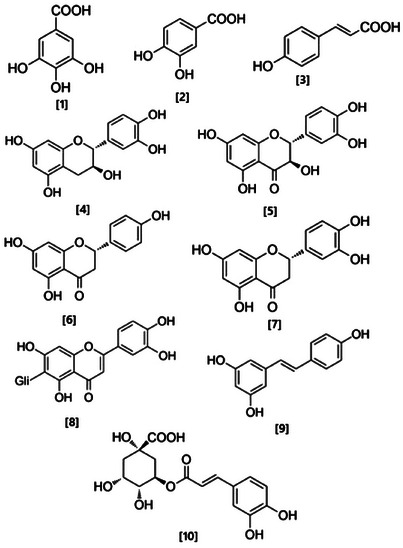 Figure 6
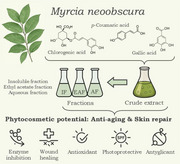 Figure 7
Peer Reviews
No public reviews on file for this paper yet. If you reviewed it on a platform where reviews are public (OpenReview, ICLR, NeurIPS, ICML), you can paste yours below so the community can read it here.
Videos
No videos yet. Explain this paper in a talk, walkthrough, or lecture? Add one.
Taxonomy
TopicsPhytochemicals and Antioxidant Activities · Bee Products Chemical Analysis · Bioactive natural compounds